The clock is ticking for large retailers operating in New York. On January 1, 2027, every retail employer with 500 or more employees in New York State must provide a silent response button to every retail worker. The mandate comes from the Retail Worker Safety Act, which Governor Kathy Hochul signed in September 2024 and amended in early 2025. With less than a year on the calendar, retailers who treat this as a “next year” problem are already behind.
According to the U.S. Bureau of Labor Statistics, nearly one in four workplace homicides happens in retail establishments, and retail consistently ranks among the most violent industries for frontline workers. The new law is New York’s answer to that reality, and it is reshaping what compliant store operations look like nationwide.
What the Retail Worker Safety Act Actually Requires
The Retail Worker Safety Act adds Section 27-e to New York Labor Law. The policy and training portions of the law took effect on June 2, 2025, but the silent response button (SRB) requirement is the next major deadline, scheduled for January 1, 2027.
According to the New York State Department of Labor, covered employers with 500 or more retail employees statewide must:
- Provide every retail employee with access to a silent response button
- Configure the button to summon immediate assistance from a security officer, manager, or supervisor when pressed
- Train employees on when and how to use the device
- Maintain the system year-round, not just during peak seasons
The law gives employers three compliant device formats:
- A stationary button installed in an easily accessible location in the workplace
- A wearable panic button carried by each employee
- A mobile-phone-based button installed on employer-provided equipment only
A critical privacy guardrail applies to wearable and mobile devices: location tracking is permitted only when the button is triggered, never as a passive monitoring tool. This rules out repurposing a personal phone app and forces employers to issue dedicated equipment for the wearable and mobile options.
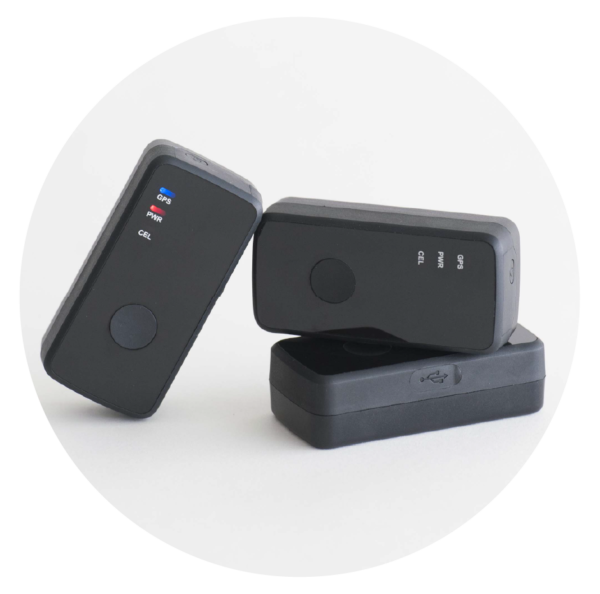
Employees are never alone with PERSA
Designed to be accessible any time you need it, PERSA is a wearable safety device and tracker complete with our software platform to ensure all remote or lone workers are safe 24/7.
- Employee clock-in and clock-out times
- Any off-site location their mobile employees may visit
- Mobile employees are on the best route to get to their site locations
Why “Silent” Matters More Than “Panic”
The original draft of the law called these devices “panic buttons” and required them to alert local law enforcement. The 2025 amendment changed both the name and the function. As legal analysts at Morgan Lewis explained, the revised law replaces the law-enforcement alert with internal escalation to security, managers, or supervisors.
That distinction matters operationally. A silent button:
- Does not escalate a tense situation by drawing visible attention
- Prevents accidental 911 dispatches that strain public safety resources
- Routes alerts to people who already understand the store, the staff, and the threat profile
- Allows employees to summon help when speaking aloud could put them in greater danger
For an employee facing an aggressive customer, an active robbery, or a domestic violence incident that has followed them to work, a silent alert is often the only safe option.
How New York Compares to Other States
New York is not the first state to require employee duress devices, but it is the first to apply the requirement broadly to retail. Other state laws have focused on hospitality and healthcare:
- New Jersey became the first state to require panic devices when its 2019 law mandated them for hotels with 100 or more guest rooms, according to coverage in the National Law Review.
- Washington State requires duress devices for hotel, motel, and certain retail and janitorial workers under RCW 49.60.515
- Illinois mandates wearable safety devices for hotel and casino employees working alone, and is expanding similar rules to healthcare
- California requires written workplace violence prevention plans for nearly all employers and is moving toward device requirements in healthcare
The pattern is clear: state-level mandates are expanding from hospitality into retail, healthcare, and beyond. Retailers operating in multiple states should expect the New York model to spread.
The Workplace Violence Reality Behind the Law
The legislation responds to data that has alarmed safety officials for years. The BLS Census of Fatal Occupational Injuries recorded 733 workplace fatalities from violent acts in 2024. OSHA notes that violent acts remain the third-leading cause of fatal occupational injuries in the United States, with retail consistently in the highest-risk tier.
For retailers, this is not an abstract compliance question. It is a question of whether a cashier facing a robbery, a lone closing employee in a parking lot, or a manager confronting a hostile shoplifter has a fast, discreet way to call for help.
TRUSTED BY INDUSTRY LEADERS



Building a Compliant Silent Response Program
Compliance is more than buying hardware. A defensible program needs five components working together:
- Reliable devices that activate quickly, transmit GPS location, and work in low-signal areas
- A defined escalation protocol that routes alerts to specific security, manager, or supervisor roles
- Documented employee training on activation, false-alarm protocols, and post-incident steps
- Regular testing and drills to verify response times and device readiness
- Audit trails showing activations, response times, and resolutions for legal and insurance purposes
Vestige’s PERSA wearable panic button was built for exactly this kind of high-stakes deployment. Worn discreetly on a lanyard or badge, PERSA activates silently, transmits real-time GPS data even in low-signal environments, and routes customizable alert sequences to designated responders.
San Diego County’s Mobile Crisis Response Team uses PERSA across more than 130 field staff, achieving a 28-second average emergency response time in real-world drills. Henry Ford Health deployed PERSA across its Mobile Integrated Health team to protect clinicians making in-home visits in challenging neighborhoods. These deployments preview what a compliant retail program looks like in practice. More examples are documented across Vestige’s client stories.
Choosing the Right Device Format for Retail
For most large retailers, the wearable option offers the strongest combination of compliance, employee acceptance, and operational value:
- Stationary buttons require employees to reach a fixed location during an emergency, which is rarely practical on a sales floor or in a stockroom
- Mobile-phone-based buttons require employer-provided phones for every employee, which is cost-prohibitive at scale
- Wearable buttons travel with the employee, activate without drawing attention, and provide GPS location data the moment they trigger
A purpose-built employee panic button also avoids the privacy and battery-life issues that plague phone-based solutions. For organizations focused on protecting frontline workers with PERSA, the wearable form factor has become the de facto standard.
Get Ahead of the January 2027 Deadline
The retailers that handle this transition best are the ones getting ahead of it now. That means testing devices, fine-tuning escalation protocols, and ensuring staff are fully trained well before the deadline. For larger retail operations, the full rollout process, from hardware procurement to IT integration and employee onboarding, can easily take six to nine months.
Vestige works with retailers, healthcare systems, and public safety organizations to roll out wearable safety technology that aligns with the Retail Worker Safety Act and similar regulations taking shape across the country. If you want to see how PERSA can help protect your employees, meet New York’s January 2027 requirement, and position your organization for what’s coming next, request a demo to get started.

 Mike Stahnten
Trustindex verifies that the original source of the review is Google.
I have been a customer of Vestige for over 5 years. Megan and Corey do an awesome job and get us whatever we requested extremely quickly whether it’s an emergency that we need video of or a simple report we want! Their system has saved us from several Faldo claims and the software has never let us down! Jake CrainVery effective and reliable resource in the field. Product is durable and does everything you’ll need from A-Z, remember you get what you pay for so why not get the best you can. Thank you Vestige for your support and business in this demanding field!
 Drake SawmillOne of our trucks lost a drive line and no parts houses had one in stock. We were able to find it by watching the video from the side camera to see where it landed. Excellent product, and customer service at Vestige is excellent! Much better than other dash cam companies we have used in the past. Highly recommend.
 Dan De La TorreGreat products and Service... we were hesitant about getting the Dashcam Service but within a few months it basically paid for itself due to an accident we had that could have been considered our fault but thanks to the camera I was actually able to share it with the Trooper that worked the accident. Not sure how many different set ups they offer but we are very happy with the basicly Live DashCam service we got that also has GPS integrated . Its great having it all in one App.
Frequently Asked Questions
No. The 2025 amendment narrowed the scope to employers with 500 or more retail employees in New York State. The threshold is statewide, not nationwide.
A retail store sells consumer commodities to the public and is not primarily engaged in selling food for on-premises consumption. Restaurants are generally excluded; supermarkets, department stores, big-box retailers, and specialty chains are included.
No. The law allows mobile-phone-based buttons only on employer-provided equipment. Personal phones do not satisfy the requirement.
Not entirely. Retailers with 10 or more employees still must adopt a written workplace violence prevention policy and provide annual training. Only the silent response button requirement is limited to the 500-employee threshold.
The New York Department of Labor enforces the Act. Penalties scale with the severity and duration of non-compliance and can include civil fines and injunctive relief.