
How Wireless Panic Buttons for Healthcare Workers Help Hospitals Protect Nurses
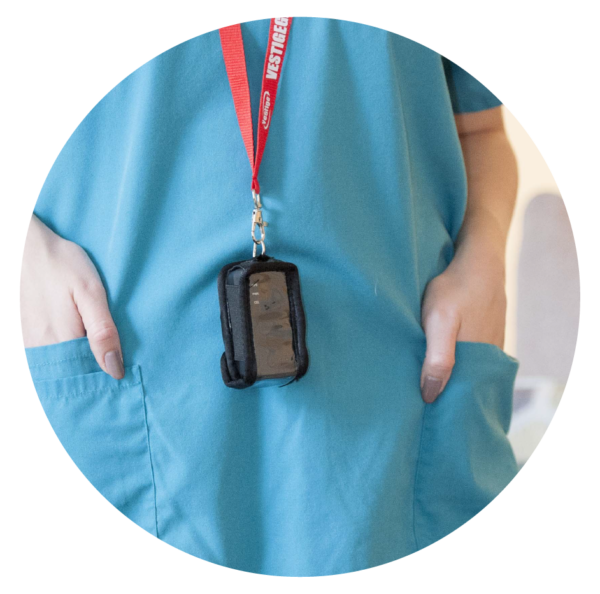
Let us help you protect your people!
Discreet Wearable Design:
Compact, lightweight button that's easy to carry or wear—ideal for lone workers, educators, and healthcare staff.
Silent Emergency Alerts:
Send instant, silent distress signals with precise GPS location—no need to reach for a phone.
Real-Time GPS Tracking:
Live tracking for fast response and full visibility of employees in the field or in remote settings.
Seamless Platform Integration:
Automatically logs location, clock-in/out times, and emergency activity—all in one easy-to-use dashboard.
Regulatory Compliance:
Helps meet safety mandates like OSHA and Alyssa’s Law while reducing liability risks.
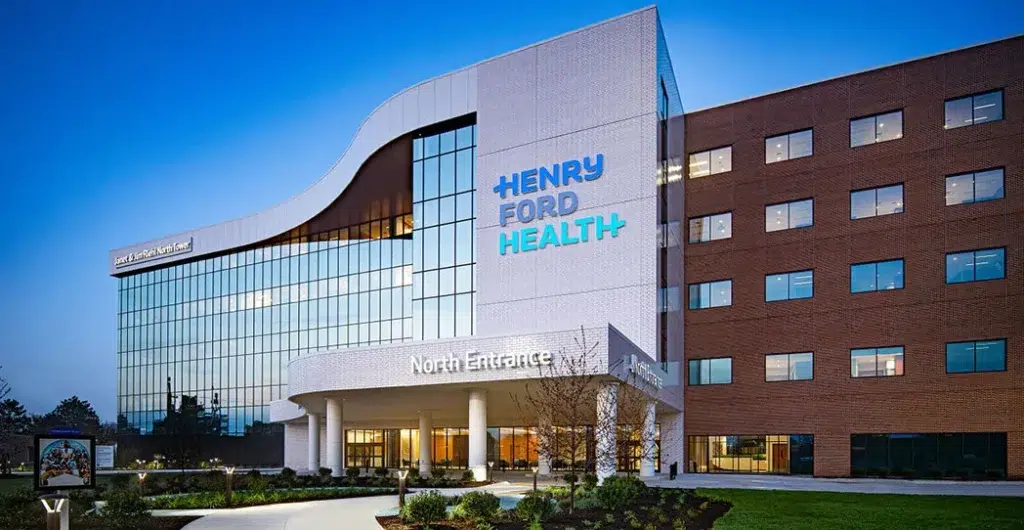
Henry Ford Health Chooses Vestige's Persa To Protect Remote Workers In Michigan
Simplicity, reliability and alert customization drive decision to deploy and retain Vestige PERSA safety solution
Healthcare workers are dealing with a level of workplace violence that most industries never come close to experiencing. According to the U.S. Bureau of Labor Statistics, those in healthcare and social assistance face the highest rates of nonfatal workplace violence injuries in the private sector, often serious enough to require time away from work. For nurses, emergency department technicians, home health aides, and crisis responders, the risk is part of the job. Situations can escalate quickly and without warning, especially in isolated settings where calling for help is not always easy or safe.
That is why wireless panic buttons for healthcare have become such an important part of healthcare safety. These devices give workers a fast, discreet way to call for help when they need it most, helping reduce response times and improve overall security.
Why Wireless Panic Buttons for Healthcare Workers Are Necessary
Workplace violence in healthcare is not a new problem, but its scale is often underestimated. The Occupational Safety and Health Administration (OSHA) reports that healthcare workers are nearly five times more likely to experience workplace violence than workers in other private-sector industries. This includes physical assaults, verbal threats, harassment, and confrontations from patients, visitors, and, in some cases, other staff members.
The risk is especially high in specific care settings:
- Emergency departments, where patients may be under the influence of substances or in psychiatric distress
- Psychiatric and behavioral health units, where patient behavior is often unpredictable
- Home health and mobile care, where clinicians work alone in unfamiliar environments with no colleagues nearby
- Crisis response programs, where unarmed responders assist in volatile situations in the field
The National Institute for Occupational Safety and Health (NIOSH) identifies healthcare and social services as the sectors with the greatest exposure to occupational violence. These are not abstract risks. They are daily realities for nurses, medical technicians, and behavioral health teams who report to work with no reliable way to summon help in an emergency. This is where wireless panic buttons for healthcare play a critical role, giving staff a fast, discreet way to call for help when situations escalate.
The consequences of inadequate protection extend beyond physical injury. Staff burnout, high turnover, and declining morale follow organizations that fail to address this risk. A nurse who feels unsafe at work is less likely to stay. Losing experienced clinical staff is both costly and operationally damaging.
What Is a Healthcare Panic Button?
A healthcare panic button is a compact, wearable device that allows a staff member to silently trigger an emergency alert with a single press. Unlike a mobile phone, which requires unlocking, dialing, and speaking, a panic button transmits an instant alert without drawing attention or escalating a volatile situation.
Modern systems are built around several core capabilities:
- Silent activation that sends an alert in seconds without audible signals
- Real-time GPS location sharing that pinpoints the staff member’s exact position
- Customizable escalation protocols that notify supervisors, security, or 911 dispatch in a preset sequence
- Reliable performance in low-signal environments, including basements, parking structures, and rural home-visit locations
- Wearable form factors, including lanyards, belt clips, and badge attachments that integrate into a normal uniform
These features matter because an emergency in healthcare rarely unfolds with time to spare. A clinician confronted by an aggressive patient in a private room needs help in seconds, not minutes. For nurses working alone in patient homes or remote units, a nurse panic button is often the only reliable line of communication in a crisis.
Henry Ford Health trusts PERSA for mobile clinicians
The Michigan Health System turns to Vestige and its 24-hour call center to provide simple and affordable panic button technology to protect staff working in challenging environments.
TRUSTED BY INDUSTRY LEADERS




How Healthcare Duress Alerting Systems Work
Healthcare duress alerting describes the broader infrastructure around panic button technology. A complete duress system includes the wearable device worn by the staff member, a monitoring platform that receives and routes alerts, and a response protocol that dispatches the right people with the right information.
Here is how a typical alert sequence works:
- A nurse or clinician presses the panic button, either a single press or a specific sequence, depending on the system’s configuration
- The device transmits an encrypted signal to the cloud-based monitoring platform within seconds
- The platform identifies the staff member’s identity, current GPS location, and the time of activation
- Preset alert recipients, which may include a security supervisor, dispatch center, on-call administrator, or 911, receive an immediate notification via text, email, or app
- Responders use the GPS data to locate the staff member and dispatch assistance
The best systems support customizable alert tiers, so a staff member can send a lower-priority check-in in addition to a full emergency signal. They also require monthly drills and testing protocols so that system reliability is confirmed regularly, not just assumed.
One feature that separates professional-grade systems from consumer alternatives is performance in difficult environments. Home health clinicians visiting patients in rural counties, crisis responders working in remote locations, and hospital workers in basement-level care areas all need a system that transmits reliably when conditions are difficult, not just when cellular coverage is strong.
Key Benefits of Personal Alarms for Healthcare Workers
Healthcare organizations that deploy personal alarms for healthcare workers report measurable results across three categories: staff safety, organizational liability, and workforce retention. Many are now turning to wireless panic buttons for healthcare as a more advanced and responsive solution to meet these needs.
Faster Emergency Response Times
The most direct benefit is speed. When a staff member activates a panic button, responders receive an immediate location-stamped alert rather than waiting for a bystander to notice a problem and find a phone. Research from the IAHSS Foundation found that 95.7% of healthcare facilities using personal safety devices reported the technology was worth the cost. In the same study, safety devices were used to settle workplace disputes in 78.3% of incidents and served as court evidence in 28.6% of cases.
Speed matters in life-safety situations. The difference between a 28-second average response time and a 5-minute response time can determine whether a confrontation resolves safely or results in serious injury.
De-escalation Before Incidents Occur
There is a psychological benefit to wearing a panic button that is often overlooked. According to Reveal Media, visible safety technology, including wearable devices and body cameras, often de-escalates tense situations simply by signaling to a patient or visitor that the interaction is monitored and that help can be summoned immediately. Staff members who know backup is a button press away report feeling more confident in difficult situations, which itself reduces the likelihood of escalation.
Reduced Liability and Documentation Support
When incidents do occur, a panic button system creates a timestamped, GPS-tagged record of the event. This documentation supports internal investigations, workers’ compensation claims, and legal proceedings. Organizations that can demonstrate a clear emergency response protocol, including the use of duress technology, are better positioned during regulatory audits and in litigation.
Workforce Retention and Morale
Nurses who feel protected are more likely to remain in their roles. The IAHSS Foundation study found that healthcare facilities using safety technology reported improved staff morale and reduced burnout-related attrition. Addressing healthcare worker duress proactively through equipment, training, and response systems sends a clear message to clinical staff that their safety is a priority, not an afterthought.
Below are the alert levels you can forward:
Red Alert
An employee can send distress signals to request immediate assistance for a 911 call.
Yellow Alert
Users can report concerning situations to their team through text or email.
Regular check-in (Green code)
The system requires regular check-ins from professionals on duty.
Real-World Proof: How Organizations Are Using These Systems
San Diego County Mobile Crisis Response Team (MCRT)
San Diego’s MCRT deploys more than 130 field staff who respond to behavioral health crises across the county, without body armor, without weapons, and often in areas with limited cell coverage. They adopted the Vestige PERSA wearable panic button to give responders a silent, immediate way to request backup.
PERSA activates in under four seconds and transmits accurate GPS data even in low-signal environments. Monthly surprise drills confirmed the system outperformed other panic button technologies in real-world conditions.
The result: a 28-second average emergency response time and a measurable improvement in staff morale. Program Administrator Bre Lane described it plainly:
“No one should fear for their life doing this work… With PERSA, we are protecting our people.”
San Diego’s MCRT is now a reference model for other municipalities. Lane regularly shares her experience with behavioral health leaders across the country and recommends PERSA as a national standard.
Henry Ford Health — Mobile Integrated Health Team
Henry Ford Health’s Mobile Integrated Health (MIH) team sends 13 clinicians daily into the homes of recently discharged patients across Detroit and surrounding counties. Many of these visits occur in neighborhoods where safety is uncertain. Standard mobile phones were insufficient. Too slow, too obvious, and unreliable in emergencies.
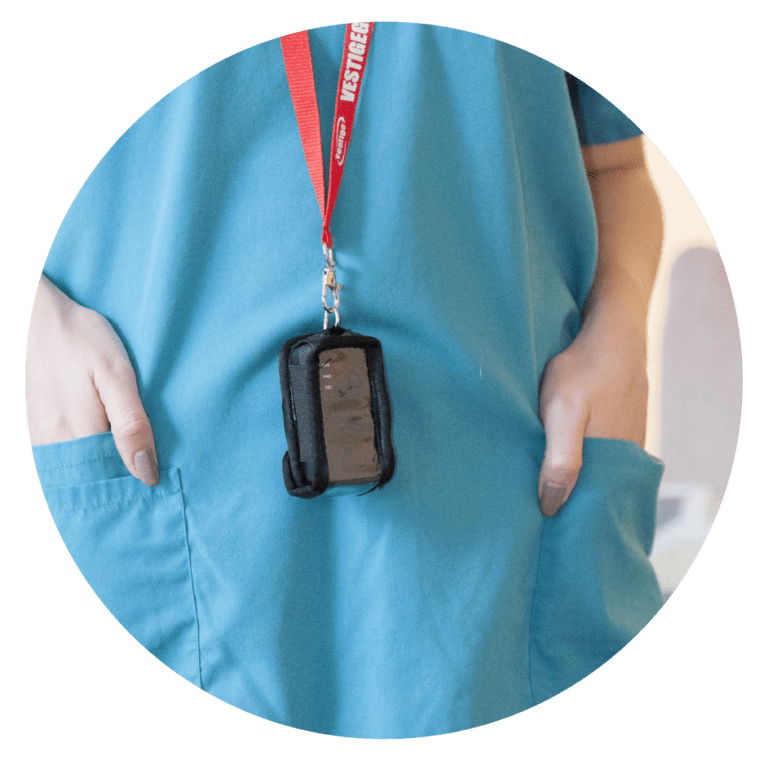
The team deployed the Vestige PERSA system, worn on a lanyard by every clinician. The system is now a required part of every MIH clinician’s gear, tested regularly through escalation drills. Leonard Adams, head of the MIH team, described it as “Our last line of defense for our staff in the field.”
Both deployments demonstrate what a purpose-built healthcare safety system can accomplish when properly matched to the environment and the team’s operational protocols.
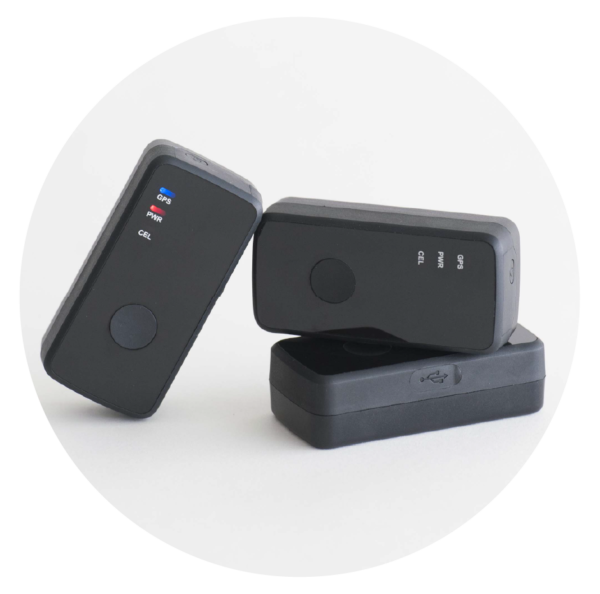
Employees are never alone with PERSA
Designed to be accessible any time you need it, PERSA is a wearable safety device and tracker complete with our software platform to ensure all remote or lone workers are safe 24/7.
- Employee clock-in and clock-out times
- Any off-site location their mobile employees may visit
- Mobile employees are on the best route to get to their site locations
What to Look for in a Healthcare Panic Button System
Not all panic button systems perform equally in clinical environments. Safety coordinators and hospital administrators evaluating wireless panic buttons for healthcare should ask these questions:
- Does it work in low-signal areas? Basements, parking garages, and rural home visit locations require a system that does not rely solely on strong cellular connectivity.
- How fast does it activate? A system that takes 10 seconds to trigger is dangerous in an acute confrontation. Look for systems that activate in four seconds or fewer.
- Can alert sequences be customized? Different facilities have different response hierarchies. The system should support configurable escalation protocols like notifying a supervisor first, then security, then 911 if the prior contacts do not respond.
- What is the battery life and device maintenance plan? Devices that fail silently provide no protection. Regular testing protocols must be part of the implementation plan from day one.
- How is GPS data transmitted and shared? First responders need to reach the correct location. The system should provide a precise, shareable GPS coordinate, not just a general building location.
- Is the vendor experienced with healthcare environments? Healthcare organizations have unique protocols, compliance requirements, and operational constraints. Work with a vendor that has proven deployments in similar settings.
OSHA Compliance and Workplace Violence Prevention
OSHA does not currently have a healthcare-specific workplace violence standard, but the agency has issued detailed Guidelines for Preventing Workplace Violence for Healthcare and Social Service Workers that establish a clear expectation: employers must take reasonable steps to protect workers from recognized hazards, including violence.
Under OSHA’s General Duty Clause, failing to implement protective measures in high-risk healthcare environments can result in citations and penalties following an incident. Healthcare organizations that incorporate wireless panic buttons for healthcare into their safety programs, along with documented workplace violence protocols, emergency alert procedures, staff training, and duress alerting systems, are better positioned to demonstrate due diligence and meet OSHA expectations.
The Joint Commission also issues Sentinel Event Alerts on workplace violence in healthcare, providing accredited organizations with recommended strategies that include physical safety measures and staff support systems. Deploying a healthcare panic alarm is not only a safety investment, but it is also a compliance action that supports accreditation, reduces regulatory risk, and demonstrates organizational commitment to the workforce.
Healthcare risk managers should document all panic button activations, response times, and drill results. This record-keeping supports compliance reviews and demonstrates that the organization maintains an active, tested violence prevention program, not just one that exists on paper.
Protect Your Team with Vestige
Healthcare organizations cannot prevent every confrontation. But they can ensure that every nurse, clinician, and field responder has an immediate, reliable way to call for help the moment they need it.
Vestige’s PERSA wearable panic button delivers silent activation, real-time GPS tracking, and customizable alert sequences built for high-risk healthcare and field environments. Trusted by organizations including Henry Ford Health and San Diego County’s MCRT, Vestige provides the emergency response infrastructure your team deserves.
Request a demo today to see how Vestige protects healthcare workers in the moments that matter most.
Start Protecting Your Remote Employees Today
Are you ready to meet the security demands of modern organizations? An ESD is a cost-effective way to achieve your goals.
Many people think it’s a complicated process, but it doesn’t have to be. With Vestige on your side, you can provide guards, bouncers, and event staff with a compact, water-resistant, advanced safety device that they can comfortably wear 24/7.
There’s no other device quite like it on the market. It’s the ideal step to achieving your safety goals for personnel in your company. Request a demo now.
Frequently Asked Questions
These terms are often used interchangeably. A panic button is the physical device a staff member activates. A duress alarm describes the alert that the system triggers in response. Together, they form a healthcare distress alerting system. The combination of hardware, software, and response protocols that deliver help when a staff member needs it.
There is no universal federal mandate requiring panic buttons in all healthcare settings. However, OSHA’s General Duty Clause requires employers to address recognized workplace hazards, including violence. Several states have enacted specific workplace violence prevention requirements for hospitals. California, New York, and Illinois have among the most developed state-level frameworks. Organizations should consult their state’s occupational safety office for jurisdiction-specific requirements.
Deployment timelines vary by organization size and system complexity. A basic system for a small clinic or mobile team can be operational within days. A hospital-wide deployment involving hundreds of staff members, integration with existing security systems, and customized escalation protocols typically takes several weeks to implement properly. Vendor experience with healthcare environments accelerates this process significantly.
Yes, but not all systems perform equally. The best systems — including the Vestige PERSA device — are engineered to transmit GPS location data even in low-signal environments. This is a critical feature for home health teams, crisis responders, and field clinicians working outside well-covered urban areas.
The response should follow a preset protocol established before deployment. Typically, the first-tier recipient acknowledges the alert and contacts the staff member or dispatches responders. If there is no acknowledgment within a set timeframe, the system escalates to the next tier. All activations, including accidental ones, should be logged and reviewed. Regular drills confirm that the response chain functions as intended.
Consumer-grade personal alarms are designed for general public use and typically lack GPS tracking, customizable escalation protocols, and low-signal reliability. Professional healthcare duress systems are purpose-built for clinical and field environments, offering precise location data, silent activation, and integration with institutional response protocols that consumer devices cannot replicate.