
Safety Solutions for Healthcare Workers: Protecting Those Who Care for Us
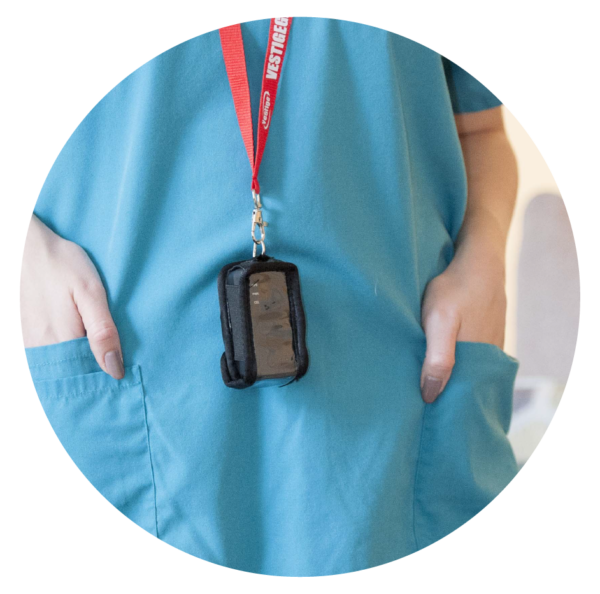
Let us help you protect your people!
Discreet Wearable Design:
Compact, lightweight button that's easy to carry or wear—ideal for lone workers, educators, and healthcare staff.
Silent Emergency Alerts:
Send instant, silent distress signals with precise GPS location—no need to reach for a phone.
Real-Time GPS Tracking:
Live tracking for fast response and full visibility of employees in the field or in remote settings.
Seamless Platform Integration:
Automatically logs location, clock-in/out times, and emergency activity—all in one easy-to-use dashboard.
Regulatory Compliance:
Helps meet safety mandates like OSHA and Alyssa’s Law while reducing liability risks.
Henry Ford Health Chooses Vestige's Persa To Protect Remote Workers In Michigan
Simplicity, reliability and alert customization drive decision to deploy and retain Vestige PERSA safety solution
Healthcare workers face some of the most challenging and dangerous conditions in the American workforce. According to the U.S. Bureau of Labor Statistics, healthcare workers experience workplace violence at rates four times higher than other industries, with thousands of assaults reported each year in hospitals, clinics, and home healthcare settings. These frontline professionals deserve strong protection as they dedicate themselves to caring for others. That’s why safety solutions for healthcare workers have become a critical focus across hospitals and care organizations nationwide.
Today’s healthcare environment demands effective safety solutions that address both immediate threats and long-term risk management. From emergency room nurses to home health aides, medical professionals encounter unpredictable situations every day. Advanced technology now provides powerful tools to protect these essential workers while preserving the dignity and quality of care patients deserve.
Understanding the Healthcare Worker Safety Crisis
The statistics paint a sobering picture of workplace violence in healthcare settings. Medical professionals often work in high-stress environments where patients can become confused, agitated, or violent due to medical conditions, substance abuse, or psychiatric emergencies. Unlike many other industries, healthcare workers cannot simply walk away from dangerous situations because they are ethically obligated.
Workplace violence in healthcare takes many forms, including physical assault, verbal abuse, harassment, and threats. Emergency departments, psychiatric units, and geriatric care facilities experience the highest rates of incidents. Home healthcare workers face unique risks when visiting patients alone in isolated settings without immediate backup or security support.
Research from the International Association for Healthcare Security and Safety Foundation found that body cameras helped resolve workplace disputes in hospitals 78.3% of the time and served as court evidence in 28.6% of cases. Perhaps most notably, 95.7% of facilities using body cameras reported the technology was worth the investment. This highlights how safety technology for healthcare workers can provide measurable protection and operational benefits.
Investing in safety solutions for healthcare workers not only protects staff but also reduces financial losses associated with workers’ compensation claims, productivity drops, and legal liability.
OSHA guidelines specifically address healthcare workplace violence in healthcare, requiring employers to establish prevention programs, conduct hazard assessments, implement safety measures, and provide in-depth training. Organizations that fail to meet these standards face citations, penalties, and increased liability exposure.
Modern Technology Solutions for Healthcare Worker Protection
Today’s healthcare safety solutions leverage advanced technology to deliver multiple layers of protection. These systems combine real-time monitoring, rapid emergency response, and documented evidence to create safer working environments for medical professionals. Such efforts form the foundation of effective healthcare safety programs.
Wearable Panic Button Systems
Personal Emergency Response Safety (PERSA) devices serve as a frontline defense for healthcare workers. These discreet wearable panic buttons allow staff members to instantly summon help during emergencies without reaching for a phone or leaving a dangerous situation.
Modern panic button technology has evolved well beyond simple alert systems. Today’s devices incorporate GPS tracking, two-way communication, and integration with facility security systems. When a healthcare worker activates their panic button, security personnel immediately receive the worker’s exact location, can listen to the situation in real time, and can coordinate an appropriate response.
These devices work effectively in various healthcare settings. In hospitals, panic buttons integrate with the facility’s security infrastructure, alerting on-site teams who can respond within seconds. For home healthcare workers operating in the field, GPS-enabled panic buttons connect to monitoring centers that can dispatch local emergency services while maintaining communication with the endangered worker.
The psychological benefit cannot be overstated. Healthcare workers who carry panic buttons report feeling more confident and secure, knowing immediate help is always available. This confidence translates into better patient care, as staff members can focus on their medical responsibilities rather than constantly worrying about their personal safety.
Implementing safety solutions for healthcare workers requires thoughtful planning regarding device selection, training, and response procedures. Organizations must establish clear escalation protocols defining when and how to activate panic buttons, who responds to alerts, and how to document incidents for future analysis and continuous improvement.
Body-Worn Camera Technology
Wearable security cameras provide an additional layer of protection through detailed documentation of workplace interactions. These compact devices clip onto uniforms or lanyards, recording high-definition video and audio of everything occurring during a healthcare worker’s shift.
The mere presence of visible body cameras often prevents violent incidents from occurring. Research consistently demonstrates that individuals behave differently when they know interactions are being recorded. This effect of de-escalation is especially useful in psychiatric units, emergency rooms, and other high-risk areas where tensions can rise quickly.
Video evidence provides full transparency to dispel or verify any claims. Body camera footage provides an objective record of what happened during an incident, which protects innocent healthcare workers from false accusations and holds aggressors accountable for their actions. This documentation proves invaluable during investigations, legal proceedings, and insurance claims.
Healthcare organizations using body cameras report multiple benefits beyond violence prevention. The footage serves as excellent training material, allowing supervisors to review interactions and provide coaching on de-escalation techniques, communication strategies, and proper protocols. New employees benefit from watching recorded examples of both exemplary performance and situations requiring improvement.
Privacy concerns require careful consideration when implementing body camera programs. Organizations must establish clear policies regarding when cameras should record, how footage is stored and accessed, retention periods, and compliance with HIPAA regulations protecting patient information. Transparent policies that balance safety needs with privacy rights earn buy-in from both staff and patients.
Integrated Safety Management Platforms
Comprehensive safety solutions integrate multiple technologies into unified platforms that provide complete situational awareness. These systems combine panic buttons, body cameras, GPS tracking, and facility sensors to create real-time safety dashboards that security personnel can monitor continuously. This type of safety technology for healthcare workers ensures constant monitoring and rapid response capabilities.
Real-time safety alerts enable immediate intervention before situations escalate into serious incidents. When sensors detect raised voices, rapid movement, or other indicators of potential violence, security teams can proactively check on staff members and deploy resources before emergencies fully develop.
Safety solutions for healthcare workers increasingly use artificial intelligence to identify patterns and predict high-risk situations. By analyzing historical incident data, these systems can flag specific times, locations, or circumstances associated with elevated danger, allowing organizations to adjust staffing levels, increase security presence, or implement additional precautions during high-risk periods.
Integration with existing hospital infrastructure maximizes effectiveness. Safety platforms connect with electronic health records to identify patients with histories of violence, coordinate with access control systems to restrict unauthorized individuals, and interface with surveillance cameras to provide security personnel with full visual coverage of incidents in progress.
Henry Ford Health trusts PERSA for mobile clinicians
The Michigan Health System turns to Vestige and its 24-hour call center to provide simple and affordable panic button technology to protect staff working in challenging environments.
TRUSTED BY INDUSTRY LEADERS




Compliance Requirements and Legal Considerations
Healthcare organizations operate under strict regulatory frameworks governing workplace safety. Understanding these requirements is essential for implementing compliant safety programs that protect both workers and institutions from legal liability.
OSHA Standards for Healthcare
The Occupational Safety and Health Administration establishes specific standards for preventing violence in healthcare workplaces. OSHA’s guidelines for healthcare and social service workers mandate that employers provide a safe working environment free from recognized hazards likely to cause death or serious physical harm.
Comprehensive safety programs must include management commitment and employee participation, worksite hazard analysis, hazard prevention and control measures, safety training and education, and recordkeeping and program evaluation. Organizations demonstrating good-faith efforts to comply with these guidelines significantly reduce their liability exposure in the event of workplace violence incidents.
OSHA requires healthcare employers to report serious workplace injuries, including those resulting from workplace violence, within specific timeframes. Failure to report incidents can result in citations and penalties separate from violations related to inadequate safety measures. Proper documentation systems ensure organizations meet these reporting requirements while creating valuable data for identifying trends and improving safety protocols.
Regular risk assessments identify specific hazards present in different departments and locations. Emergency departments require different safety measures than outpatient clinics or administrative offices. Tailored approaches addressing unit-specific risks prove more effective than one-size-fits-all programs.
State-Specific Regulations
Many states have passed laws that go beyond federal OSHA requirements to deal with violence in healthcare workplaces. These laws may mandate specific safety measures, require plans to prevent workplace violence, establish enhanced penalties for assaulting healthcare workers, or provide additional reporting requirements.
California’s law for preventing workplace violence in healthcare, considered among the strongest, requires healthcare employers to establish detailed prevention plans, provide training, maintain violent incident logs, and conduct annual evaluations. Other states have followed California’s lead with similar legislation reflecting growing recognition of this serious occupational hazard.
Healthcare organizations operating in multiple states must ensure compliance with varying state requirements, creating complexity for large health systems. Implementing best practices that exceed minimum requirements in all states provides consistent protection while simplifying compliance management across different jurisdictions.
Below are the alert levels you can forward:
Red Alert
An employee can send distress signals to request immediate assistance for a 911 call.
Yellow Alert
Users can report concerning situations to their team through text or email.
Regular check-in (Green code)
The system requires regular check-ins from professionals on duty.
Implementation Strategies for Healthcare Safety Programs
Successfully implementing comprehensive safety solutions requires strategic planning, stakeholder engagement, and commitment to continuous improvement. Organizations that approach safety initiatives systematically achieve better outcomes than those implementing technologies without proper planning and support. These efforts are central to effective safety solutions for healthcare workers.
Assessment and Planning Phase
Begin with a thorough assessment of current safety conditions, incident history, and specific risks facing different departments and worker categories. Analyze past incidents to identify patterns regarding timing, locations, patient populations, and circumstances surrounding violence. This data-driven approach ensures resources focus on areas of greatest need.
Engage stakeholders throughout the organization during the planning phase. Healthcare workers on the front lines possess invaluable insights regarding specific safety concerns, practical challenges, and potential solutions. Security personnel, risk management professionals, legal advisors, and IT staff all contribute essential perspectives to planning.
Establish clear objectives defining what the organization aims to achieve through safety investments. Measurable goals such as reducing workplace violence incidents by specific percentages, decreasing workers’ compensation claims, or improving staff retention provide concrete targets for evaluating program success.
Budget considerations encompass not only initial technology acquisition costs but also ongoing expenses for monitoring services, maintenance, training, and program administration. Building strong business cases demonstrating return on investment through reduced injuries, lower insurance premiums, and improved retention helps secure necessary funding.
Technology Selection and Deployment
Choose technologies appropriate for specific needs and environments. Lone worker safety solutions for home healthcare workers differ from systems optimal for hospital emergency departments. Consider factors including device durability, battery life, ease of use, integration capabilities, and vendor support when evaluating options.
Pilot programs allow organizations to test technologies on a smaller scale before full deployment. Select representative departments or units for initial implementation, gather feedback from users, identify technical issues, and refine procedures before expanding to the entire organization. This phased approach minimizes disruption while allowing course corrections based on real-world experience.
Technical infrastructure must support new safety technologies. Ensure adequate wireless coverage throughout facilities, particularly in areas like stairwells, basements, and parking structures where workers may need assistance. Redundant communication paths prevent single points of failure from compromising safety systems.
Training and Change Management
Effective training ensures all staff members understand how to use safety technologies effectively and have proper protocols for emergencies. Training should cover device operation, when to activate panic buttons, how to position body cameras, and expected responses when alerts are triggered.
Address concerns and resistance proactively through transparent communication about program goals, privacy protections, and benefits for workers. Some healthcare professionals initially resist body cameras due to concerns about being monitored or micromanaged. Emphasizing that these tools protect workers rather than police them helps overcome objections.
Ongoing education maintains proficiency and incorporates lessons learned from actual incidents. Regular drills simulate various emergency scenarios, allowing staff to practice appropriate responses in controlled environments. Post-incident debriefings analyze what worked well and identify opportunities for improvement.
Worker safety solutions in hospitals succeed when leadership visibly prioritizes safety and staff members recognize the organization’s genuine commitment to their well-being. This top-down support drives cultural change that makes safety everyone’s responsibility.
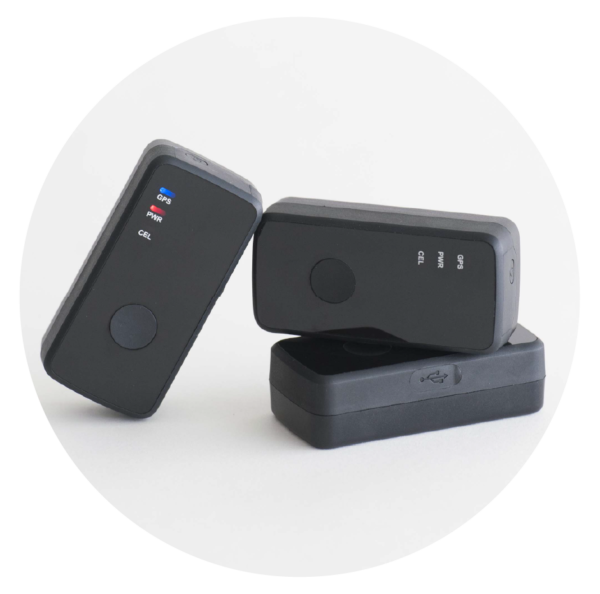
Employees are never alone with PERSA
Designed to be accessible any time you need it, PERSA is a wearable safety device and tracker complete with our software platform to ensure all remote or lone workers are safe 24/7.
- Employee clock-in and clock-out times
- Any off-site location their mobile employees may visit
- Mobile employees are on the best route to get to their site locations
Real-World Success Stories and ROI
Healthcare organizations implementing comprehensive safety solutions report significant measurable benefits justifying their investments. These success stories demonstrate the practical impact of modern safety technologies.
Industry studies show body cameras helped settle disputes in hospitals 78% of the time, providing clear evidence that resolved conflicts quickly without prolonged investigations or costly litigation. This dispute resolution capability alone generates substantial returns by avoiding legal fees, settlements, and damage awards.
One hospital system reported an 80% reduction in workplace violence incidents within the first year of implementing integrated panic buttons and body camera systems. This dramatic improvement resulted from both the deterrent effect of visible cameras and rapid response capabilities when incidents did occur.
Safety solutions for healthcare workers contribute to higher job satisfaction and reduced stress, as staff members feel more secure and supported in their roles. Organizations implementing safety programs experience lower turnover rates, saving substantial recruitment and training costs. Considering that replacing a single registered nurse can cost $50,000 or more, even modest retention improvements generate significant financial returns.
Insurance companies increasingly recognize the value of proactive safety measures. Healthcare organizations with violence prevention programs may qualify for reduced workers’ compensation premiums, with some insurers offering discounts of 5-15% for facilities demonstrating strong safety commitments through technology investments and robust policies.
Take Action to Protect Your Healthcare Team
Healthcare workers dedicate their careers to caring for others in their most vulnerable moments. These compassionate professionals deserve effective protection as they perform their lifesaving work. Modern safety technology provides powerful tools to create safer environments, but technology alone is insufficient without organizational commitment and proper implementation.
Vestige offers comprehensive healthcare safety solutions designed specifically for medical environments. Our personal safety wearable panic buttons provide instant emergency response capabilities, while our body-worn camera systems deliver both deterrence and documentation. We understand the unique challenges healthcare organizations face and provide integrated platforms that address your specific safety needs.
Do not wait for a serious incident to prompt action. Proactive safety measures protect your most valuable assets—your dedicated staff members who provide exceptional patient care. Contact Vestige today to schedule a safety assessment and discover how our proven solutions can enhance protection for your healthcare team. Your workers deserve to return home safely at the end of every shift, and we are committed to making that happen.
Start Protecting Your Remote Employees Today
Are you ready to meet the security demands of modern organizations? An ESD is a cost-effective way to achieve your goals.
Many people think it’s a complicated process, but it doesn’t have to be. With Vestige on your side, you can provide guards, bouncers, and event staff with a compact, water-resistant, advanced safety device that they can comfortably wear 24/7.
There’s no other device quite like it on the market. It’s the ideal step to achieving your safety goals for personnel in your company. Request a demo now.
Frequently Asked Questions
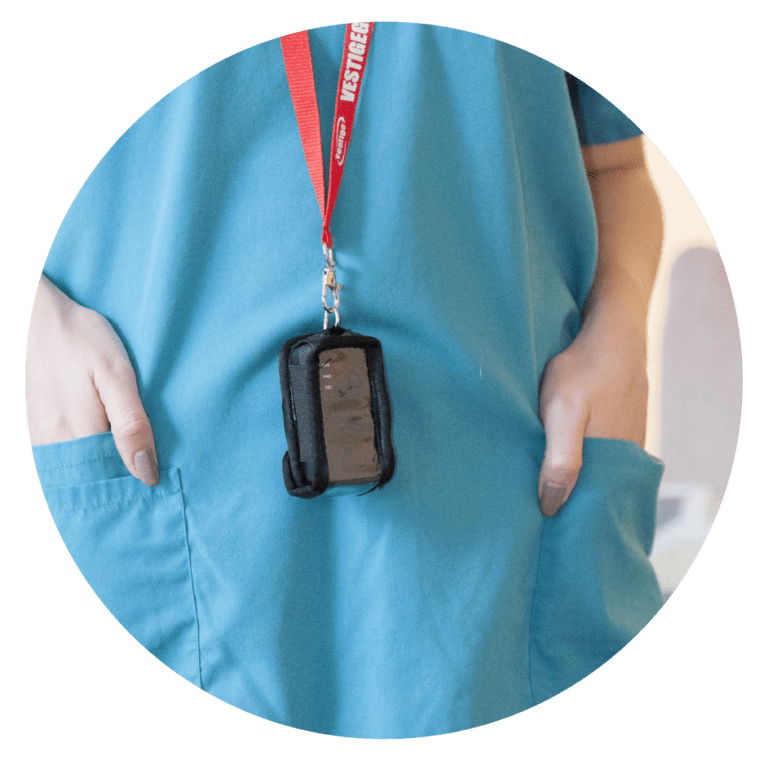
Modern panic buttons are small wearable devices that healthcare workers carry on lanyards, clips, or badges. When activated, they immediately alert security personnel or monitoring centers of an emergency while transmitting the worker’s precise location through GPS or facility-based positioning systems. Response teams can listen to the situation through the device’s microphone and coordinate appropriate intervention.
Body cameras are legal in healthcare settings when used in compliance with applicable privacy laws, including HIPAA. Organizations must establish clear policies regarding recording, storage, access, and retention of footage that balance worker safety with patient privacy rights. Posting notices informing patients that recording may occur for safety purposes provides transparency while maintaining legal compliance.
Effective training covers device operation, appropriate situations for activation, response protocols, and post-incident procedures. Initial training typically requires 1-2 hours, followed by annual refresher sessions and regular drills. Training should be hands-on, allowing workers to practice using devices in simulated emergency scenarios until the operation becomes second nature.
Response times vary based on the setting and resources. In hospitals with on-site security, help typically arrives within 30-90 seconds. For home healthcare workers in the field, panic buttons alert monitoring centers that can dispatch local emergency services, with response times depending on the worker’s location and local emergency services. Real-time GPS tracking enables responders to locate workers quickly, even in unfamiliar areas.
Safety systems for medical staff document incidents and actively prevent workplace violence. The visible presence of body cameras and knowledge that panic buttons enable rapid response significantly deters many potential aggressors from acting violently. When incidents do occur, immediate intervention through panic button alerts often prevents escalation to serious injuries. Documentation capabilities ensure accountability and provide evidence for investigations and legal proceedings.
Return on investment includes both direct cost savings and indirect benefits. Direct savings come from reduced workers’ compensation claims, lower insurance premiums, decreased legal expenses, and avoided damages from litigation. Indirect benefits include improved worker retention, enhanced recruitment, better patient satisfaction scores, and protection of organizational reputation. Most healthcare organizations that implement comprehensive safety programs report positive ROI within 12–24 months.
Privacy protection requires clear policies, technical safeguards, and staff training. Policies should specify when recording occurs, who can access footage, retention periods, and safeguards for protected health information. Technical measures include encryption, access controls, and automatic redaction of sensitive information. Training ensures staff members understand privacy requirements and operate devices in compliance with HIPAA and state privacy laws.