
Wearable Panic Button Cost Analysis: Real ROI for Employee Safety Programs

Let us help you protect your people!
Discreet Wearable Design:
Compact, lightweight button that's easy to carry or wear—ideal for lone workers, educators, and healthcare staff.
Silent Emergency Alerts:
Send instant, silent distress signals with precise GPS location—no need to reach for a phone.
Real-Time GPS Tracking:
Live tracking for fast response and full visibility of employees in the field or in remote settings.
Seamless Platform Integration:
Automatically logs location, clock-in/out times, and emergency activity—all in one easy-to-use dashboard.
Regulatory Compliance:
Helps meet safety mandates like OSHA and Alyssa’s Law while reducing liability risks.

Henry Ford Health Chooses Vestige's Persa To Protect Remote Workers In Michigan
Simplicity, reliability and alert customization drive decision to deploy and retain Vestige PERSA safety solution
Workplace violence claimed 740 lives in the United States during 2023, with thousands more workers suffering non-fatal injuries that disrupted operations and devastated families. For organizations weighing employee safety investments, wearable panic buttons have become a critical decision point where upfront costs must be balanced against measurable protection benefits and long-term financial return.
Understanding the true cost of wearable panic button systems means looking beyond the initial purchase price. A structured wearable panic button cost analysis requires evaluating the total cost of ownership, risk mitigation value, and quantifiable safety improvements. This overview breaks down the financial factors that safety coordinators, fleet managers, and business owners should consider as they work to make informed decisions about protecting their team.
The Financial Impact of Workplace Violence Without Protection
Before analyzing panic button costs, organizations should understand the baseline expense of inadequate worker protection as part of any wearable panic button cost analysis. Workplace violence costs an estimated $56 billion annually in the United States, representing a concerning financial burden that extends far beyond immediate medical expenses.
A single significant workplace violence injury can lead to workers’ compensation losses of thousands of dollars, according to the Occupational Safety and Health Administration (OSHA) analysis. These direct costs multiply when accounting for overtime coverage, temporary staffing requirements, recruitment expenses, and training investments for replacement workers. Even incidents that don’t result in lost work time generate hidden costs through increased turnover, reduced productivity, and declining employee morale.
The healthcare and social services sectors face particularly severe financial exposure. On-the-job violence cost the health and social services sector nearly half a billion dollars in 2022 alone, demonstrating how concentrated risk in certain industries drives disproportionate financial losses. Healthcare workers suffer 8.3 nonfatal assaults per 10,000 workers compared to just 2.0 per 10,000 employees in other private-sector jobs.
Organizations in high-risk industries face additional regulatory compliance costs as authorities respond to escalating workplace violence trends. OSHA estimates the total cost of workplace violence prevention programs at $1.22 billion per year across affected sectors, translating to approximately $4,047 per establishment. These compliance investments become mandatory expenses rather than optional safety enhancements as healthcare safety solutions requirements continue expanding nationwide.
Understanding Wearable Panic Button Cost Components
Evaluating the costs of panic button systems requires examining multiple financial elements that contribute to total investment over time. Organizations that focus solely on device purchase prices miss critical factors that determine actual deployment expenses and long-term value.
Initial Equipment Investment
Hardware costs for wearable panic buttons vary significantly based on technology features, durability specifications, and integration capabilities. Basic systems typically start in the lower price range, while advanced devices offering GPS tracking, fall detection, two-way communication, and cellular connectivity command higher initial investments.
Enterprise-grade wearable devices designed for demanding environments feature rugged construction, extended battery life, and reliable performance across challenging conditions. These specifications add to upfront costs but reduce long-term replacement expenses and ensure consistent protection for workers in harsh field conditions.
Organizations deploying systems across large workforces benefit from volume pricing that substantially reduces per-unit costs. Bulk purchases of 100 or more devices often receive significant discounts compared to smaller deployments, improving overall program economics.
Ongoing Operational Expenses
Monthly service fees represent the largest recurring cost component for most panic button systems. These subscriptions typically cover cellular connectivity, monitoring services, GPS tracking capabilities, cloud storage, and platform access. Service tier options range from basic alert notification to 24/7 professional monitoring with emergency dispatch coordination.
Organizations must evaluate whether internal monitoring through existing security or operations teams provides sufficient response capability, or whether professional monitoring services justify their additional expense through faster emergency response and specialized crisis management expertise.
Device maintenance, battery replacement, and periodic hardware upgrades create additional ongoing expenses that vary based on technology choices. Systems requiring proprietary batteries or specialized service providers generate higher long-term costs than devices using standard components and user-serviceable designs.
Implementation and Training Costs
Successful panic button deployments require comprehensive training programs that ensure all workers understand system operation, appropriate activation scenarios, and proper response protocols. Initial training sessions typically require 30-60 minutes per employee, representing a significant labor investment for large workforces.
Administrative setup costs include system configuration, user account creation, response protocol development, and integration with existing security infrastructure. Organizations with complex hierarchies or multiple facility locations face higher implementation expenses as coordinators customize alert routing and response procedures for different scenarios.
Technology integration expenses arise when panic button systems connect with access control platforms, video surveillance networks, building automation systems, or fleet management software. These integrations enhance emergency response effectiveness but add implementation complexity and technical support requirements.
Henry Ford Health trusts PERSA for mobile clinicians
The Michigan Health System turns to Vestige and its 24-hour call center to provide simple and affordable panic button technology to protect staff working in challenging environments.
TRUSTED BY INDUSTRY LEADERS




Calculating Return on Investment for Panic Button Systems
Quantifying panic button ROI requires analyzing both tangible cost reductions and intangible organizational benefits that contribute to overall value creation, which forms the foundation of an effective wearable panic button cost analysis.
Direct Cost Savings
Workers’ compensation claims represent the most measurable cost savings from effective panic button deployment. Organizations implementing lone worker safety technology report significant reductions in injury severity and medical expenses through faster emergency response that prevents minor incidents from escalating into major injuries.
Lowering insurance premiums is another way to save money. Commercial carriers increasingly require or strongly incentivize panic button adoption for high-risk workers, offering premium discounts ranging from 5-15% for organizations demonstrating safety programs. These recurring savings compound annually, often recouping initial system costs within 18–24 months.
Legal liability mitigation delivers substantial value despite measurement challenges. Organizations facing workplace violence litigation incur defense costs, settlement expenses, and reputational damage that dwarf direct injury costs. Panic button systems demonstrate employer commitment to worker safety, strengthening legal defenses and often reducing settlement amounts in negligent security claims.
Operational Efficiency Gains
Reducing emergency response time represents a critical operational improvement that prevents incident escalation. Traditional communication methods like phone calls require workers to verbally describe emergencies and provide location information during high-stress situations. Panic button systems send exact GPS coordinates and alert notifications in seconds, which speeds up response times and reduces damage and disruption to operations.
Real-world implementations demonstrate impressive response improvements. The San Diego Mobile Crisis Response Team achieved a 28-second average emergency response time using Vestige’s PERSA wearable panic button system, providing crisis workers with rapid backup in volatile situations across challenging service areas.
As panic button systems make it easier for remote workers to be supervised, staffing efficiency improves. Organizations confident in emergency alert capabilities assign workers to isolated tasks that previously required two-person teams, improving productivity without compromising safety standards.
Risk Management Value
Regulatory compliance becomes increasingly straightforward with documented panic button systems that satisfy evolving requirements for preventing workplace violence. California’s SB 553 mandates workplace violence prevention programs for virtually all employers, effective July 2024, creating compliance urgency across the state’s diverse business landscape.
Employee retention improvements provide significant financial value as worker turnover generates substantial replacement costs. Studies indicate recruiting, hiring, and training expenses for a single employee typically equal 50-200% of their annual salary, making retention improvements highly valuable. Workers provided with personal safety wearables report greater job satisfaction and security, reducing voluntary turnover in high-risk positions.
Recruitment advantages emerge as organizations promoting safety programs attract higher-quality applicants concerned about workplace protection. Healthcare facilities, social service agencies, and field service companies implementing panic button systems differentiate themselves in competitive labor markets where qualified candidates prioritize safety considerations.
Industry-Specific Cost-Benefit Analysis
Different industries face unique risk profiles and operational characteristics that influence panic button cost-benefit calculations. Understanding sector-specific factors helps organizations benchmark investment decisions against relevant peer comparisons.
Healthcare and Social Services
Healthcare organizations confront the highest workplace violence rates among major industries, making panic button investments particularly compelling from both safety and financial perspectives. Hospital employees suffer workplace violence at rates four times higher than workers in other industries, creating urgent protection requirements for clinical staff, social workers, and support personnel.
Henry Ford Health’s Mobile Integrated Health team deployed Vestige PERSA panic buttons to protect 13 clinicians providing in-home medical services across Detroit and surrounding counties. The organization recognized that, despite extensive clinical training, healthcare workers operating as lone responders in uncertain neighborhoods required reliable emergency alert capabilities to summon immediate assistance without escalating already tense situations.
Mental health and social service providers face similar risks with workers entering private residences, managing volatile clients, and responding to crises. Panic button systems provide discreet protection that enables workers to request backup without triggering defensive reactions from distressed clients.
Field Service Operations
Field technicians, delivery drivers, utility workers, and home service professionals operate in isolated environments where standard workplace security measures don’t apply. These workers encounter unknown hazards ranging from aggressive customers to dangerous property conditions requiring immediate emergency assistance.
Body-worn cameras complement panic button systems for field workers by documenting interactions that may escalate into disputes or violence. The combination offers immediate emergency alerts and recorded evidence that helps protect workers from false claims and discourages aggressive actions.
HVAC technicians, electricians, plumbers, and similar trade workers benefit from panic button protection during isolated service calls where equipment malfunctions, hazardous materials, or hostile property occupants create emergencies. The relatively low monthly service costs per technician justify implementation across entire field workforces.
Transportation and Logistics
Commercial drivers, particularly those operating alone on routes through high-crime areas or during overnight hours, face elevated violence risks that panic button systems effectively mitigate. Transit operators, taxi drivers, and delivery personnel working without direct supervision benefit from emergency alert capabilities that summon law enforcement or company assistance when threatened by robbery, assault, or other criminal activity.
Organizations operating fleet vehicles with GPS tracking already maintain location monitoring infrastructure that reduces panic button integration costs. Leveraging existing telematics platforms to add emergency alert capabilities minimizes incremental investment while maximizing workforce protection.
Hospitality and Retail
Hotel housekeeping staff working alone in guest rooms represent prime candidates for panic button protection, given documented harassment and assault risks. State and local legislation increasingly mandates panic button provision for hotel workers, transforming these systems from optional safety measures into compliance requirements.
Retail workers face rising violence trends, with assaults in convenience stores rising 75% from 2018 to 2020 FIU News and grocery store assaults increasing 63% during the same period. Late-night shift workers and those handling cash transactions face the highest risk profiles requiring reliable emergency alert capabilities.
Below are the alert levels you can forward:
Red Alert
An employee can send distress signals to request immediate assistance for a 911 call.
Yellow Alert
Users can report concerning situations to their team through text or email.
Regular check-in (Green code)
The system requires regular check-ins from professionals on duty.
Comparing Panic Button Technology Options
Organizations evaluating panic button investments must compare competing technology approaches that offer different feature sets, cost structures, and operational characteristics affecting total value delivered.
Standalone Wearable Devices
Purpose-built wearable panic buttons provide the most reliable emergency alert capabilities through dedicated hardware optimized for safety applications. These devices function independently of smartphones or facility infrastructure, ensuring consistent operation regardless of network conditions or facility environments.
Standalone devices typically offer superior battery life compared to smartphone applications, with many models operating 12-24 months on replaceable batteries. This extended runtime reduces maintenance requirements and ensures protection continuity without frequent charging interruptions.
The higher upfront costs of standalone devices deliver value through greater reliability, longer service life, and purpose-specific features like fall detection, man-down alerts, and water resistance. Organizations prioritizing maximum worker protection typically select standalone devices despite premium pricing.
Smartphone-Based Applications
Panic button applications running on existing employee smartphones minimize hardware costs by leveraging devices workers already carry. This approach appeals to organizations with limited safety budgets or workforces already equipped with company-provided mobile devices.
Application-based solutions face reliability challenges, including battery drain from GPS tracking, connectivity dependencies on cellular networks, and potential unavailability when workers leave phones unattended. These limitations reduce emergency response effectiveness compared to dedicated wearable devices that remain constantly accessible.
Monthly service costs for smartphone panic button applications generally match or exceed dedicated device subscriptions, eliminating the cost advantage that initially attracts organizations to application-based approaches. Organizations must carefully evaluate whether apparent hardware savings justify compromised reliability and functionality.
Hybrid Systems
Hybrid panic button systems combine smartphone applications with small wearable devices that communicate via Bluetooth connectivity. This approach attempts to balance dedicated device reliability with smartphone communication capabilities and application interface advantages.
Hybrid solutions introduce complexity through multiple components requiring coordination, potentially creating additional failure points rather than improving overall reliability. Organizations considering hybrid approaches should carefully evaluate whether added complexity delivers meaningful advantages over simpler dedicated device deployments.
Real-World Cost and ROI Examples
Examining documented case studies provides concrete data points for organizations developing panic button investment analyses and ROI projections.
San Diego Mobile Crisis Response Team
San Diego County’s Mobile Crisis Response Team deployed Vestige PERSA panic buttons across 130+ field staff responding to behavioral health crises in volatile, unpredictable environments. MCRT responders work unarmed, without body armor, in remote areas with limited cellular coverage, where standard mobile phones proved unreliable for emergencies.
The organization needed emergency alert capabilities that worked when nothing else did, functioning in low-signal areas while providing accurate GPS tracking for rapid response. PERSA devices delivered a 28-second average emergency response time during high-stakes situations, dramatically improving worker protection and operational confidence.
Implementation included surprise monthly drills testing system responsiveness across diverse operational scenarios and challenging geographic areas. PERSA consistently outperformed competing technologies, maintaining location transmission even where conventional cell service was unavailable.
The deployment improved team safety, enhanced morale, and reduced burnout risk among responders who previously felt exposed and unsupported. Workers reported feeling “seen and protected,” translating safety investments into improved retention and organizational culture.
Henry Ford Health Mobile Integrated Health
Henry Ford Health’s Mobile Integrated Health program protects 13 clinicians providing in-home medical services across Detroit and surrounding counties. The team recognized that clinical expertise alone couldn’t protect lone workers visiting recently discharged patients in challenging neighborhoods where safety conditions remained uncertain.
Leadership selected Vestige PERSA as their “last line of defense” for field staff, providing silent alert capabilities that summon immediate help without escalating already tense situations. The wearable system activates discreetly and transmits GPS locations to preset emergency contacts and responders within seconds.
While the panic button hasn’t yet needed emergency activation, its presence transformed team safety perceptions and preparedness confidence. Regular drills confirm system speed and accuracy, boosting morale and workers’ security feelings that reduce turnover risk in difficult recruitment positions.
The program supports broader organizational initiatives, lowering healthcare costs and ER burdens by treating patients at home, demonstrating how safety investments enable innovative care delivery models that improve both patient outcomes and system efficiency.
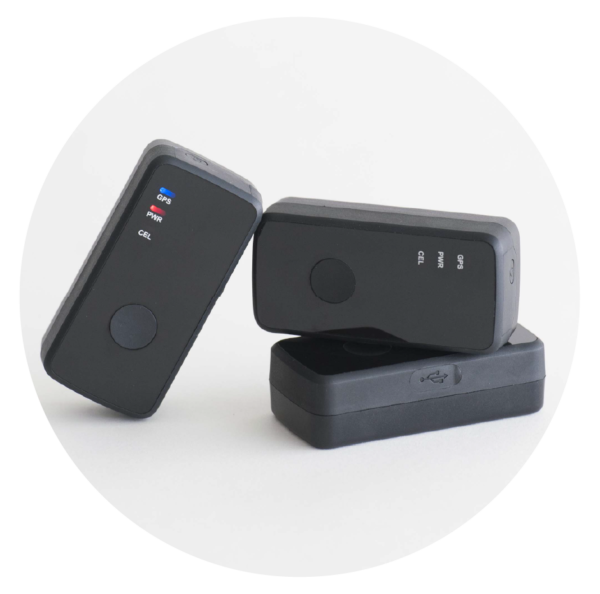
Employees are never alone with PERSA
Designed to be accessible any time you need it, PERSA is a wearable safety device and tracker complete with our software platform to ensure all remote or lone workers are safe 24/7.
- Employee clock-in and clock-out times
- Any off-site location their mobile employees may visit
- Mobile employees are on the best route to get to their site locations
Hidden Costs Organizations Often Overlook
Comprehensive panic button cost analysis must account for expenses beyond obvious hardware and service fees that influence total investment requirements and long-term budget impact.
Change Management and Adoption Resistance
Introducing new safety technology requires overcoming organizational inertia and worker skepticism about monitoring concerns or system complexity. Change management investments, including leadership communications, worker education sessions, and feedback mechanisms, help ensure successful adoption that maximizes safety value.
Organizations that underinvest in change management face lower system utilization rates as workers perceive panic buttons as burdensome rather than protective. This adoption failure wastes technology investments while leaving workers inadequately protected.
False Alarm Response Costs
Panic button systems inevitably generate false alarms from accidental activation, technology malfunctions, or user error during initial deployment periods. Organizations must establish response protocols distinguishing genuine emergencies from false alerts while avoiding alarm fatigue that undermines system effectiveness.
False alarm costs include wasted response team time, unnecessary emergency services dispatch, and productivity disruptions from repeated drills or activations. Careful device selection, emphasizing intuitive interfaces and inadvertent activation prevention, minimizes these expenses.
Technology Obsolescence and Upgrade Requirements
Electronic safety devices experience technology evolution, requiring periodic hardware replacement to maintain optimal functionality and support availability. Organizations must budget for equipment refresh cycles, typically ranging from 3 to 7 years, depending on device durability and technology advancement pace.
Software platform updates, cellular network transitions, and security protocol changes create additional upgrade requirements independent of physical device condition. Cloud-based systems with automatic software updates minimize these costs compared to on-premise platforms requiring manual upgrade implementations.
Start Protecting Your Remote Employees Today
Are you ready to meet the security demands of modern organizations? An ESD is a cost-effective way to achieve your goals.
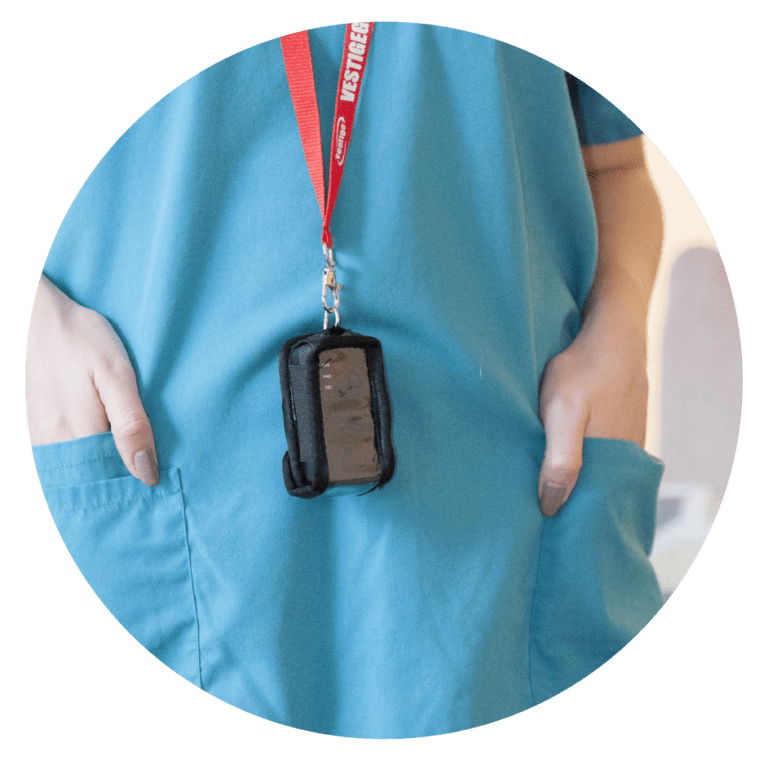
Many people think it’s a complicated process, but it doesn’t have to be. With Vestige on your side, you can provide guards, bouncers, and event staff with a compact, water-resistant, advanced safety device that they can comfortably wear 24/7.
There’s no other device quite like it on the market. It’s the ideal step to achieving your safety goals for personnel in your company. Request a demo now.
Making the Investment Decision: Key Evaluation Criteria
Organizations ready to evaluate panic button investments should consider several critical factors that determine system effectiveness, cost-efficiency, and long-term value delivery.
Risk Assessment Foundation: Document workplace violence history, near-miss incidents, worker concerns, and regulatory compliance requirements that establish baseline risk levels. Organizations with documented incidents, high-risk industries, or expanding compliance mandates face compelling investment justifications requiring minimal additional analysis.
Technology Feature Requirements: Identify essential capabilities, including GPS accuracy requirements, battery life specifications, environmental durability needs, integration requirements with existing systems, and monitoring service preferences. Feature prioritization prevents overspending on unnecessary capabilities while ensuring critical protection requirements receive adequate investment.
Deployment Scale and Phasing: Consider whether organization-wide deployment makes sense or if phased implementation targeting the highest-risk workers provides better initial value. Pilot programs with 10-25 devices help validate technology selection and refine implementation procedures before full-scale deployment commits substantial resources.
Vendor Evaluation Criteria: Assess panic button suppliers based on technology reliability, customer support quality, integration capabilities, pricing transparency, contract flexibility, and industry experience. Organizations benefit from vendors with proven track records in similar industries and deployment scales rather than selecting based solely on the lowest pricing.
Success Metrics Definition: Establish clear performance measurements, including emergency response times, user adoption rates, false alarm frequencies, worker satisfaction scores, and incident outcome improvements. Defined metrics enable objective ROI assessment and system optimization over time, supporting more precise Wearable panic button cost analysis
Protect Your Team with Proven Safety Technology
Vestige provides comprehensive personal safety wearable panic buttons and GPS panic button devices trusted by over 2,000 organizations across healthcare, public safety, field services, and transportation industries. Our PERSA panic button system delivers silent emergency alerts with real-time GPS tracking, customizable response protocols, and reliable performance in challenging environments, including low-signal areas where conventional solutions fail.
Contact Vestige today for a cost-benefit analysis tailored to your organization’s specific risk profile, workforce characteristics, and operational requirements. Our safety technology experts will help you understand total investment costs, quantify potential returns, and develop implementation strategies that maximize worker protection while optimizing budget efficiency.
Schedule your free consultation now to discover how Vestige’s proven panic button technology protects lone workers, reduces liability exposure, and delivers measurable ROI through improved safety outcomes and operational efficiency. Your workers deserve the same protection trusted by leading healthcare systems, crisis response teams, and field service organizations nationwide.
FAQ: Wearable Panic Button Cost Considerations
Wearable panic button costs vary significantly based on features, monitoring services, and deployment scale. Basic systems start around $200-400 per device with monthly service fees of $15-40 per user. Enterprise solutions with professional monitoring, advanced features, and integration capabilities range from $400 to $800 per device with monthly costs of $40-80. Volume discounts for large deployments can reduce per-unit costs by 20–40%.
Organizations typically achieve panic button ROI within 18-36 months through combined workers’ compensation savings, insurance premium reductions, and improved retention. High-risk industries with frequent incidents see faster payback periods of 12-18 months, while lower-risk environments may require 36-48 months. Regulatory compliance value and legal liability protection provide additional returns that are difficult to quantify but significantly influence overall investment value.
Many commercial insurance carriers provide premium discounts ranging from 5 to 15% for organizations implementing lone worker safety programs, including panic buttons. Insurers increasingly require or strongly incentivize these systems for high-risk workers in healthcare, social services, field operations, and hospitality. Organizations should discuss safety technology investments with insurance brokers during policy renewals to maximize available discounts.
Beyond monthly service subscriptions, organizations should budget for battery replacements ($10-30 per device every 1-2 years), device repairs or replacements (typically 5-10% annual attrition), training updates for new employees, and periodic technology upgrades. Professional monitoring services, integration maintenance, and administrative oversight also create ongoing expenses. Well-rounded budgets typically add 20-30% to monthly subscription costs to account for these additional factors.
Some states and municipalities offer grant programs supporting technology for preventing workplace violence, particularly for healthcare facilities, social service agencies, and nonprofit organizations. Federal OSHA training grants sometimes cover safety technology investments. Organizations should research resources from state labor departments, industry association funding opportunities, and local government violence prevention initiatives. Many panic button vendors also offer financing options that spread costs across multi-year payment schedules.
Panic buttons typically cost significantly less than physical security guards ($50,000-80,000 annually per guard), video surveillance networks ($10,000-50,000+ for comprehensive installations), or access control systems ($15,000-100,000+ depending on facility size). While these technologies serve complementary purposes, panic buttons provide the most direct worker protection per dollar invested, particularly for mobile workforces operating beyond fixed facility security infrastructure.