
GPS Panic Button Device
Advanced Personal Safety Through Real-Time Location Technology
GPS panic button devices function as sophisticated emergency communication systems that integrate satellite positioning technology with cellular networks to provide comprehensive safety coverage.

Let us help you protect your people!
Discreet Wearable Design:
Compact, lightweight button that's easy to carry or wear—ideal for lone workers, educators, and healthcare staff.
Silent Emergency Alerts:
Send instant, silent distress signals with precise GPS location—no need to reach for a phone.
Real-Time GPS Tracking:
Live tracking for fast response and full visibility of employees in the field or in remote settings.
Seamless Platform Integration:
Automatically logs location, clock-in/out times, and emergency activity—all in one easy-to-use dashboard.
Regulatory Compliance:
Helps meet safety mandates like OSHA and Alyssa’s Law while reducing liability risks.

Henry Ford Health Chooses Vestige's Persa To Protect Remote Workers In Michigan
Simplicity, reliability and alert customization drive decision to deploy and retain Vestige PERSA safety solution
According to the U.S. Bureau of Labor Statistics, violence in the workplace is evident through some grim statistics. In 2023, homicides accounted for 61.9 percent of on-the-job violence, or 8.7 percent of all work-related fatalities.
As violence against employees continues to be a threat across all sectors, some employers have begun to take matters into their own hands, looking for new and innovative ways to protect their people on the job.
One such solution is GPS panic button devices.
Combining cutting-edge location tracking technology with instant contact capabilities has resulted in countless applications across a number of instances.
Whether a skier finds themselves trapped in an avalanche or an at-home caretaker finds themselves in a dangerous situation, GPS panic devices have become a reliable solution for contacting help with a simple button press.
As technologies progress, these devices have become smaller and more discreet, enabling their use in any situation without concern.
These sophisticated safety devices represent a fundamental shift in our approach to personal protection, providing immediate access to help and precise location information that can be crucial in critical situations.
Understanding How GPS Panic Button Devices Work
GPS panic button devices function as sophisticated emergency communication systems that integrate satellite positioning technology with cellular networks to provide comprehensive safety coverage.
When activated, these devices instantly transmit the user’s exact location to predetermined emergency contacts or professional monitoring centers while establishing direct communication channels for immediate assistance.
The technology behind modern GPS panic button devices has evolved significantly from early emergency alert systems.
Today’s devices utilize multiple positioning technologies, including GPS satellites, cellular tower triangulation, and Wi-Fi positioning, to ensure accurate location detection even in challenging environments like urban canyons or indoor spaces.
The operational simplicity of GPS panic button devices masks their technical sophistication.
Users need only press a single button to activate a complex emergency response sequence that includes location determination, signal transmission, and communication establishment—all occurring within seconds of activation.
This seamless operation ensures that help arrives quickly when every second counts.
Below are the alert levels you can forward:
Red Alert
An employee can send distress signals to request immediate assistance for a 911 call.
Yellow Alert
Users can report concerning situations to their team through text or email.
Regular check-in (Green code)
The system requires regular check-ins from professionals on duty.
Henry Ford Health trusts PERSA for mobile clinicians
The Michigan Health System turns to Vestige and its 24-hour call center to provide simple and affordable panic button technology to protect staff working in challenging environments.
TRUSTED BY INDUSTRY LEADERS




Essential Features of Modern GPS Panic Button Devices
Advanced Location Tracking Capabilities
Contemporary GPS panic button devices offer remarkable precision in location tracking, with leading models providing location updates every 2-5 seconds and accuracy within 2-3 meters.
This level of precision ensures that emergency responders can locate users quickly and efficiently, even in complex environments where traditional communication methods might fail.
The multi-technology approach used in personal safety devices ensures reliable positioning across diverse environments.
Indoor positioning capabilities complement outdoor GPS tracking, while geofencing features can trigger automatic alerts when users enter or leave designated safe zones.
Durability and Environmental Protection
Professional-grade GPS panic button devices are engineered to withstand harsh conditions and daily wear.
Industry-leading models feature IP67 water resistance ratings, impact-resistant construction, and extended temperature operation ranges that ensure functionality in diverse environmental conditions.
The design philosophy behind these devices emphasizes reliability above all else.
Anti-tamper features, reinforced casings, and shock-resistant construction ensure that GPS panic button devices continue operating when users need them most, regardless of external conditions or physical stress.
Extended Battery Performance
Battery life represents a critical factor in GPS panic button device effectiveness.
Modern devices incorporate smart power management systems that provide a minimum of 24 hours of continuous operation while maintaining full functionality.
Advanced models offer multi-day battery life with intelligent power conservation that extends operation during extended emergencies.
Low battery alerts and quick charging capabilities ensure that users maintain protection without interruption.
Monitoring features for battery health provide advance warning of potential power issues, allowing for preventive maintenance that keeps devices operational when needed.
Industry Applications for GPS Panic Button Devices
Healthcare and Medical Services
Healthcare workers face unique safety challenges that GPS panic button devices address effectively.
Home health nurses, emergency medical technicians, and other healthcare professionals working in unpredictable environments benefit from the instant access to help that these devices provide.
Healthcare safety solutions incorporating GPS panic button devices have shown significant improvements in worker confidence and response times.
Medical alert functionality embedded in GPS panic button devices serves both healthcare workers and patients, providing fall detection, medication reminders, and automatic emergency notifications that support independent living while ensuring rapid response to medical emergencies.
Lone Worker Protection
Employees working in isolation face elevated safety risks that GPS panic button devices help mitigate.
Construction workers, security personnel, real estate agents, and field service technicians rely on these devices for protection during routine work activities that might unexpectedly become dangerous.
The psychological benefits of carrying GPS panic button devices extend beyond physical protection.
Workers report increased confidence and reduced anxiety when they know help is immediately available, leading to improved job performance and reduced turnover in high-risk positions.
Senior Safety and Independence
Aging adults increasingly rely on GPS panic button devices to maintain independence while ensuring safety.
These devices offer comfort to family members and enable seniors to maintain an active lifestyle without constant supervision.
Advanced GPS panic button devices designed for seniors incorporate additional features like medication reminders, activity monitoring, and regular check-in capabilities that support healthy aging while providing emergency protection when needed.
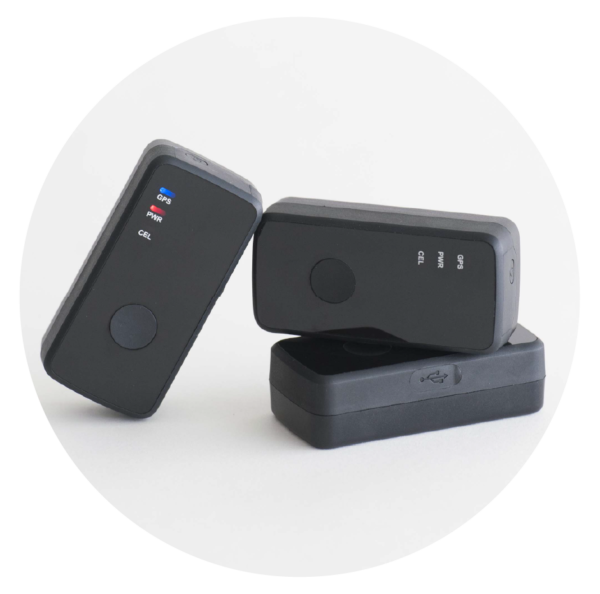
Employees are never alone with PERSA
Designed to be accessible any time you need it, PERSA is a wearable safety device and tracker complete with our software platform to ensure all remote or lone workers are safe 24/7.
- Employee clock-in and clock-out times
- Any off-site location their mobile employees may visit
- Mobile employees are on the best route to get to their site locations
Selecting the Right GPS Panic Button Devices
Assessing Individual Safety Needs
Choosing appropriate GPS panic button devices requires careful analysis of specific safety requirements, environmental conditions, and usage patterns.
Different users benefit from different feature sets and device configurations based on their unique circumstances and risk profiles.
Personal factors to consider include physical limitations, technology comfort levels, lifestyle patterns, and specific safety concerns that might influence device selection.
Professional consultation can help identify optimal solutions that balance functionality with usability.
Evaluating Monitoring Services
The monitoring service component of GPS panic button devices often proves as important as the hardware itself.
Professional monitoring centers provide trained operators who can assess emergency situations, coordinate appropriate responses, and maintain communication during critical events.
Service evaluation should consider response protocols, operator training levels, integration with local emergency services, and backup communication capabilities that ensure continuous protection even during system maintenance or upgrades.
Cost-Benefit Analysis
Investment in GPS panic button devices should be evaluated against the potential costs of emergency situations and safety incidents.
While the implementation of panic buttons might be an expense in the short term, this cost may be nothing when weighed against the cost of liability lawsuits and employee or client injuries.
Additionally, other expenses like insurance premiums may decrease with the implementation of GPS panic buttons and other safety devices.
Long-term cost considerations should include device replacement schedules, service fees, and potential expansion needs that might influence initial selection decisions.
Implementation Best Practices
User Training and Adoption
Successful implementation of GPS panic button devices requires comprehensive training programs that ensure users understand device operation, emergency procedures, and service capabilities.
Training should address both technical operation and practical scenarios that help users respond effectively during actual emergencies.
Ongoing support and refresher training help maintain program effectiveness while addressing questions or concerns that arise during regular use.
Regular testing protocols ensure that devices function properly while familiarizing users with activation procedures.
Integration with Existing Safety Systems
GPS panic button devices work most effectively when integrated with existing safety infrastructure and emergency response procedures.
It’s important that, in the event of an emergency, companies have careful plans in place to assist employees and alert the proper authorities if need be.
This integration creates comprehensive protection that maximizes the value of both new and existing safety investments.
Coordination with security systems, communication networks, and emergency response protocols ensures that GPS panic button activations trigger appropriate responses while maintaining operational efficiency during non-emergency situations.
Vestige's Persa Device For Remote Employee Safety
Wearable Panic Button
Employees in duress can send silent alarms with a thumb-sized activation button. With a swift movement, they can alert authorities and forward accurate location notifications and precise location details.
Maximum Visibility
Our PERSA technology offers an enterprise-grade GPS (Global Positioning System) tracker with real-time data. This feature finds a person’s exact location.
Wearability
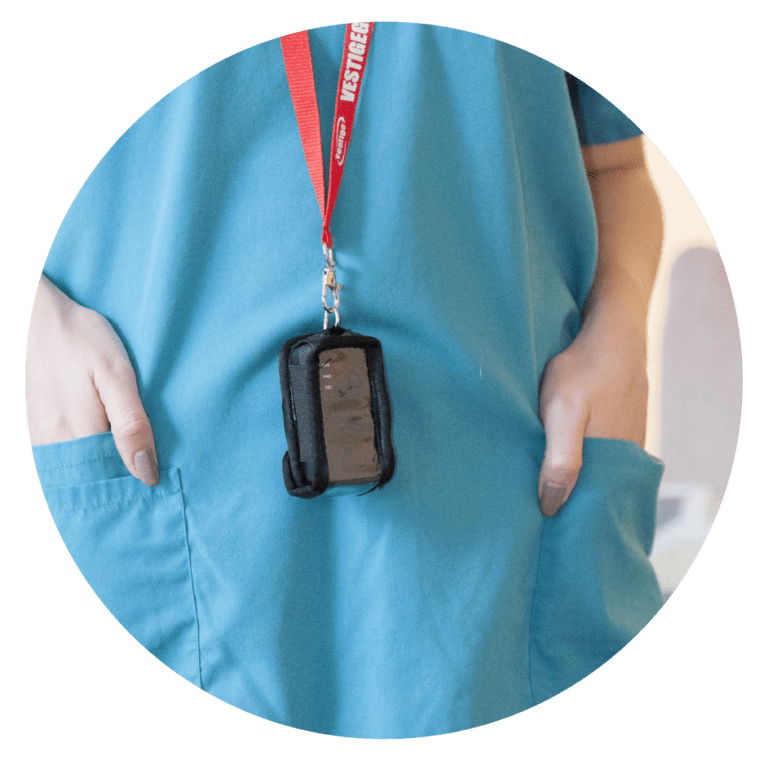
The Vestige pocket-sized device comes with a lanyard. This allows users to wear them around necks, belts, or bags.
Durability
With PERSA on your side, you won’t have to worry about daily charging or the elements. These gadgets are compact, water-resistant tools that can last up to two weeks on a full charge.
Custom Notifications
We don’t believe in one-size-fits-all solutions. Let us know which geofence alert notifications you want, and our team can make it happen.
Future Developments in GPS Panic Button Technology
Enhanced Positioning Accuracy
Next-generation GPS panic button devices will incorporate advanced positioning technologies that provide even greater accuracy and reliability.
Integration with emerging satellite systems and terrestrial positioning networks will ensure consistent coverage across all environments.
Augmented reality capabilities may enable GPS panic button devices to provide visual guidance to emergency responders, reducing response times and improving rescue efficiency in complex environments.
Expanded Health Monitoring
Future GPS panic button devices will likely integrate comprehensive health monitoring capabilities that can detect medical emergencies before they become critical.
Continuous vital sign monitoring, fall prediction, and early warning systems will transform these devices into proactive health management tools.
Integration with electronic health records and medical monitoring systems will enable GPS panic button devices to provide emergency responders with critical medical information that improves treatment outcomes during emergency situations.
Start Protecting Your Remote Employees Today
Are you ready to meet the security demands of modern organizations? An ESD is a cost-effective way to achieve your goals.
Many people think it’s a complicated process, but it doesn’t have to be. With Vestige on your side, you can provide guards, bouncers, and event staff with a compact, water-resistant, advanced safety device that they can comfortably wear 24/7.
There’s no other device quite like it on the market. It’s the ideal step to achieving your safety goals for personnel in your company. Request a demo now.
Investing in Safety with GPS Panic Button Devices
The decision to implement GPS panic button devices represents a proactive approach to personal and organizational safety that provides both immediate protection and long-term peace of mind.
These sophisticated devices have evolved from basic emergency alert systems into comprehensive safety management tools that adapt to diverse user needs and environmental challenges.
It’s easy for any organization to claim that they care about their employees, but only a select few will truly back this up with concrete safety measures—the implementation of panic buttons is a key indicator that an employer is serious about their employees safety.
The combination of advanced location tracking, instant communication, and professional monitoring creates a powerful safety framework that can be customized for virtually any application.
Contact Vestige today to learn more
To explore how advanced GPS panic button devices can enhance your safety program, consider comprehensive personal safety solutions that integrate with your existing safety infrastructure.
For additional insights into safety technology trends and implementation strategies, visit our resource center for expert guidance and industry best practices.
Remember that effective safety planning requires proactive measures that prevent emergencies rather than simply responding to them.
GPS panic button devices provide the proactive protection and immediate response capabilities that modern safety requirements demand, ensuring that help arrives when and where it’s needed most.
Frequently Asked Questions About GPS Panic Button Devices
Modern GPS panic button devices provide location accuracy within 2-3 meters under optimal conditions, with updates every 2-5 seconds during active emergencies.
These devices utilize multiple positioning technologies, including GPS satellites, cellular triangulation, and Wi-Fi positioning, to ensure reliable location detection even in challenging environments like indoor spaces or urban areas with limited satellite visibility.
During an emergency, first responders can literally track someone down to their feet using their GPS signal.
While cellular coverage enhances the functionality of GPS panic button devices, many models include backup communication methods and local storage capabilities.
Some devices can store location data and emergency alerts for transmission when coverage returns, while others utilize satellite communication networks for remote area coverage.
However, for optimal performance and immediate emergency response, cellular coverage is recommended.
Professional GPS panic button devices typically provide 24-48 hours of continuous operation, with some models offering extended battery life up to several days.
Smart power management systems optimize battery usage by adjusting transmission frequency based on activity levels and emergency status.
Most devices include low battery alerts and quick charging capabilities to ensure continuous protection.
Professional monitoring services employ trained operators who assess each activation within seconds, verify the emergency status through two-way communication, and coordinate appropriate responses.
This may include contacting designated emergency contacts, dispatching local emergency services, or providing direct assistance through the device’s communication capabilities.
Response protocols are customized based on user preferences and specific safety requirements.