
Security Body Cameras for Sale: Complete Buyer's Guide for Professional Protection

TRUSTED BY INDUSTRY LEADERS




The global body camera market reached $919 million in 2024 and will continue accelerating toward $2.3 billion by 2030. This explosive growth reflects a fundamental shift in how organizations protect their employees, document critical incidents, and defend against liability claims. Whether you manage a healthcare facility, operate a service business, or oversee field personnel, knowing wahere to find security body cameras for sale and understanding their features represents essential knowledge for modern risk management.
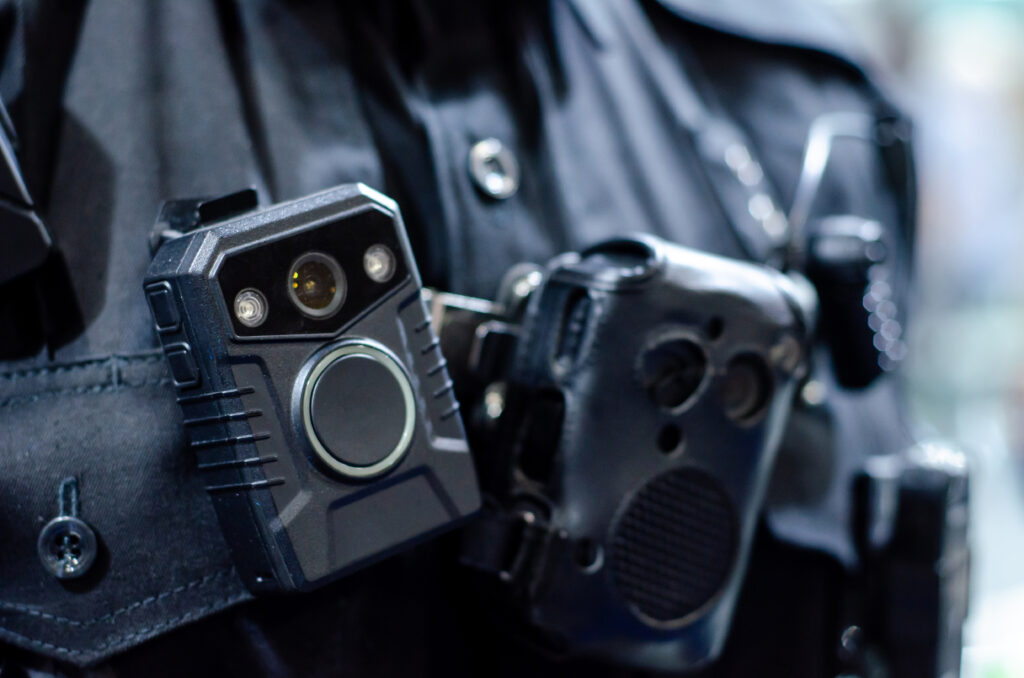
Understanding Body Camera Technology and Applications
Security body-worn cameras have evolved far beyond their law enforcement origins into versatile professional tools. These wearable devices capture audio and video evidence from the user’s perspective, creating an objective record of interactions that protects both employees and organizations. Modern systems integrate advanced features, including real-time GPS tracking, instant alert capabilities, cloud storage solutions, and AI-powered incident detection. Organizations looking to enhance workplace safety can find security body cameras for sale that meet various operational needs.
The technology addresses a critical workplace safety challenge. Healthcare and social assistance workers face workplace violence rates more than four times higher than private industry averages, with serious violent incidents requiring days away from work occurring at alarming frequencies. From 2002 to 2013, healthcare accounted for nearly as many serious violent injuries as all other industries combined. This epidemic extends beyond healthcare into transportation, field services, inspection services, and customer-facing operations where employees work alone or encounter potentially hostile situations.
Body-worn cameras serve multiple protection functions. They document accurate incident details, deter aggressive behavior through visible recording, provide evidence for legal proceedings, settle disputes quickly with video proof, and improve employee professionalism when interactions are documented. Organizations implementing comprehensive camera programs report significant reductions in false accusations, faster claim resolutions, and improved safety culture across their operations.
Modern systems include basic recording devices and sophisticated platforms that offer live-streaming capabilities, automatic evidence upload, extended battery life, and integration with emergency response protocols. The right solution depends on your specific operational environment, risk profile, budget constraints, and compliance requirements. Understanding these variables help identify which features deliver genuine value versus unnecessary complexity that increases costs without proportional benefits.
Key Industries Benefiting From Body Camera Protection
Healthcare facilities represent the fastest-growing segment of the body camera market. According to Bureau of Labor Statistics data, healthcare workers experience injury rates from workplace violence exceeding 10 incidents per 10,000 full-time workers, significantly higher than the 2.1 rate across all industries. Hospital workers face even higher rates at 12.8 per 10,000 full-time employees. Nearly 20 percent of healthcare professionals have experienced physical abuse at their workplace, creating an urgent demand for protective technologies.
Mobile healthcare teams working in community settings face particularly acute risks. Home health aides, mobile crisis response teams, and community health workers operate in uncontrolled environments with limited backup support. These lone workers require discreet emergency alert capabilities combined with GPS tracking to summon help when situations deteriorate. Hospitals deploying healthcare safety solutions integrated with panic button systems report 28-second average emergency response times compared to several minutes with traditional phone-based alerts.
Service industry businesses discover significant value in body camera documentation. Tow truck operators, utility technicians, home inspectors, pest control specialists, and delivery drivers regularly enter private property where false accusations occur. Research shows that 80 percent of accusations against home inspectors are exaggerated or completely false. Technicians using body cameras protect themselves from theft claims, damage allegations, and accusations of unprofessional conduct that could destroy reputations and livelihoods.
Transportation operations embrace body cameras for both driver protection and liability defense. Commercial drivers face staged accident schemes, false injury claims, and aggressive customer interactions. Video evidence from multi-angle camera systems helps fleets avoid fraudulent claims that cost the insurance industry over $308 billion annually. Logistics companies report using camera footage to exonerate drivers, reduce insurance payouts, and settle disputes that once required expensive legal proceedings.
Law enforcement and security professionals pioneered body camera adoption, with 47 percent of general-purpose agencies acquiring cameras by 2016, rising to 80 percent among large departments. This widespread implementation demonstrates technology maturity and established best practices that other industries now leverage. Private security firms, campus safety teams, and parking enforcement personnel adopt similar systems to protect personnel while maintaining accountability standards expected by modern stakeholders.
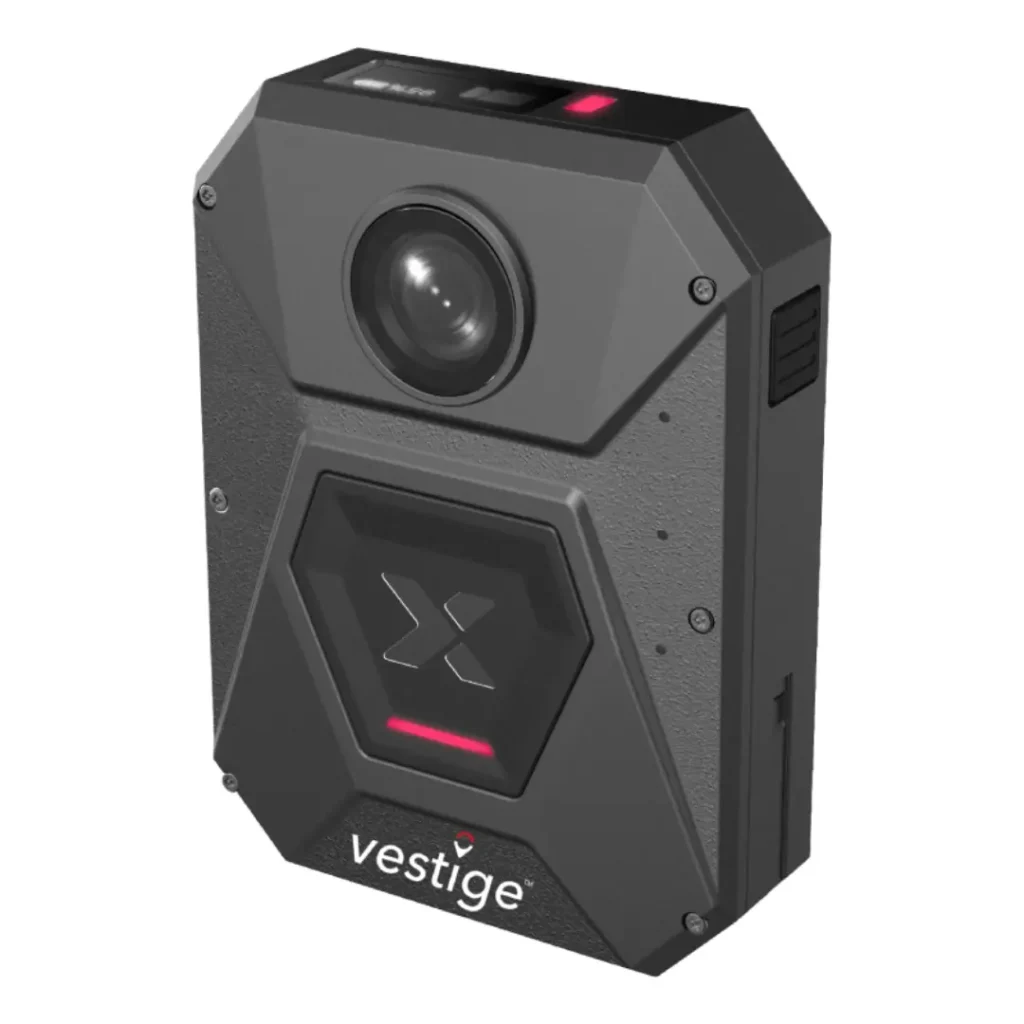
Your Team’s Safety—Captured and Secured with Vestige
Give your employees peace of mind and accountability with our discreet, easy-to-use body cameras. VestigeView’s body-worn solution ensures your team is protected, monitored, and compliant—wherever the job takes them.
- Record and store on-the-job interactions securely
- Track employee movements and verify site visits
- Promote transparency and reduce liability
Essential Features When Evaluating Security Body Cameras for Sale
Video resolution determines evidence quality and usability. Full HD (1080p) cameras deliver clear footage suitable for facial identification and incident documentation while maintaining reasonable file sizes for storage management. Many organizations find Full HD provides an optimal balance between quality and cost-effectiveness. Higher 4K resolution offers exceptional detail but generates massive files requiring substantially more storage capacity and bandwidth for uploads. Standard HD (720p) may suffice for basic documentation needs when budget constraints exist, though image quality limitations could prove problematic for critical evidence scenarios.
Battery life directly impacts operational functionality. Field workers require cameras that last entire shifts without recharging interruptions. Look for devices offering 10-12 hour continuous recording capability, though actual performance varies based on recording settings, temperature conditions, and feature usage. Some advanced models incorporate removable batteries, enabling quick swaps during extended operations. Consider how charging infrastructure integrates with existing workflows, whether through individual charging cables or docking stations supporting multiple devices simultaneously, with automated evidence uploads.
Storage solutions fundamentally affect long-term costs and evidence management. Local storage via SD cards provides a simple implementation but creates evidence custody challenges and manual upload burdens. Cloud-based systems streamline evidence handling through automatic uploads when devices connect to Wi-Fi or cellular networks. Cloud platforms enable centralized access, robust security controls, automated retention policies, and simplified sharing with authorized parties. However, subscription costs accumulate over time while requiring reliable internet connectivity for proper function.
GPS tracking capabilities transform body cameras into comprehensive safety tools. Real-time location monitoring enables supervisors to track lone workers, verify service completion, and respond quickly during emergencies. Combined with panic button functionality, GPS-enabled cameras become emergency response devices alerting designated contacts with precise location data when employees activate distress signals. This integration particularly benefits healthcare workers, field technicians, and anyone working in isolated or high-risk environments where immediate help summons proves critical.
Durability specifications ensure reliable performance in demanding conditions. Look for cameras with IP ratings indicating water and dust resistance appropriate for your environment. IP67 ratings withstand temporary immersion, while IP54 offers splash resistance sufficient for most indoor applications. Impact resistance matters for active environments where cameras might experience drops or collisions. Military-grade specifications provide reassurance, though adding cost that may exceed requirements for controlled indoor settings.
Regulatory Compliance and Legal Considerations
Organizations implementing body-worn security camera programs must navigate complex privacy regulations varying by jurisdiction. Many states require employee consent before recording in-cabin audio or using inward-facing cameras with biometric capabilities. Illinois, Texas, and Washington mandate explicit consent for facial recognition features and audio recording beyond what general workplace monitoring allows. Before purchasing systems, consider exploring security body cameras for sale that meet both operational needs and compliance requirements, and verify regulations in every location where cameras will operate to avoid expensive legal challenges or regulatory penalties.
OSHA guidelines increasingly recognize body cameras as components of comprehensive workplace violence prevention programs. While no specific federal OSHA standard currently mandates body cameras, the agency uses General Duty Clause provisions to cite employers failing to protect healthcare and social service workers from recognized violence hazards. California, Oregon, and Washington enacted state-level workplace violence prevention requirements that may reference monitoring technologies as risk mitigation strategies. Implementing cameras demonstrates proactive safety measures that satisfy regulatory expectations while generating documentation supporting workers’ compensation defense.
Data retention policies require careful planning. Some businesses maintain footage for five years, covering statute of limitation periods for potential litigation. Others implement shorter retention schedules with extended preservation triggered by specific incidents or complaints. Consider storage costs when determining retention periods, as extended video archives accumulate substantial expenses. Cloud platforms typically offer tiered storage pricing based on retention duration and access frequency, with older footage archived to lower-cost storage tiers.
Evidence handling procedures ensure footage maintains legal admissibility. Establish clear protocols governing who accesses recordings, how footage gets shared with authorized parties, what triggers preservation beyond standard retention, and how chain of custody documentation supports legal proceedings. Many camera systems include evidence management platforms that automate these processes through access logs, sharing controls, and audit trails, demonstrating proper handling from capture to legal presentation.
Start Protecting Your Remote Employees Today
Are you ready to meet the security demands of modern organizations? An ESD is a cost-effective way to achieve your goals.
Many people think it’s a complicated process, but it doesn’t have to be. With Vestige on your side, you can provide guards, bouncers, and event staff with a compact, water-resistant, advanced safety device that they can comfortably wear 24/7.
There’s no other device quite like it on the market. It’s the ideal step to achieving your safety goals for personnel in your company. Request a demo now.

Body Camera Integration With Safety Systems
Standalone body cameras provide valuable documentation capabilities, but integrated safety platforms deliver comprehensive protection. Modern solutions combine wearable cameras with panic buttons, GPS tracking, and centralized monitoring capabilities, creating complete lone worker safety systems. Healthcare organizations increasingly deploy personal safety wearable panic button devices that trigger silent alerts with real-time location sharing when employees face threatening situations.
San Diego’s Mobile Crisis Response Team implemented integrated panic button technology with GPS tracking for 130+ field staff responding to behavioral health crises in volatile environments. The system enables responders to request backup without escalating situations while ensuring supervisors receive instant location data. Program administrators report 28-second average emergency response times with the integrated system compared to several minutes previously. Staff morale improved significantly knowing that protection exists during high-risk encounters.
Video evidence enhances safety program effectiveness through behavior coaching and incident analysis. Organizations using camera footage for training report 50 percent reductions in risky behaviors when employees receive feedback on specific incidents. Supervisors identify patterns requiring additional training, recognize exceptional performance deserving recognition, and document progress toward safety culture improvements. This coaching application often generates greater long-term value than evidence collection alone, though both functions justify implementation costs.
Fleet operations benefit particularly from integrated camera and telematics systems. Multi-camera configurations capturing forward road views, driver behavior, and cargo areas provide comprehensive incident documentation. AI-powered analysis detects distracted driving, harsh braking, and other risk indicators, triggering real-time alerts. These systems reduce accidents while lowering insurance costs through premium discounts ranging from 5-20 percent, depending on the insurer and camera features deployed.
Body Camera Cost Analysis and Return on Investment
Body camera pricing varies dramatically based on features, build quality, and included services. Basic recording-only devices start around $200-400 per unit, suitable for small operations with simple documentation needs. Mid-range systems with cloud integration, extended batteries, and GPS capabilities typically cost $400-800 per camera. Enterprise-grade solutions featuring advanced AI, live streaming, and comprehensive evidence management platforms run $800-1,500+ per device plus ongoing subscription fees. Across this spectrum of security body cameras for sale, buyers can match performance levels to their specific risk environments and operational goals.
Total cost of ownership extends beyond initial hardware purchases. Cloud storage subscriptions represent ongoing expenses ranging from $20-100+ monthly per camera, depending on retention periods, storage capacity, and platform features. Evidence management software, user training, policy development, and system administration add implementation costs often equaling or exceeding hardware expenses. Instead of just looking at the upfront costs of cameras, which don’t show the full cost of a program, organizations should plan their budgets more broadly.
ROI calculations demonstrate compelling value propositions despite substantial initial investments. Fleets that don’t have to deal with one fraudulent lawsuit often get back all of the money they spent on cameras. One logistics company documented insurance payouts dropping from $9 million annually to under $200,000 after implementing comprehensive commercial truck camera systems. Healthcare facilities reducing workplace violence incidents by even modest percentages generate significant savings through lower workers’ compensation costs, reduced employee turnover, and improved care quality.
Risk mitigation value often exceeds direct cost savings. Organizations facing potential nuclear verdicts exceeding $10 million in trucking litigation or substantial settlements in healthcare violence cases view camera programs as essential insurance against catastrophic losses. The ability to exonerate employees from false accusations, document incident timelines accurately, and demonstrate safety commitment to juries justifies considerable ongoing investment for risk-conscious organizations.
Implementation Best Practices and Common Mistakes
Successful body camera programs begin with clear policies establishing when recording occurs, how footage gets accessed, who reviews evidence, and what privacy protections exist. Involve legal counsel early when developing policies to ensure compliance with applicable regulations. Engage employees during policy development to build buy-in and address legitimate privacy concerns before implementation creates resistance. Transparent communication about program purposes and footage usage prevents suspicion that cameras represent punitive management tools rather than safety enhancements.
Training determines whether cameras achieve intended benefits. Employees need instruction on proper device operation, charging procedures, evidence upload verification, and emergency alert activation. Practice scenarios help workers develop comfort with technology while identifying workflow issues requiring adjustment. Supervisors require training on footage review procedures, coaching conversations, evidence preservation, and legal compliance obligations. Ongoing refresher training addresses common mistakes and reinforces proper practices as initial implementation enthusiasm fades.
Common implementation mistakes undermine program success. Organizations purchasing inadequate quantities leave gaps in coverage where incidents occur without documentation. Inconsistent enforcement, where some employees avoid wearing body cameras while others comply, creates fairness concerns and documentation gaps. Insufficient charging infrastructure causes devices to run out of power during shifts. Neglecting evidence review makes expensive camera systems underutilized assets rather than active safety tools.
Data management challenges frequently catch organizations unprepared. Explosive growth in video files strains IT infrastructure and storage budgets. Establish procedures addressing footage lifecycle from capture through deletion, including review workflows, sharing protocols, and retention compliance. Consider whether existing IT resources handle camera management or whether outsourced solutions better serve organizational capabilities and priorities.
See how SalSon Logistics turned a $9 million insurance problem into a strategic advantage
After spending nearly $9 million in claims in 2017—some from staged accidents—SalSon implemented Vestige’s AI‐powered fleet cameras and real‑time command center. The result? Accident payouts dropped from six‑figure annual totals to under $200,000 by 2024.
Better yet, drivers are protected, insurers are competing for their business, and a stronger safety culture now fuels their profitability.
Selecting the Right Body Camera Vendor and Support
Vendor selection significantly impacts long-term program success beyond initial product capabilities. Evaluate companies based on industry experience, customer support quality, update frequency, training resources, and evidence management platforms. Established vendors serving law enforcement and healthcare bring proven expertise but may charge premium prices. Emerging companies offer innovative features and competitive pricing but carry risks around long-term support and development roadmaps.
Support infrastructure determines operational reliability. What warranty coverage protects against device failures? How quickly do replacements ship when cameras break? Can technical support resolve issues efficiently, or do problems languish unresolved? What training resources exist for new hires and refresher education? Companies that depend on cameras for evidence collection cannot tolerate extended downtimes or unhelpful support responses that leave programs crippled during critical periods.
Integration capabilities affect whether cameras complement existing systems or require parallel infrastructure. Can camera evidence integrate with incident reporting software? Does GPS data feed into dispatch or employee tracking systems? Will panic button alerts trigger through the current emergency protocols? Smooth integration reduces administrative burden while creating cohesive safety ecosystems rather than disconnected point solutions requiring separate management attention.
Scalability considerations matter for growing organizations. Will the vendor support additional cameras as you expand? Can the evidence management platform handle increasing storage requirements? Do licensing models accommodate growth affordably, or do per-unit costs create prohibitive expenses? Starting with vendors offering clear expansion paths prevents expensive migrations when initial solutions cannot scale with organizational needs.
Making Your Body Camera Purchase Decision
Purchasing body cameras represents a strategic safety investment rather than a simple equipment acquisition. Begin by thoroughly assessing your specific risks, operational requirements, regulatory obligations, and budget constraints. Document clear objectives that the camera program should achieve, whether evidence collection, employee protection, liability defense, or behavioral improvements. These defined goals guide feature prioritization and vendor evaluation while providing metrics for measuring program success.
Request demonstrations from multiple vendors using scenarios matching your actual operational environment. Observe how quickly evidence uploads complete, how easily footage gets located and reviewed, whether GPS tracking provides adequate location accuracy, and how comfortable employees find wearing devices during full shifts. Compare battery life under realistic usage patterns rather than manufacturers’ best-case specifications. Verify cloud platform usability and evidence management workflows matching your administrative capabilities.
Testing employee body cameras for workplace safety with selected employee groups identifies workflow issues, training needs, and policy gaps before organization-wide rollout. Pilot feedback often reveals unexpected challenges or benefits, informing final purchasing decisions. Starting small also demonstrates value to skeptical stakeholders who may question whether camera benefits justify costs. This approach ensures that when investing in security body cameras for sale, you’re choosing solutions proven effective within your own operating environment.
Negotiate contracts carefully, addressing all total cost of ownership components. What discounts apply for volume purchases? Are storage costs per unit or tiered by total organizational usage? What happens if you need to reduce camera quantities during economic downturns? Can you pause subscriptions for seasonal operations, or must you pay year-round? Understanding complete financial obligations prevents budget surprises, undermining program sustainability.
Protect Your Organization With Professional Body Camera Solutions
Security body cameras provide thorough protection for organizations dealing with risks of workplace violence, threats of false accusations, and potential legal issues from incidents that aren’t recorded. Healthcare facilities, service businesses, transportation companies, and field operations benefit from objective evidence documenting employee interactions while deterring aggressive behavior and settling disputes quickly. Modern camera systems combine GPS tracking, emergency alerts, and cloud storage for evidence into all-in-one safety tools that go beyond just recording events.
Successful implementation requires careful planning, addressing technology selection, policy development, employee training, and evidence management procedures. Organizations should assess their specific operational risks, evaluate vendor capabilities comprehensively, and establish clear program objectives before purchasing. Consider starting with pilot programs validating technology choices while building organizational expertise before full deployment.
Vestige understands the complex challenges organizations face in protecting lone workers and documenting critical incidents in high-risk environments. Our integrated safety solutions combine fleet AI cameras and tracking with real-time GPS monitoring, silent emergency alerts, and comprehensive evidence management into platforms specifically designed for healthcare, transportation, and field service applications. We work with organizations to develop customized safety programs addressing your unique operational requirements, regulatory obligations, and budget constraints.
Contact Vestige today to discuss how our professional body camera and safety solutions protect your employees while defending your organization against liability claims. Our team brings extensive experience implementing programs across diverse industries and can guide you toward solutions delivering genuine operational value rather than unnecessary complexity.
Trustindex verifies that the original source of the review is Google. I have been a customer of Vestige for over 5 years. Megan and Corey do an awesome job and get us whatever we requested extremely quickly whether it’s an emergency that we need video of or a simple report we want! Their system has saved us from several Faldo claims and the software has never let us down!Trustindex verifies that the original source of the review is Google. Very effective and reliable resource in the field. Product is durable and does everything you’ll need from A-Z, remember you get what you pay for so why not get the best you can. Thank you Vestige for your support and business in this demanding field!Trustindex verifies that the original source of the review is Google. One of our trucks lost a drive line and no parts houses had one in stock. We were able to find it by watching the video from the side camera to see where it landed. Excellent product, and customer service at Vestige is excellent! Much better than other dash cam companies we have used in the past. Highly recommend.Trustindex verifies that the original source of the review is Google. Great products and Service... we were hesitant about getting the Dashcam Service but within a few months it basically paid for itself due to an accident we had that could have been considered our fault but thanks to the camera I was actually able to share it with the Trooper that worked the accident. Not sure how many different set ups they offer but we are very happy with the basicly Live DashCam service we got that also has GPS integrated . Its great having it all in one App.
Frequently Asked Questions
Storage retention periods vary widely based on organizational policies and regulatory requirements. Most businesses maintain footage for 30-90 days for routine recordings with no incidents or complaints. When incidents occur or complaints get filed, footage typically receives extended retention ranging from 1-5 years, depending on legal statute of limitations and organizational risk tolerance. Some healthcare and transportation companies retain all footage for 5+ years, given potential litigation timeframes. Cloud storage costs increase substantially with longer retention, requiring organizations to balance legal protection with storage expense management.
Systems like Vestige’s body-worn cameras utilize dual-channel audio recording and advanced noise reduction technologies to ensure optimal performance for a body camera with audio applications.
Policies governing employee access to their footage vary by organization, though most allow review under supervised conditions. Many companies permit employees to view recordings involving complaints or incidents where they appear, though they typically require supervisor presence during review. Some organizations restrict access entirely to prevent evidence tampering concerns. Labor agreements may establish specific access rights for union-represented employees. Clear policies established before implementation prevent disputes around footage access while balancing transparency with evidence integrity protection.
Professional-grade body cameras with audio solutions are specifically designed to provide clear audio even in challenging environments using sophisticated filtering technologies.
Many insurance carriers offer premium discounts for organizations deploying body camera systems, particularly in transportation, healthcare, and field service industries. Discounts typically range from 5-15 percent for fleets implementing comprehensive camera and telematics programs, with some insurers offering up to 20 percent reductions. Healthcare facilities demonstrating workplace violence prevention measures, including cameras, may qualify for workers’ compensation premium adjustments. Discounts vary significantly by carrier, camera system capabilities, and the organization’s claims history. Contact insurance providers before purchasing to verify specific discount availability and requirements.
Departure procedures should include evidence preservation protocols for terminated employees. Organizations typically maintain footage according to standard retention policies regardless of employment status. When terminations involve disputes, misconduct allegations, or potential litigation, footage receives extended retention matching legal timelines. Employees generally cannot delete footage or remove it from organizational possession. Clear policies addressing footage ownership, retention after separation, and access by former employees prevent disputes while ensuring evidence preservation for potential claims arising after employment ends.
Yes, body camera footage typically receives admission as evidence in civil and criminal proceedings when proper authentication and chain of custody documentation exist. Courts generally view video evidence favorably compared to conflicting witness testimony. However, admissibility requires demonstrating footage authenticity, proper handling, and lack of tampering from capture through presentation. Organizations maintaining comprehensive evidence management systems with audit trails and access controls rarely face admissibility challenges. Consulting legal counsel during implementation ensures evidence handling procedures satisfy applicable evidentiary standards for your jurisdiction.
Most professional body cameras feature weather-resistant construction suitable for outdoor use in rain, snow, and temperature extremes. Look for cameras with IP67 or higher ingress protection ratings, ensuring water resistance and dust protection. Many devices function reliably in temperatures from -20°F to 140°F, covering most operational environments. However, extreme conditions affect battery performance and device longevity. Consider camera mounting options that protect devices from direct weather exposure when possible. For particularly harsh environments, including marine applications, select cameras specifically rated for those conditions rather than standard commercial models lacking adequate protection.