Dash Cams vs. Video Telematics: What's the Difference for Fleets?
Let us help you protect your fleet!
Driver Behavior Analytics:
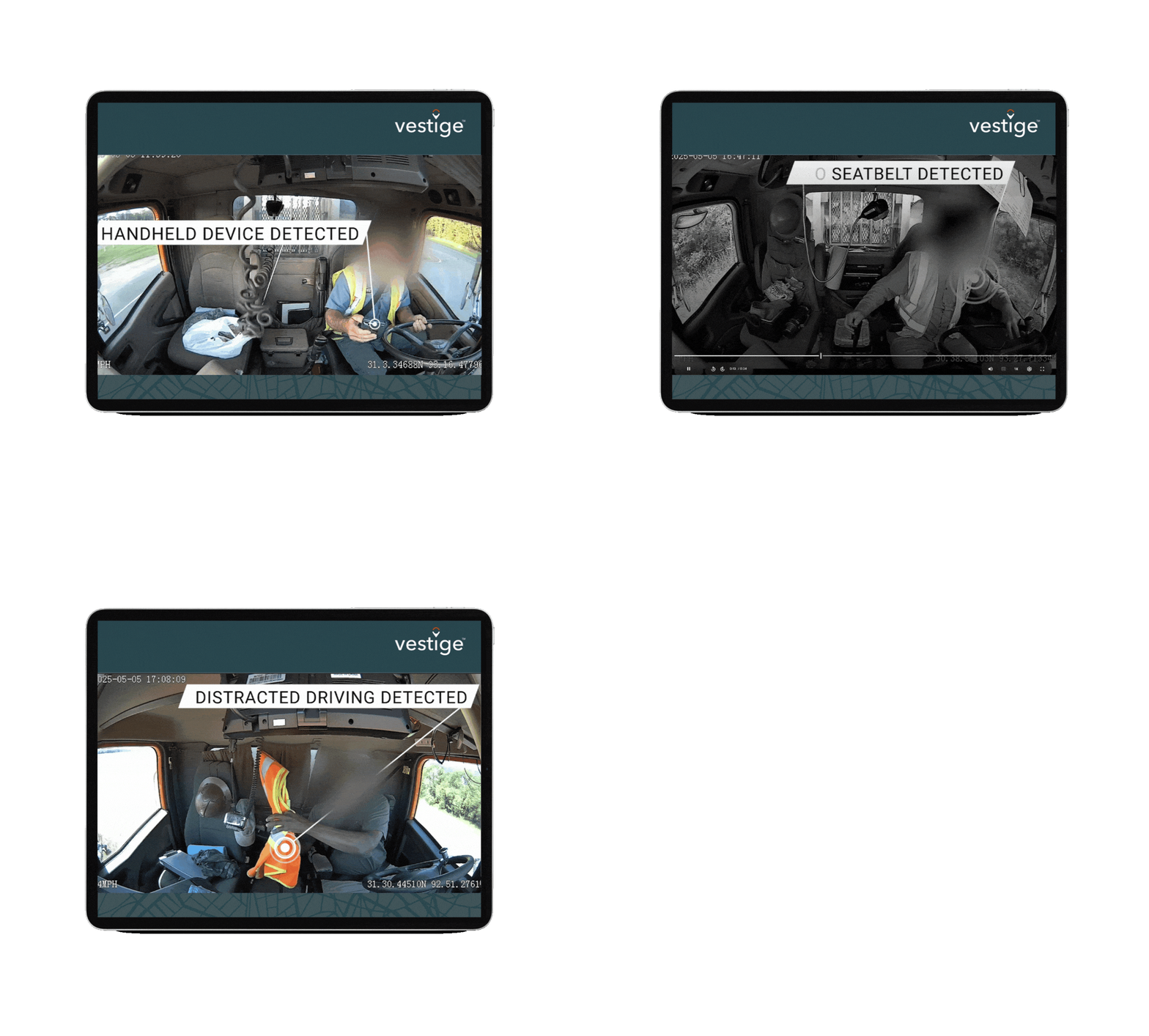
Real-time alerts for distracted driving, device usage, and fatigue to improve safety culture.
360º Fleet Vision:
Multi-camera system offers complete coverage inside and outside each vehicle
Incident Documentation:
Secure, high-quality footage to protect against false claims
Real-Time Tracking:
GPS with alerts for speeding, idling, and unauthorized use
Driver Coaching:
Actionable data on routes, braking, and driving habits
The Vestige Difference
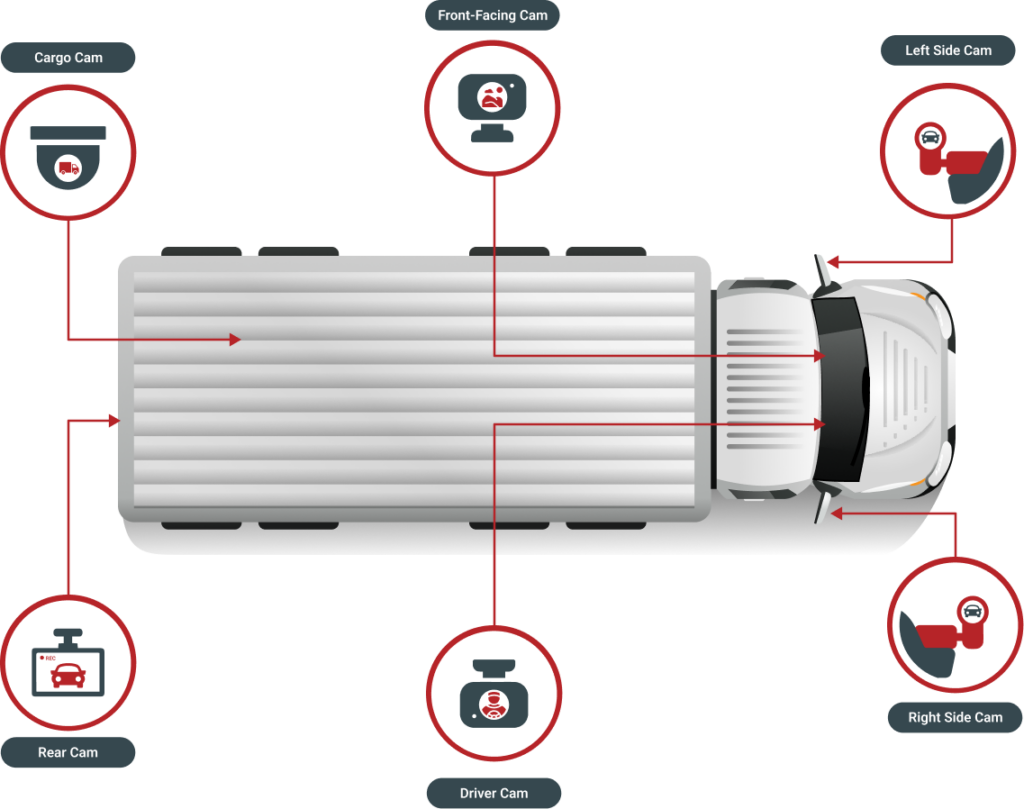
Multi-Camera System:
Customize up to 8 cameras per vehicle (interior & exterior)
Includes HD, audio, and 4G LTE live-streaming
Records even when parked
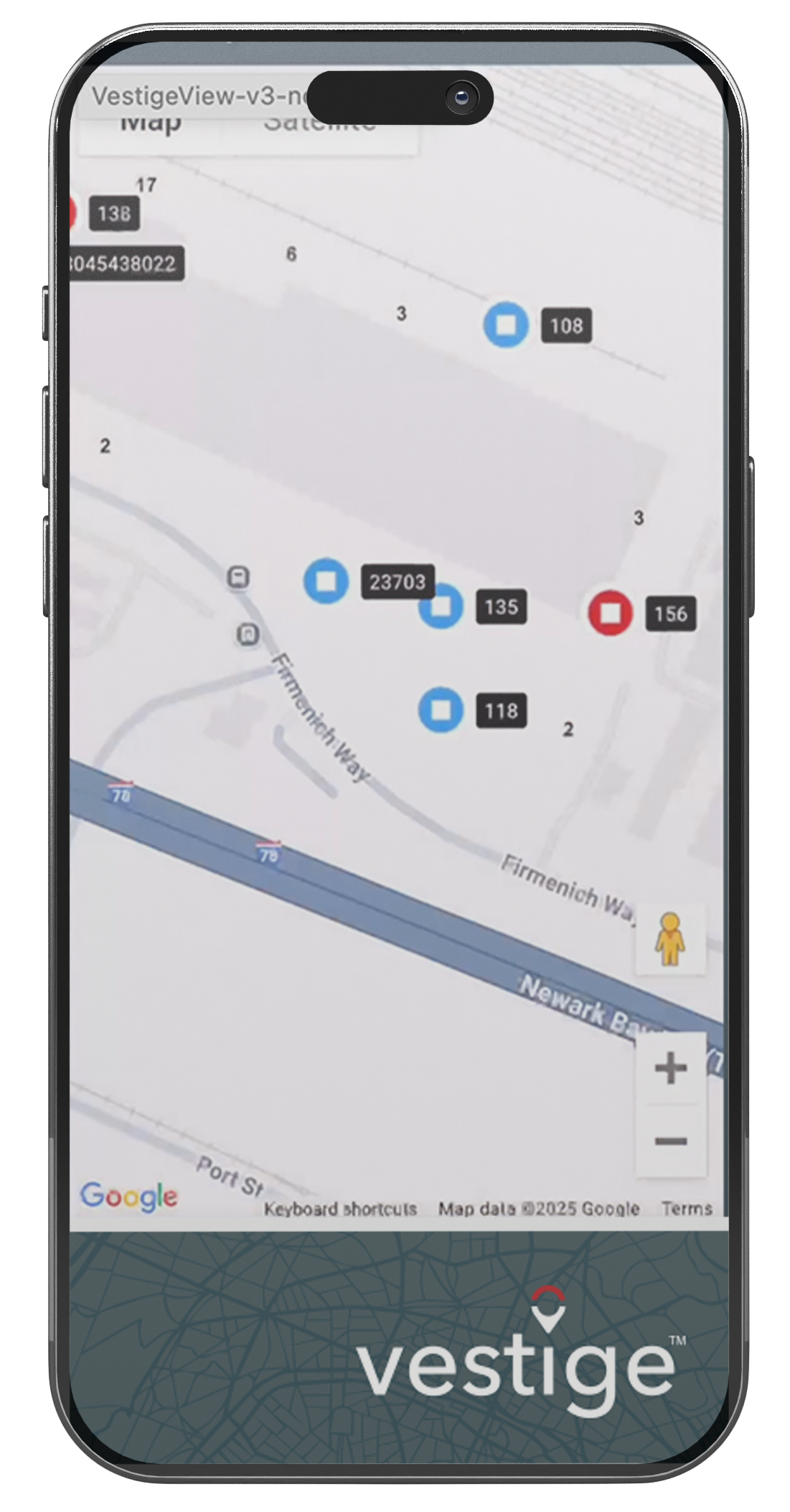
Live GPS Tracking:
Track locations, set alerts, and view analytics
Spot unsafe driving patterns instantly
Driver Behavior Monitoring:
Capture speed, routes, braking, and distractions
Coach drivers using real data
Incident Review & Protection:
Access footage with multiple angles
Prevent false claims and reduce insurance hikes
TRUSTED BY INDUSTRY LEADERS


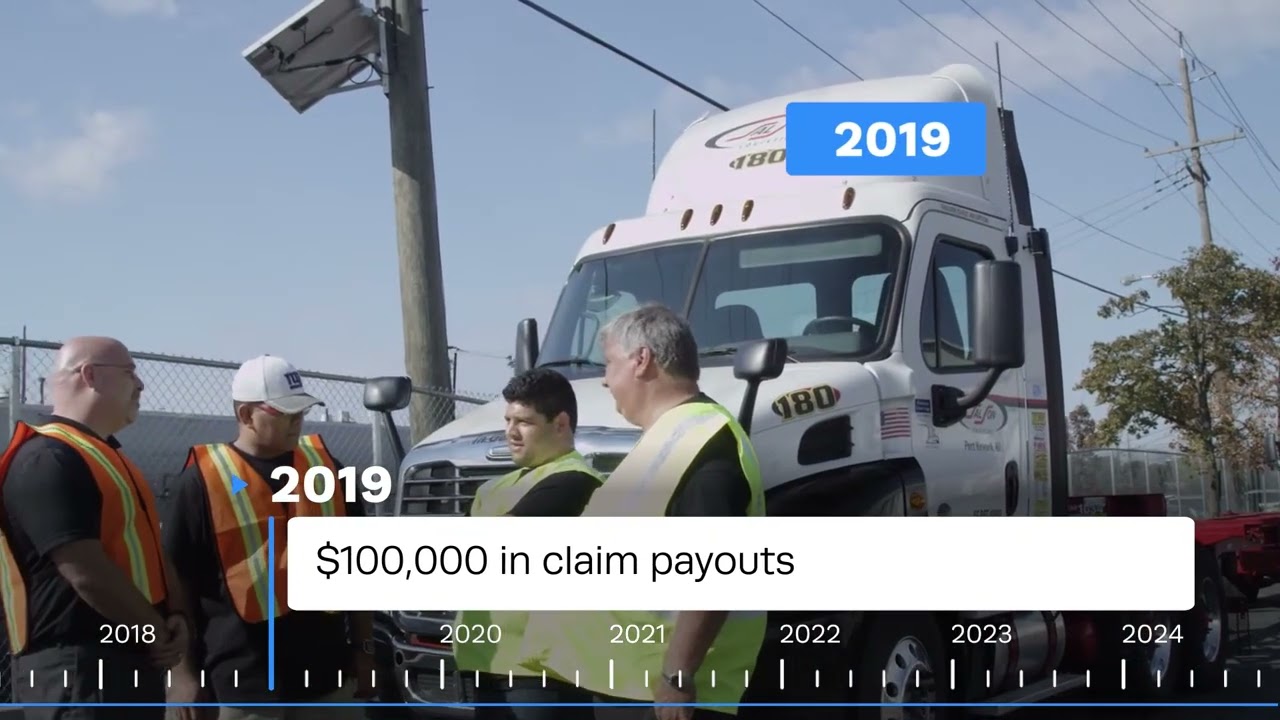
See how SalSon Logistics turned a $9 million insurance problem into a strategic advantage
After spending nearly $9 million in claims in 2017—some from staged accidents—SalSon implemented Vestige’s AI‐powered fleet cameras and real‑time command center. The result? Accident payouts dropped from six‑figure annual totals to under $200,000 by 2024.
Better yet, drivers are protected, insurers are competing for their business, and a stronger safety culture now fuels their profitability.
Trustindex verifies that the original source of the review is Google. I have been a customer of Vestige for over 5 years. Megan and Corey do an awesome job and get us whatever we requested extremely quickly whether it’s an emergency that we need video of or a simple report we want! Their system has saved us from several Faldo claims and the software has never let us down!Trustindex verifies that the original source of the review is Google. Very effective and reliable resource in the field. Product is durable and does everything you’ll need from A-Z, remember you get what you pay for so why not get the best you can. Thank you Vestige for your support and business in this demanding field!Trustindex verifies that the original source of the review is Google. One of our trucks lost a drive line and no parts houses had one in stock. We were able to find it by watching the video from the side camera to see where it landed. Excellent product, and customer service at Vestige is excellent! Much better than other dash cam companies we have used in the past. Highly recommend.Trustindex verifies that the original source of the review is Google. Great products and Service... we were hesitant about getting the Dashcam Service but within a few months it basically paid for itself due to an accident we had that could have been considered our fault but thanks to the camera I was actually able to share it with the Trooper that worked the accident. Not sure how many different set ups they offer but we are very happy with the basicly Live DashCam service we got that also has GPS integrated . Its great having it all in one App.
Commercial truck insurance premiums have increased nearly 50% over the last decade, with per-mile costs reaching a record high of $0.102 in 2024, according to the American Transportation Research Institute.
As fleet managers face mounting pressure to control insurance costs while improving safety performance, the difference between basic dash cams and comprehensive video telematics systems has never been more critical. Research from the Virginia Tech Transportation Institute shows that 80% of collisions involve some form of driver distraction, making video technology essential for modern fleet operations. Understanding which solution meets your operational needs can mean the difference between reducing accidents by 37% or achieving reductions exceeding 80%.

Sobering Statistics About the Increase In Staged Accidents
1. It’s Organized Crime
Criminal rings orchestrate many of these scams—with recruiters, fake clinics, lawyers, and “professional crashers.”
One ring in New Orleans stole $4.7 million before being caught.
2. Fraudsters Win Big in Court
Some walk away with $1M+ settlements because carriers settle quickly to avoid trial—especially when no dashcam footage exists.
3. Fleets Are Prime Targets
Large trucks are targeted due to their high liability coverage—often $750,000+ per incident—making them especially attractive to scammers.
4. It Hurts Everyone
These frauds increase insurance premiums by 10–20% annually for honest fleets in high-fraud areas.
5. Most Fleets Lack Video Protection
Only 15% of fleets are fully equipped with dash cameras—leaving them vulnerable and unable to prove their innocence.
Understanding Basic Dash Cams
Basic dash cams are standalone video recording devices that capture footage from one or more cameras mounted in commercial vehicles. These entry-level systems typically record continuously or trigger recordings based on impact sensors, providing a simple video record of road conditions and incidents.
Traditional dash cam systems operate independently from other vehicle systems. They store footage locally on SD cards or internal storage, requiring manual retrieval when incidents occur. Fleet managers must physically collect storage devices or download footage through direct connections to access recorded video. This creates significant operational challenges when managing fleets with dozens or hundreds of vehicles spread across multiple locations.
Most basic dash cams offer forward-facing road views, with some models adding rear-facing or interior cabin cameras. The footage quality varies widely, from standard definition to 4K resolution, depending on the price point and manufacturer. However, recording quality alone does not translate to actionable safety insights. Without intelligent analysis capabilities, these systems function primarily as passive documentation tools rather than proactive safety management platforms.
Storage limitations represent another significant constraint for basic dash cam operations. Continuous recording fills storage capacity quickly, forcing systems to overwrite older footage or stop recording entirely. Fleet managers frequently discover that critical incident footage was already overwritten before they could retrieve it. This makes dash cams unreliable for compliance documentation or insurance claim defense when incidents occurred days or weeks before discovery.
Basic dash cams provide minimal integration with fleet management systems. They cannot communicate with GPS tracking, fuel monitoring, electronic logging devices, or maintenance scheduling platforms. This isolation prevents fleet managers from correlating video evidence with other operational data like speeding events, harsh braking, location information, or driver identification. Without this context, dash cam footage offers limited value for driver coaching programs or comprehensive safety analysis.
The cost structure of basic dash cams appears attractive initially, with hardware prices ranging from $100 to $500 per unit. However, the total cost of ownership increases dramatically when accounting for manual data retrieval, storage management, footage review time, and the inability to prevent incidents proactively. Fleet operations experience higher long-term costs through missed coaching opportunities, slower incident response, and continued exposure to preventable accidents that more advanced systems could address.
What Video Telematics Systems Deliver
Video telematics platforms integrate AI dash cams with comprehensive fleet management capabilities, creating unified safety and operations systems that deliver actionable intelligence in real time. These advanced platforms combine video evidence with GPS tracking, driver behavior analytics, and automated safety monitoring to provide complete visibility into fleet operations.
The fundamental difference lies in connectivity and intelligence. Video telematics systems maintain continuous cellular connections, transmitting critical events immediately to cloud platforms where advanced AI algorithms analyze footage automatically. Fleet GPS tracking capabilities enable safety managers to view live video streams from any vehicle in the fleet, correlate incidents with precise locations, and respond to emergencies as they unfold. This real-time visibility transforms fleet safety from reactive incident investigation to proactive risk management.
Artificial intelligence powers the core advantages of video telematics. AI algorithms detect distracted driving, drowsiness, cell phone use, smoking, eating, and other risky behaviors as they occur. According to NHTSA and VTTI research, distracted driving increases crash risk by 23 times for activities like texting, making real-time detection crucial. When AI identifies dangerous behavior, the system can deliver immediate in-cab alerts to drivers, providing corrections before incidents occur. This proactive intervention capability reduces collision rates by 40-80% according to fleet safety studies.
Advanced video telematics platforms offer multi-camera fleet systems with forward road views, driver-facing cameras, and side/rear coverage. 360-degree vehicle cameras provide complete documentation of the vehicle’s surroundings, eliminating blind spots and protecting fleets from false liability claims. Elite Collateral Recovery, a New Jersey repossession firm, reports that its three-camera Vestige configuration has saved millions by preventing fraudulent claims and staged accident attempts that are common in its industry.
Cloud storage infrastructure eliminates the storage capacity constraints of basic dash cams. Video telematics platforms automatically upload critical events and maintain footage indefinitely in secure cloud environments. Fleet managers access any incident from any location through web portals or mobile applications, sharing footage instantly with insurance carriers, legal teams, or law enforcement. SalSon Logistics Vice President John Lampasona stated that Vestige cameras paid for themselves after the first accident by providing immediate video exoneration that protected the company from a false liability claim.
Integration capabilities separate video telematics from basic cameras. These platforms connect seamlessly with Electronic Logging Devices, fuel cards, maintenance systems, and dispatching software. Safety managers correlate harsh braking events with specific routes, identify patterns in driver behavior across vehicles, and build comprehensive safety profiles for each operator. This integrated approach enables data-driven decision-making that improves both safety performance and operational efficiency.
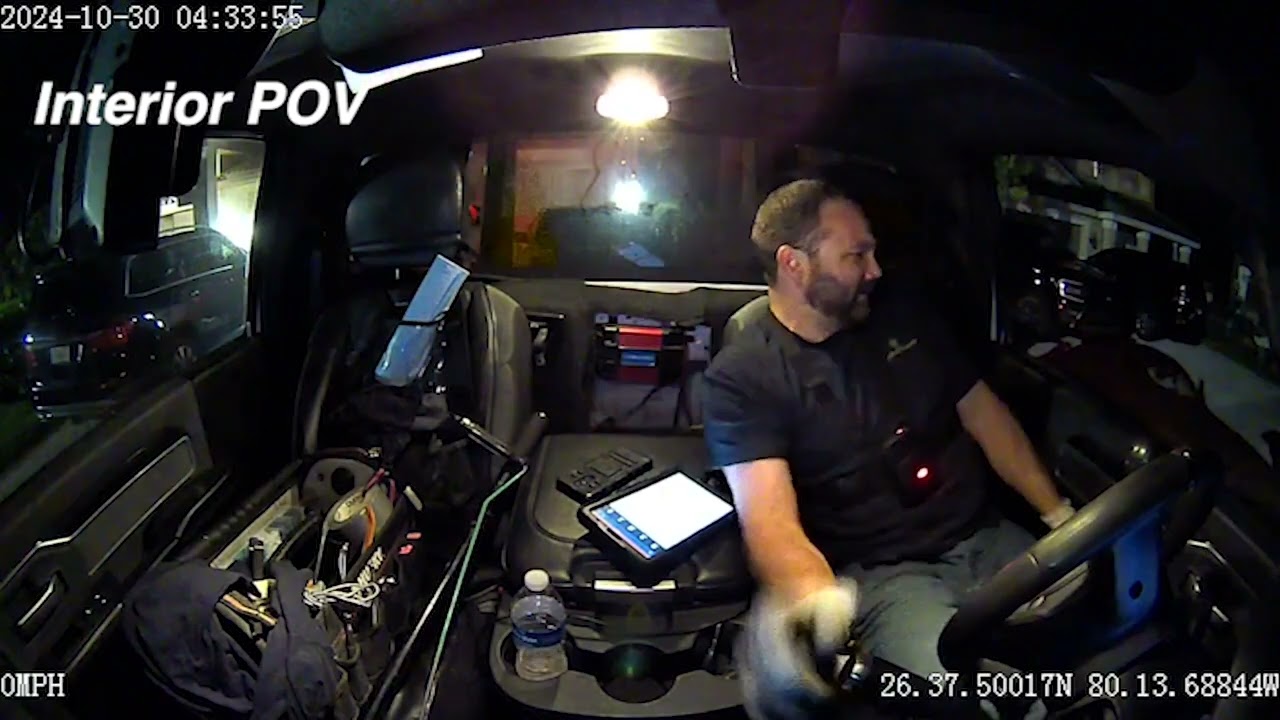
Elite Collateral Recovery Case Study
Rising insurance fraud is making it harder than ever for repossession companies to stay insured. Some have even shut down because of it. Elite Collateral Recovery faced a critical moment when staged accidents and false claims started to jeopardize its operations.
That’s when their founder, Max Piñeiro, turned to Vestige AI Cameras. With the right technology in place, the company not only protected its drivers but also safeguarded its company’s reputation.
Critical Technology Differentiators
The technical specifications that distinguish basic dash cams from video telematics systems directly impact fleet safety outcomes and total cost of ownership. Understanding these differences helps fleet managers make informed technology investments that deliver measurable returns.
Real-time connectivity represents the most significant technical advantage of video telematics. Basic dash cams record and store footage locally without any network communication capability. Video telematics systems maintain continuous 4G LTE or 5G connections, enabling instant event uploads, live video streaming, and real-time fleet monitoring. This connectivity allows safety managers to intervene during developing situations rather than discovering incidents hours or days later through post-event investigations.
Artificial intelligence processing fundamentally changes how video systems detect and respond to safety risks. Basic dash cams capture video without analyzing content or identifying specific behaviors. AI-powered video telematics platforms process video feeds continuously, recognizing dozens of risky driving behaviors, including distraction, drowsiness, cell phone use, following too closely, lane departures, and unsafe speeds. According to Virginia Tech Transportation Institute research, video-based safety programs could save 800 lives annually by reducing risky driving behaviors by 37-52%.
Event-triggered recording capabilities differ dramatically between systems. Basic dash cams use simple G-force sensors to detect impacts, creating 30-second to 2-minute video clips around collision events. Video telematics platforms employ sophisticated multi-factor triggering that identifies dozens of event types, including harsh acceleration, hard braking, sharp turns, speeding violations, stop sign violations, and traffic light infractions. These systems also support Power Take-Off (PTO) bookmarks for specialized vehicles, automatically timestamping footage when equipment engages to simplify incident location for tow operators and construction fleets.
Storage architecture impacts both footage availability and system costs. Basic dash cams rely on physical SD cards with 32GB to 256GB capacity that record continuously until full, then overwrite the oldest footage. This creates regular data loss as older incidents disappear before manual retrieval. Video telematics platforms use unlimited cloud storage that retains critical events indefinitely. Certified Auto Mall owner Mike Stahnten reports that Vestige’s cloud-based system prevented multiple fraudulent liability claims by providing instant access to incident footage weeks after events occurred, something impossible with SD card-based systems.
Scalability and fleet management capabilities separate enterprise-grade telematics from consumer-oriented dash cams. Managing 50 or 500 vehicles with basic cameras requires physically collecting and reviewing footage from each unit. Video telematics platforms centralize all footage in cloud environments with powerful search and filtering tools. Safety managers query events across entire fleets, identify coaching opportunities, track safety trend improvements, and generate compliance reports without touching individual vehicles.
Integration and data ecosystem advantages compound over time. Basic dash cams operate in isolation, providing only video footage without context. Video telematics platforms integrate with fuel cards, GPS tracking, maintenance systems, payroll, dispatch software, and compliance tools. This creates comprehensive operational visibility where video evidence correlates with location data, fuel consumption, maintenance needs, and driver performance metrics. The Federal Motor Carrier Safety Administration’s Crash Preventability Determination Program specifically recognizes dashcam footage as critical evidence for exonerating drivers in non-preventable crashes, but only when fleets can quickly locate and provide relevant video with supporting contextual data.
Business Impact and ROI Analysis
Fleet managers evaluate video technology investments based on measurable business outcomes rather than technical specifications alone. The financial differences between basic dash cams and comprehensive video telematics systems become clear when examining insurance costs, accident prevention, operational efficiency, and driver retention.
Insurance premium reductions represent the most immediate return on investment for video telematics systems. According to industry surveys, insurance premium discounts for fleets using dashcams range from 5% to 20%, with some programs offering more substantial reductions for AI-powered systems that demonstrate active safety management. With average truck insurance costs reaching $0.102 per mile in 2024, a 100-truck fleet averaging 100,000 miles per year saves $51,000 to $204,000 annually through insurance discounts alone. These savings typically exceed the total cost of comprehensive video telematics implementation within the first year.
Accident cost avoidance delivers even more dramatic financial impact. Nuclear verdicts in trucking litigation frequently exceed $10 million, with median awards reaching $36 million in the worst cases, according to the American Transportation Research Institute. Video evidence exonerates drivers and prevents these catastrophic payouts. SalSon Logistics documented insurance claim reductions from $9 million annually in 2017 to under $200,000 in 2019 after implementing Vestige video telematics, while simultaneously reducing accidents from 418 to 24 incidents. This represents over $8.8 million in annual savings directly attributable to comprehensive video documentation and AI-powered safety monitoring.
Fraudulent claim prevention protects fleets from staged accidents and false liability assertions. The Coalition Against Insurance Fraud reports that fraudulent claims cost over $308 billion annually across all sectors, with commercial trucks frequently targeted due to high policy limits. Research from the National Insurance Crime Bureau shows that staged accidents against commercial vehicles are increasing, particularly “swoop and squat” schemes where fraudsters deliberately cause rear-end collisions. Video telematics provides irrefutable evidence that defeats these claims, while basic dash cam footage may have been overwritten or lack the resolution and camera angles needed to prove driver innocence.
Operational efficiency improvements extend beyond safety metrics. Fleet management platforms that integrate video with GPS tracking enable better route optimization, fuel efficiency monitoring, and customer service verification. Research shows that dashcams improve fuel economy by 5% to 9% through improved driving behaviors and reduced aggressive acceleration. For a 100-truck fleet consuming 20,000 gallons annually per vehicle, this efficiency gain saves $45,000 to $81,000 in fuel costs at $4.50 per gallon diesel prices.
Driver retention and recruitment benefits emerge from proper video telematics implementation. Drivers initially resist camera systems out of privacy concerns and fear of constant monitoring. However, when safety managers use video primarily to protect drivers from false accusations rather than punitive discipline, driver acceptance improves dramatically. Mike McGregor, Operations Manager at Verified Response security firm, reports that officers became supporters after cameras helped “put people in jail” and “kept my guys out of trouble” by providing clear evidence in confrontations. This protection improves driver morale and reduces turnover in an industry where driver turnover reached 94% for large carriers.
Claims resolution speed impacts both insurance costs and fleet productivity. Video evidence expedites claims resolution by providing indisputable documentation of incident circumstances. Fleet managers using video telematics report investigation times reduced from weeks to hours when video clearly establishes fault. This speed prevents extended vehicle downtime, reduces legal expenses, and allows drivers to return to work faster rather than spending days providing statements and testimony.
Coaching program effectiveness multiplies when video evidence supports behavioral feedback. Driver behavior analytics identify specific coaching opportunities with objective evidence. Studies show that integrating dashcam footage into structured coaching programs reduces risky driving behaviors by more than 50%, improving safety culture and driver retention. Basic dash cams cannot provide this proactive coaching capability because they lack behavior detection, event categorization, and automated incident identification.
SalSon Logistics Case Study
John Lampersona, VP of Safety & Logistics at SalSon, was determined to protect his fleet—and his business relationships—from the crushing weight of multi-million dollar accident claims.
Lampersona transformed the situation by equipping his entire fleet with the Vestige Camera.
Real-time data significantly enhanced driver behavior, prevented false claims, and reduced accident-related costs, thereby revolutionizing SalSon’s safety culture.
Read more about how the Vestige Camera drives lasting change in the logistics industry.
Regulatory Compliance Considerations
Federal Motor Carrier Safety Administration regulations and DOT requirements create compliance obligations that video systems can help fleet operators meet more effectively than manual processes alone. Understanding how different video technologies support regulatory compliance helps fleet managers select systems that reduce violation risk while improving operational safety.
Hours of Service compliance monitoring benefits significantly from integrated video telematics platforms. While basic dash cams only record video, comprehensive platforms correlate GPS location data with electronic logging device records to identify potential HOS violations before they result in roadside inspection penalties. According to FMCSA data, HOS violations represent one of the highest crash correlation factors for commercial vehicles. Video timestamping provides supporting evidence when HOS disputes arise, helping carriers prove compliance during audits.
Crash preventability determinations under FMCSA’s expanded Crash Preventability Determination Program specifically recognize video evidence as critical documentation. As of December 2024, FMCSA expanded crash preventability categories to 21 specific crash types that can be reviewed for Not Preventable classification. The agency explicitly states that carriers must supply police reports, dashcam video, black box data, or other documentation to prove crashes were unpreventable. Video systems that automatically preserve incident footage and provide easy sharing mechanisms dramatically increase successful preventability claims, removing non-preventable crashes from carrier safety records.
Driver safety file documentation requirements mandate that carriers maintain records of driver training, safety meetings, and coaching activities. Video telematics platforms automatically document coaching sessions, safety incidents, and driver acknowledgments in electronic formats that satisfy FMCSA recordkeeping requirements. Safety managers generate compliance reports demonstrating active safety management programs, which regulators view favorably during compliance reviews and audits.
Electronic Logging Device integration creates comprehensive compliance documentation when video systems connect with ELD platforms. The ELD mandate requires automatic recording of driving time, but adding synchronized video provides context for inspection challenges, traffic delays, or unusual circumstances that explain apparent violations. Combined ELD and video evidence protects carriers during roadside inspections by providing clear documentation of compliant operations.
Driver vehicle inspection reports become more efficient when video captures pre-trip and post-trip inspections. While FMCSA requires written DVIRs, video documentation supplements these reports with timestamped visual evidence of vehicle condition. This protects carriers if accidents occur due to pre-existing damage or mechanical failures that drivers properly reported. Several fleets use video to train new drivers on proper inspection procedures, ensuring consistent compliance with FMCSA maintenance requirements.
Safety Measurement System ratings improve when carriers actively use video telematics to reduce violations across all BASIC categories. FMCSA’s SMS evaluates carriers on Unsafe Driving, Hours-of-Service Compliance, Driver Fitness, Controlled Substances/Alcohol, Vehicle Maintenance, Hazardous Materials Compliance, and Crash Indicator scores. Video evidence supports improvements in every category by providing coaching opportunities, proving preventability in crashes, documenting proper pre-trip inspections, and demonstrating active safety management that regulators recognize during interventions.
Windshield mounting regulations under FMCSA regulations permit dashcam installation if devices do not obstruct driver views beyond specific limits. Fleet managers must ensure video system installations comply with windshield obstruction rules that prohibit devices from blocking more than a small area in the lower corner of the windshield or a specific zone above the steering wheel. Proper installation prevents violations during roadside inspections and ensures driver visibility remains uncompromised.
Implementation Best Practices for Fleet Managers
Successful video technology deployment requires strategic planning, driver engagement, and operational integration that extends far beyond simply installing cameras in vehicles. Fleet managers who follow proven implementation practices achieve higher adoption rates, better safety outcomes, and stronger return on investment than those who treat video systems as simple plug-and-play installations.
Pilot program development allows fleets to validate technology performance and refine operational procedures before full-scale deployment. Safety managers should select 10-20 vehicles representing different operational segments—local delivery, regional hauls, long-haul operations—and equip them with video telematics for 60-90 days. This pilot period tests system reliability, identifies coaching workflows, evaluates driver acceptance, and documents measurable safety improvements that justify broader implementation. ATRI research shows that carriers increasingly rely on telematics data and driver coaching to improve safety programs, making pilot programs essential for developing effective protocols.
Driver communication and buy-in determine whether video systems create safety improvements or driver resistance. Fleet managers should involve drivers early in the selection process, explaining that cameras primarily protect drivers from false accusations rather than creating surveillance systems for punitive discipline.
Sharing case studies like Elite Collateral Recovery, where owner Max Piñeiro stated that “if it wasn’t for the cameras, we wouldn’t be in business today” due to protection from violence and false claims, helps drivers understand that video evidence safeguards their careers and personal safety. Industry studies show that drivers become more supportive when they see footage that protects them from wrongful accusations.
Privacy policy development addresses legitimate driver concerns about constant monitoring and footage misuse. Fleet managers should establish written policies defining how footage is accessed, who can view recordings, retention periods for different event types, and protections against frivolous review of driver behavior. Some states, including Illinois, Texas, and Washington, require driver consent before using inward-facing cameras that collect biometric data, making clear policies essential for legal compliance. Transparent policies that emphasize safety over surveillance reduce driver resistance.
Safety culture integration ensures video systems support positive coaching rather than punitive enforcement. The most successful programs use a “trust but verify” approach where positive driver behaviors receive recognition, while coaching addresses specific improvement opportunities backed by video evidence. Fleets should establish coaching protocols that review video privately with individual drivers, focus conversations on learning and improvement, and track safety metric trends rather than punishing isolated incidents. Research shows that rewarding good drivers produces better outcomes than simply reprimanding poor performers.
Incident response procedures maximize video system value by establishing clear protocols for footage retrieval, evidence sharing, and stakeholder notification. Safety managers need documented workflows for responding to accidents, near-misses, customer complaints, and insurance claims that specify exactly how quickly footage is retrieved, who receives copies, and how video evidence integrates with incident reports. Certified Auto Mall reports that immediate video access during accidents provided clarity and internal documentation without waiting for external requests, demonstrating the importance of well-defined incident response procedures.
Continuous improvement monitoring tracks safety metrics that demonstrate program effectiveness and justify continued investment. Fleet managers should establish baseline measurements before video implementation, then monitor collision frequency, severity, insurance claims, safety violations, near-miss incidents, and coaching completion rates monthly. These metrics provide objective evidence of return on investment that supports budget requests for system expansion and demonstrates compliance program effectiveness during regulatory audits. SalSon Logistics documented their dramatic improvement from 418 accidents in 2017 to 24 accidents in 2019, providing clear evidence that comprehensive video telematics delivers measurable safety transformation.

Vestige featured in Charlotte Business Journal
The leader in safety technology is featured following the opening of its new office to support the expanding sales and support teams, which serve thousands of clients across North America.
Take Control of Fleet Safety with Vestige
The choice between basic dash cams and comprehensive video telematics determines whether your fleet simply documents incidents after they occur or actively prevents accidents before they happen. As commercial truck insurance costs continue rising and nuclear verdicts threaten fleet operations, passive recording systems no longer provide adequate protection.
Vestige delivers complete fleet visibility through AI-powered fleet cameras that detect dangerous driving behaviors in real time, GPS tracking systems that provide instant location visibility, and cloud-based platforms that make critical footage instantly accessible when you need it most. Our customers report collision reductions exceeding 80%, insurance claim savings in the millions, and complete protection from fraudulent liability assertions that basic cameras cannot provide.
Whether you operate a 10-truck delivery fleet or manage hundreds of long-haul vehicles across multiple states, Vestige’s comprehensive video telematics platform protects your drivers, defends your company from false claims, and delivers measurable return on investment that transforms fleet safety culture.
Contact Vestige today to schedule a demonstration and discover how comprehensive video telematics eliminates the limitations of basic dash cams while delivering the safety improvements and cost savings your fleet needs to succeed in today’s challenging operating environment.
Fleet Multi-Cameras & GPS Tracking
Fleet GPS relays timely location updates and customized alerts. Capture a 360-degree view with our premium camera solutions.
By choosing advanced systems, businesses can unlock a range of features that improve safety, efficiency, and protection:
360-Degree Coverage
Monitor the full vehicle interior and exterior to ensure passenger and driver safety.
High-Definition Footage
Capture clear, reliable video evidence to resolve incidents.
Event Based Alert
Automatic recording of critical incidents, such as sudden stops or hard braking.
Real-Time Monitoring
Enable live-streaming for fleet managers to respond to emergencies quickly.
Cloud Storage
Store footage securely with easy access for future review.
GPS Integration
Track vehicle locations and routes for improved efficiency.
Night Vision Capabilities
Maintain visibility in low-light conditions to ensure safety during nighttime trips.
Frequently Asked Questions
Dash cams are standalone video recording devices that capture footage locally without real-time connectivity or intelligent analysis. Video telematics systems integrate AI-powered cameras with GPS tracking, cloud storage, fleet management platforms, and driver behavior analytics to provide comprehensive safety management. Video telematics offers real-time monitoring, automatic event detection, instant footage sharing, unlimited cloud storage, and integration with other fleet systems, while basic dash cams simply record video to local storage devices.
Yes, significantly. Insurance premium discounts for fleets using video telematics typically range from 5% to 20% according to industry surveys, with some carriers offering larger reductions for systems demonstrating active safety management. With commercial truck insurance averaging $0.102 per mile in 2024, these discounts provide substantial savings. More importantly, video evidence prevents costly liability claims. SalSon Logistics reduced insurance claims from $9 million annually to under $200,000 after implementing Vestige video telematics, demonstrating the dramatic financial impact of comprehensive video documentation.
AI algorithms continuously analyze video feeds to detect dangerous driving behaviors including distraction, drowsiness, cell phone use, following too closely, and lane departures. When AI identifies risky behavior, systems deliver immediate in-cab alerts that allow drivers to self-correct before incidents occur. Virginia Tech Transportation Institute research shows that 80% of collisions involve distraction, making real-time detection crucial. Fleets using AI-powered video telematics report collision reductions of 40-80% compared to passive recording systems that only document incidents after they occur.
Initial resistance is common, but driver acceptance improves when safety managers use video primarily to protect drivers rather than for punitive monitoring. Fleets should communicate that cameras defend drivers against false accusations, staged accidents, and wrongful liability claims. Case studies from companies like Elite Collateral Recovery show that drivers become supporters after cameras protect them from violence and fraudulent claims. Establishing clear privacy policies, using coaching rather than punishment, and demonstrating that video safeguards driver careers reduces resistance significantly.
Cloud-based storage eliminates capacity constraints entirely. Video telematics platforms automatically upload critical events to unlimited cloud storage, retaining footage indefinitely without overwriting older incidents. This contrasts with basic dash cams using 32GB to 256GB SD cards that constantly overwrite older footage. Certified Auto Mall owner Mike Stahnten reports that cloud storage prevented multiple fraudulent claims by providing instant access to incident footage weeks after events occurred, which would be impossible with SD card-based systems.
Most fleets achieve positive return on investment within the first year through insurance discounts, accident reduction, and fraudulent claim prevention. Insurance savings alone often exceed implementation costs, while preventing a single nuclear verdict that could reach $10-36 million delivers immediate ROI. SalSon Logistics saved over $8.8 million annually after implementing comprehensive video telematics. Additionally, fuel efficiency improvements of 5-9% from better driving behaviors and operational efficiency gains compound savings over time.
Yes, significantly. Video evidence supports FMCSA’s Crash Preventability Determination Program by documenting non-preventable crashes, which the agency explicitly recognizes as critical evidence. Video telematics platforms help fleets maintain compliance with Hours of Service regulations, driver vehicle inspection reports, and safety management documentation requirements. Synchronized video and ELD data protect carriers during roadside inspections and compliance audits by providing clear evidence of regulatory compliance.
Get Started with Vestige Today
Vestige is committed to delivering top-tier GPS fleet tracking and dash cam solutions tailored to your business needs. Here’s why businesses across the globe trust us:
24/7 Customer Support:
Our team is always here to assist you, whether you have a question about your fleet dash cam system or need help analyzing GPS fleet tracking data.
Seamless Integration:
Our systems are easy to install and integrate with your existing fleet management tools. You’ll be up and running in no time, with both GPS fleet tracking and dash cam footage available at your fingertips.
Scalable Solutions:
Whether you have a fleet of 5 or 500 vehicles, our GPS fleet tracking and dash cam solutions can scale with your business. From small operations to large corporations, we’ve got the right tools for every fleet size.
Don’t leave your fleet management to chance. Invest in Vestige’s advanced GPS fleet tracking and dash cam technology and gain the insights you need to improve safety, efficiency, and accountability.
Contact us today to learn how our fleet dash cam solutions can transform the way you manage your fleet.
Speak With A Fleet Specialist
Learn more about the Vestige AI Camera System
Find out more about our camera system and how our customers have utilized our smart camera solution to improve their fleets.