
Body Cameras with Audio: Features, Benefits, and Legal Considerations
TRUSTED BY INDUSTRY LEADERS



Recently, the body camera with audio capabilities has become a must-have tool for law enforcement, security, and other professional fields.
Studies show that departments using body cameras report about a 17% reduction in complaints against officers, which is a clear sign of how valuable they are for accountability, transparency, and building better community relationships.
Beyond that, they make it easy to capture solid evidence when it’s needed most, as one of the most important aspects of a body camera is its objectivity. These devices must capture all of the action of fast-paced, high-stakes situations where split-second decisions can lead to real-world consequences for the people involved.
In the case of law enforcement in particular, this objectivity and ability to capture key video evidence is crucial. When lives are potentially on the line, professionals and the public alike rely on these cameras to prove who was in the right and who was in the wrong in a given scenario.
Typically, video is the only aspect of these cameras being discussed, but the addition of audio can be a huge factor. The ability to hear what individuals are saying, how verbal interactions unfolded, and other such key markers can help investigators better unravel what happened after the fact.
How a Body Camera with Audio Works
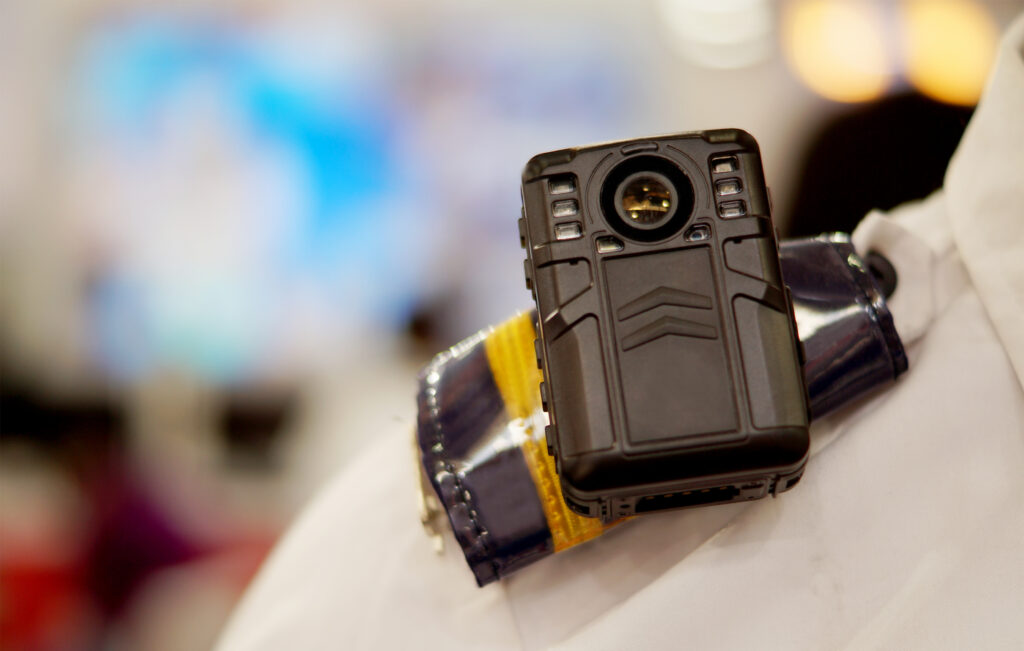
An audio-enabled body camera represents a significant advancement in surveillance and documentation technology.
Visual information is only one part of the bigger picture when it comes to interacting with other people. Think about it—in a given situation, you are not only looking at someone, but listening to them as well. What they say, and how they say it, can siginificatnyl impact how you respond to the situation.
Now take into account other factors such as background noise, other parties speaking, and any other auditory information. You’ll quickly realize that oftentimes, this audio can be just as important as the video information in unraveling what happened in any given situation.
The comprehensive approach of a modern body cam with audio makes sure nothing slips through the cracks, picking up important details that video alone can miss.
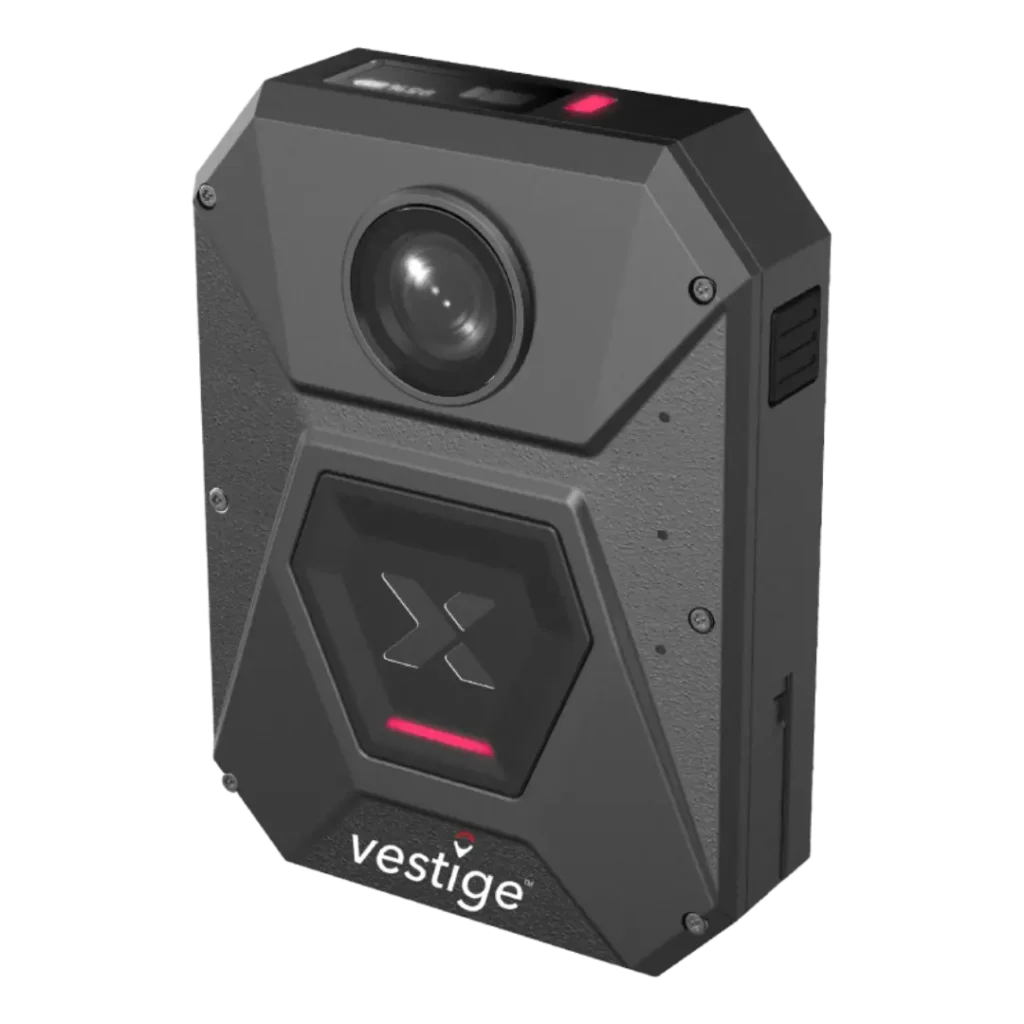
Vestige’s body-worn camera solutions include two-channel audio recording and secure data encryption, so you get clear sound and reliable protection no matter the situation.
These advanced systems are specifically designed to provide clear audio even in challenging environments. Through the use of sophisticated noise reduction and wind-filtering technologies, these devices deliver high-level performance across various operational conditions.
Multiple microphone arrays can capture clear sound, while simultaneously filtering out unnecessary background noise or consistent distractions such as wind or traffic. This can be done in a few different ways, such as tuning the microphones to focus on sound frequencies consistent with human speech.
Want to know what happened at a traffic stop, and who said what to whom? Want to know what first responders had to say while searching for victims in the midst of a howling storm?
You’re probabyl beginning to see how these devices are invaluable when it comes to evidence collection and documentation purposes.
While most people are likely familiar with body cameras through their use by law enforcement, the devices find applications across numerous settings. These are not limited to law enforcement operations, and also include private security services, healthcare facilities, public transportation, retail establishments, and construction sites, to name a few.
Additionally, body cameras are already proving to be a valuable tool for companies looking to enhance their proof-of-service capabilities.
Clear video footage that shows when, where, and how employees performed their duties are unbelievably valuable as it allows supervisors and customers instantaneous access to proof that their services were rendered appropriately.
Each environment presents unique challenges that require specialized features and capabilities to ensure optimal performance and compliance with industry-specific requirements.
Your Team’s Safety—Captured and Secured with Vestige
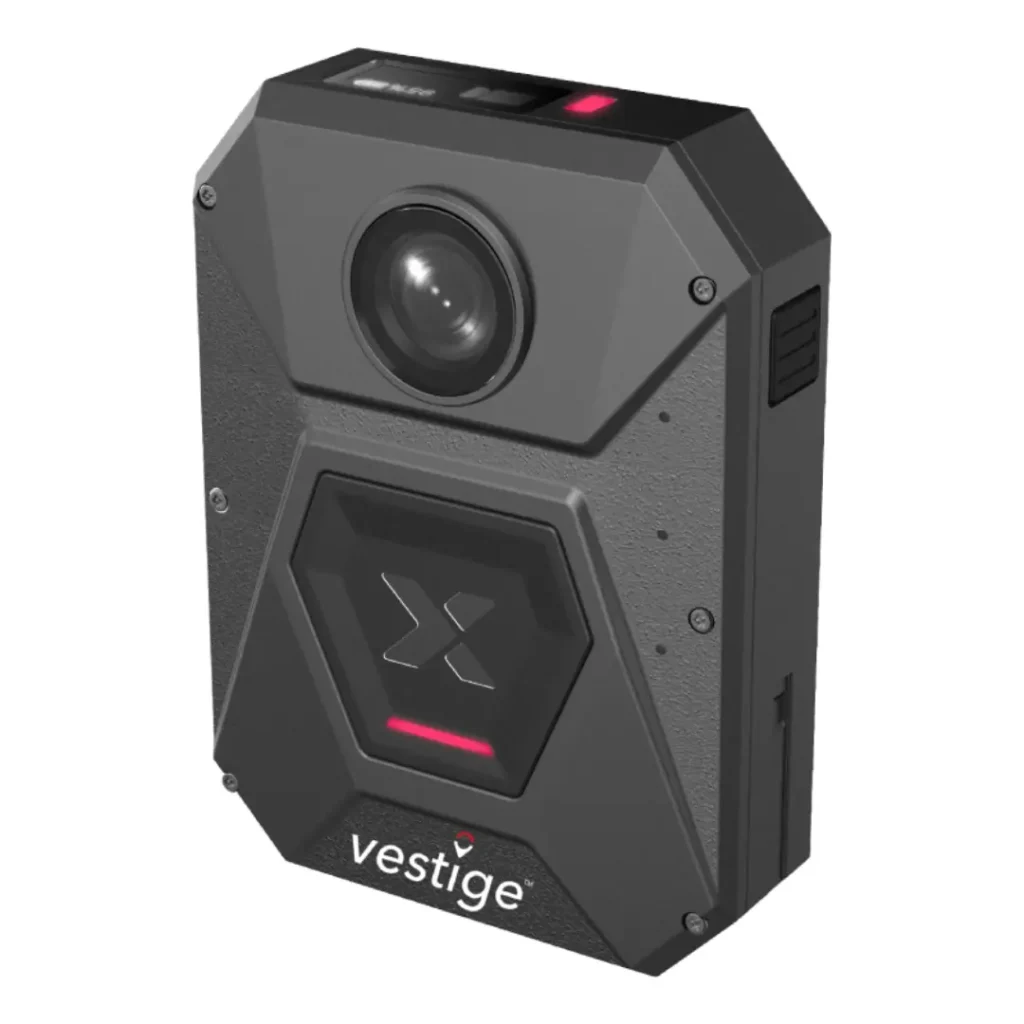
Give your employees peace of mind and accountability with our discreet, easy-to-use body cameras. VestigeView’s body-worn solution ensures your team is protected, monitored, and compliant—wherever the job takes them.
- Record and store on-the-job interactions securely
- Track employee movements and verify site visits
- Promote transparency and reduce liability
Essential Features of an Audio-enabled Body Camera
When evaluating wearable camera capabilities, there are many key features that set superior models apart from basic options.
High-quality audio recording capabilities are essential for capturing clear, admissible evidence and maintaining accurate records of interactions.
The most effective body camera with audio models incorporate advanced technologies that deliver reliable performance in a wide range of operational scenarios.
Professional-grade body cameras with audio devices include the following features:
- Dual-channel audio recording for comprehensive sound capture
- Advanced noise reduction technology for clear audio in noisy environments
- Wind-filtering capabilities for outdoor operations
- Waterproof microphone systems for all-weather functionality
- Extended battery life for full-shift operation
- Secure data encryption for evidence protection
Professional-grade body cameras with audio solutions, like those offered through Vestige’s comprehensive body-worn camera solutions, incorporate sophisticated audio processing technologies that ensure optimal sound quality even in challenging environments.
These systems use advanced microphone arrays that enable each body camera to capture clear sound while filtering out unnecessary background noise.
Key considerations for audio quality in a body camera with an audio system include frequency response range, signal-to-noise ratio, audio compression format, storage capacity, and integration with video systems.
These technical specifications directly impact the effectiveness of the evidence collected and the overall value of the audio-enabled body camera investment.
Body Camera with Audio for Law Enforcement Operations
Law enforcement agencies increasingly rely on body cameras with audio capabilities to enhance transparency, improve evidence collection, and strengthen community relations.
The impact of a body cam with audio extends far beyond simple documentation—these devices fundamentally transform police-community interactions by providing comprehensive evidence that captures both video and audio components of incidents.
Key features that make a body camera with audio effective for law enforcement include pre-event recording, automatic activation, tamper-proof evidence controls, real-time streaming, and GPS tracking.
Together, these tools make sure every audio-enabled body camera captures a full, reliable record while keeping evidence secure and trustworthy.
Successful implementations have shown that agencies using comprehensive body cameras with audio systems experience reduced use-of-force incidents, decreased citizen complaints, improved officer safety, enhanced training opportunities, and streamlined evidence collection.
The benefits of body-worn cameras for lone workers extend beyond law enforcement to include various professional applications where worker safety and accountability are paramount.
Start Protecting Your Remote Employees Today
Are you ready to meet the security demands of modern organizations? An ESD is a cost-effective way to achieve your goals.
Many people think it’s a complicated process, but it doesn’t have to be. With Vestige on your side, you can provide guards, bouncers, and event staff with a compact, water-resistant, advanced safety device that they can comfortably wear 24/7.
There’s no other device quite like it on the market. It’s the ideal step to achieving your safety goals for personnel in your company. Request a demo now.
Technical Specifications for the Audio Body Cam
When selecting a body camera with an audio system, there are several technical specifications to consider. The quality of the audio recording often determines the effectiveness of the evidence collected and the overall value of the body camera’s audio investment.
Understanding these specifications helps organizations make informed decisions about their security technology needs.
Audio quality metrics for a professional body camera with audio include sampling rate (minimum 44.1 kHz), bit depth (16-bit or higher), multiple microphone arrays, adaptive gain control, and environmental noise reduction.
These specifications ensure that the wearable camera captures high-quality audio that meets professional standards and legal requirements.
Modern systems, such as Vestige’s body-worn cameras, incorporate advanced features like dual-channel audio recording and secure data encryption to make sure that each audio body camera meets professional standards while maintaining data integrity throughout the storage and retrieval process. These systems are designed to provide reliable performance across various operational environments and conditions.
When it comes to a body cam with audio, storage, and battery power make all the difference. Look for at least an 8-hour battery life, 64GB or more of storage, fast charging, backup battery options, and cloud storage.
With these features, the camera can keep up through a full shift and securely save all the evidence it captures.
Understanding the Legal Requirements of a Body Camera with Audio
Legal considerations surrounding these body cameras vary depending on where and how it is being used. Since audio recording often comes with stricter requirements than video alone, it’s important to understand the laws that apply in your area.
Organizations must carefully navigate these legal complexities to ensure proper use of their body cameras and audio systems. Consent laws and privacy expectations vary by jurisdiction, and can become increasingly convoluted as the employer-employee relationship is added into the mix.
Organizations must ensure compliance with state-specific recording consent laws, with particular attention to two-party consent requirements that may apply in certain states when using a body cam with a microphone.
Key legal considerations for an audio body camera include two-party consent requirements, privacy expectations in various settings, chain of custody requirements, data retention policies, and access control protocols.
These considerations directly impact how organizations can deploy and use their body cameras with audio systems while maintaining legal compliance.
Compliance for a body camera with audio can look different depending on the setting. In healthcare, cameras need to follow HIPAA rules, while schools have to consider FERPA. On top of that, there are state laws around recording consent, evidence handling procedures, and documentation standards.
In more specialized industries, extra regulations may also apply, so cameras have to meet those specific requirements too.
How Body Camera with Audio Technology is Evolving
The future of body cameras with audio technology promises continued innovation and improvement in capabilities.
Emerging technologies such as artificial intelligence, enhanced battery systems, and improved audio processing will further enhance the effectiveness of body cameras with audio devices across various applications.
Sifting through bodycam footage can be tedious and time-consuming, and artificial intelligence has stepped up to help address these problems. Today, programs can perform with increasing accuracy such actions as flagging important events and reducing the time required for evidence review and analysis.
These intelligent features will make body cameras with audio systems more efficient and effective for organizations that process large volumes of recorded data.
Enhanced connectivity options will allow body cameras with audio devices to integrate more seamlessly with existing security and communication systems.
Real-time streaming capabilities and improved wireless connectivity will enable immediate access to the body camera footage when needed for emergency response or incident management.
Battery technology improvements will extend the operational time of body cameras with audio devices, ensuring that personnel can rely on their equipment throughout extended shifts.
These improvements will reduce downtime and increase the overall reliability of body cameras with audio systems in demanding operational environments.
See how SalSon Logistics turned a $9 million insurance problem into a strategic advantage
After spending nearly $9 million in claims in 2017—some from staged accidents—SalSon implemented Vestige’s AI‐powered fleet cameras and real‑time command center. The result? Accident payouts dropped from six‑figure annual totals to under $200,000 by 2024.
Better yet, drivers are protected, insurers are competing for their business, and a stronger safety culture now fuels their profitability.
Body Camera with Audio Across Professional Sectors
The versatility of a body camera with audio extends across various professional sectors, each with unique requirements and challenges. Healthcare professionals benefit from body cameras with audio systems that provide documentation while maintaining patient privacy and HIPAA compliance.
These applications demonstrate the broad utility of body cameras with audio technology beyond traditional security and law enforcement uses.
In healthcare settings, an audio-enabled body camera can provide valuable documentation for training purposes, quality assurance, and incident investigation while protecting patient privacy rights.
Other healthcare safety solutions implemented by professional providers are designed to integrate with larger overall systems that can include body cameras, with specific devices designed to cover specific parts of the safety response and investigation framework.
Employers, particularly those in the healthcare industry, need to closely monitor the rules and regulations that govern the use of recording devices. This is especially true of those working in sensitive or otherwise controlled areas.
Real estate professionals increasingly utilize body cameras with audio systems for personal safety during property showings and client interactions.
The potential of body cameras for agent safety demonstrates how a body cam with a microphone can enhance professional security while providing valuable documentation of client interactions and property conditions.
Transportation and logistics professionals also benefit from body cameras with audio systems that provide comprehensive documentation of their activities.
The body camera influence on tow truck operators and repossessors illustrates how these devices enhance safety, reduce liability, and improve customer relations in challenging professional environments.
Wearable Cameras with Sound Best Practices
Successful implementation of a body camera with an audio system requires careful planning, training, and ongoing management.
Organizations must develop comprehensive policies that address when and how to use body cameras with audio devices, ensuring compliance with legal requirements while maximizing operational benefits.
Training programs for body cameras with audio should cover technical operation, legal requirements, data management, and ethical considerations.
Team members need to know not just how to run the camera but also how to follow company policies and the law. The right training ensures the proper use of the technology in every situation.
Managing data is a big part of using a body camera with audio. Organizations need secure storage, clear rules on how long to keep recordings, and proper chain-of-custody procedures to make sure evidence stays reliable.
Many modern body cameras with audio come with cloud storage, giving a safe and flexible way to handle all that data.
Regular maintenance and system updates ensure that body cameras with audio devices continue to operate at peak performance. Organizations should establish schedules for battery replacement, software updates, and equipment inspection to maintain system reliability.
Lone worker safety through personal safety devices emphasizes the importance of reliable equipment for personnel protection and operational effectiveness.
Trusted Safety Partners

“These cameras let us separate truth from noise, If someone says the driver was rude, we don’t guess – we look,”

“It’s our last line of defense for our staff in the field, and we’re very focused on ensuring the team has them on them all the time wherever they go.”
Bre LaneProgram Administrator, Telecare, San Diego County Behavioral Health Mobile Crisis Response Team
“The job is inherently dangerous, so it was important to us to put as many of these tools like PERSA in place to keep our people safe,”
Mike StanthenOwner, Certified Auto Mall
"Having the camera has saved us millions of dollars in fraudulent insurance claims. We would not be in business without them."
Frequently Asked Questions
Superior microphone quality, advanced noise reduction, and proper positioning contribute to effective audio recording in a body camera with an audio system. Professional-grade devices should include multiple microphones and sophisticated audio processing capabilities.
Systems like Vestige’s body-worn cameras utilize dual-channel audio recording and advanced noise reduction technologies to ensure optimal performance for a body camera with audio applications.
Environmental factors like wind, rain, and background noise can impact audio quality in any body camera with an audio system. Advanced systems include features like wind reduction and adaptive gain control to maintain clear recordings in various conditions.
Professional-grade body cameras with audio solutions are specifically designed to provide clear audio even in challenging environments using sophisticated filtering technologies.
Yes, legal requirements for body cameras with audio usage vary by jurisdiction. Some states require two-party consent for audio recording, while others follow one-party consent laws.
It’s essential to understand that state-specific recording consent laws must be adhered to when using any body camera with an audio system, with particular attention to two-party consent requirements.
Implement secure storage systems with encryption, maintain clear retention policies, and ensure proper chain of custody documentation for all body cameras with audio recordings.
Cloud-based solutions offer scalable storage with enhanced security features. Modern body cameras with audio systems provide secure data encryption to protect sensitive audio and video evidence throughout the storage lifecycle.
Yes, private security operations can utilize a body camera with an audio system, subject to applicable laws and company policies. These systems enhance security operations and provide valuable documentation of incidents.
However, organizations must ensure compliance with relevant privacy laws and consent requirements in their specific jurisdiction when deploying any body camera with audio technology.