80% of accusations against service professionals are exaggerated or completely meritless. According to insurance industry data from the American Society of Home Inspectors, the vast majority of complaints filed against field service workers lack merit. Yet without video evidence, these false claims can still result in costly settlements, damaged reputations, and skyrocketing insurance premiums.
For businesses that send employees into the field, whether tow truck operators, repossession agents, home inspectors, HVAC technicians, or healthcare workers, this reality has made body-worn cameras an essential business investment rather than an optional upgrade.
At Vestige, we’ve seen firsthand how comprehensive video documentation transforms liability exposure into defensible operations. The businesses that thrive in today’s environment aren’t just the ones with the best service, they’re the ones that can prove it.
The Hidden Cost of Operating Without Documentation
Every customer interaction carries inherent risk. A routine service call can become a he-said-she-said dispute over property damage. A standard vehicle recovery can escalate into allegations of theft or assault. A home inspection can result in claims of damage that existed long before your technician arrived.
The financial stakes are substantial. Fraudulent insurance claims cost the American public over $308 billion annually, according to the Coalition Against Insurance Fraud. Criminal rings specifically target service businesses because of their insurance policy limits and the perception that companies will settle quickly to avoid litigation.
The repossession sector faces particularly acute risks. Elite Collateral Recovery, a leading firm with over 30 years of experience, discovered this firsthand when one of their drivers faced gunfire while towing a vehicle. As owner Max Piñeiro explains, the incident underscored why video documentation has become essential to survival in the industry.
But it’s not just high-risk industries facing these challenges. Home inspectors, healthcare workers, delivery drivers, and maintenance technicians all operate in environments where false accusations can devastate careers and businesses overnight.
Beyond intentional fraud, service professionals face the constant threat of false accusations from customers who claim damage occurred during service. Without video evidence documenting conditions before, during, and after service delivery, businesses find themselves unable to defend against claims that can easily exceed $75,000 per incident.
How Vestige Cameras Improved Officer Safety and Client Transparency at Verified Response
How Body Cameras Transform Business Protection
The protective value of body cameras extends far beyond simple documentation. According to research from the International Association for Healthcare Security and Safety Foundation, body cameras helped settle workplace disputes 78.3% of the time and served as court evidence in 28.6% of cases. Perhaps most significantly, 95.7% of facilities surveyed reported that body cameras were worth the investment, which is a remarkable endorsement from professionals who deal with volatile situations daily.
The de-escalation effect of visible body cameras cannot be overstated. When individuals know their behavior is being recorded, they typically moderate their actions, transforming potentially dangerous encounters into manageable interactions. This psychological deterrent alone prevents countless incidents that might otherwise result in injury claims, property damage disputes, or assault allegations.
Body cameras serve multiple protective functions across industries:
- Pre-existing condition documentation: Capture the state of property, vehicles, or equipment before service begins—eliminating “you caused this damage” disputes
- Verbal interaction records: Provide evidence of what was actually said during emotionally charged encounters
- Environmental capture: Record witnesses, surrounding conditions, and contextual factors relevant to later claims
- Professional conduct verification: Demonstrate that employees followed proper procedures and maintained professionalism
One home inspector’s experience illustrates this protective value perfectly. His body camera captured a homeowner physically ripping blinds off the wall and then falsely accusing him of causing the damage. Without that footage, he would have faced a costly claim with no way to prove his innocence.
New Workplace Safety Legislation: What Businesses Need to Know
A wave of new workplace safety legislation across the United States is fundamentally changing how service industries approach employee protection. These laws recognize the critical importance of emergency alert capabilities, and proactive companies are discovering that combining panic buttons with body cameras creates the most comprehensive protection available.
Washington State HB 1524 (Effective January 1, 2026)
Signed by Governor Bob Ferguson in April 2025, this represents the most expansive isolated worker protection law in the nation. The law applies to hotels, motels, retail establishments, security guard entities, and property services contractors, covering any employee who spends 50% or more of their working hours alone.
Requirements include:
- Panic devices that can be carried by employees
- Simple activation without passwords or delays
- Accurate location identification for responders
New York Retail Worker Safety Act (Effective June 2, 2025)
All employers with 10 or more retail employees must implement workplace violence prevention policies and training programs. By January 1, 2027, employers with 500 or more retail employees statewide must provide silent response buttons.
Los Angeles County Hotel Worker Protection Ordinance (Effective April 1, 2026)
Hotels in unincorporated areas must provide personal security devices to any worker assigned to work alone in guest rooms or restrooms. Hotels must maintain records of panic button activations for at least three years.
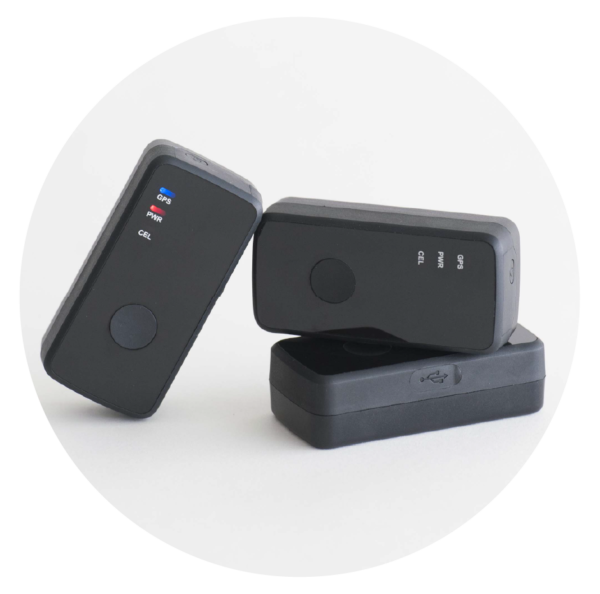
The strategic opportunity: Modern wearable panic button solutions like Vestige’s PERSA device combine silent emergency activation with real-time location tracking, which is exactly what legislation requires. When paired with body cameras that include integrated panic button functionality, businesses create a complete safety ecosystem that protects employees while documenting every interaction.
TRUSTED BY INDUSTRY LEADERS


Building a Complete Safety Ecosystem: Panic Buttons + Video Documentation
The most effective employee protection strategies combine immediate emergency response with comprehensive documentation. Each component serves a distinct and vital purpose.
The Power of Panic Buttons
Panic buttons provide what no other safety tool can: instant access to help when seconds matter. When an employee faces a threat, the ability to silently summon assistance without alerting an aggressor can be the difference between a close call and a tragedy.
Modern panic button solutions like PERSA deliver:
- Silent activation that doesn’t escalate dangerous situations
- Real-time GPS location so responders know exactly where to go
- Customizable alert routing to the right personnel based on your protocols
- Compliance with new workplace safety legislation across multiple states
The Power of Video Documentation
Body cameras add a critical layer that panic buttons alone cannot provide: an objective record of what actually happened. This documentation protects employees from false accusations, provides evidence for legitimate claims, and creates accountability that deters bad behavior before it starts.
Video documentation delivers:
- Exoneration from false claims that could end careers
- Evidence preservation for legal proceedings
- Professional conduct verification that demonstrates your team’s integrity
- Training opportunities from real-world interactions
Why Integrated Solutions Win
The most powerful approach combines both capabilities, and many of Vestige’s body cameras include integrated panic button functionality, giving employees a single device that provides immediate emergency response AND comprehensive documentation.
San Diego’s Mobile Crisis Response Team discovered that combining PERSA panic buttons with comprehensive camera systems creates a complete safety ecosystem that protects both employees and the organization. Their responders face volatile, unpredictable environments while assisting citizens in crisis, and the integrated approach gives them confidence knowing help is one button press away, while every interaction is documented.
Building a Body Camera Program That Works
Successful body camera implementation requires thoughtful planning that addresses both operational needs and employee concerns. The most effective programs treat cameras as tools that protect employees rather than surveillance mechanisms designed to catch them making mistakes.
Getting Employee Buy-In
When service professionals understand that cameras can exonerate them from false accusations and protect their careers, resistance typically transforms into enthusiastic support. Once employees see footage protecting colleagues from wrongful accusations, their perspective shifts dramatically.
Key messaging points:
- Cameras protect YOU from false accusations
- Video evidence supports YOUR version of events
- Documentation demonstrates YOUR professionalism
- Footage can prevent career-ending allegations
Footage Management Best Practices
Risk advisors recommend retaining footage for several years to cover legal statutes of limitation, and some businesses maintain records for up to five years. This extended retention ensures footage remains available even when claims are filed long after incidents occur.
Critical policies to establish:
- Clear retention periods (3-5 years recommended)
- Incident flagging procedures for immediate preservation
- Access controls defining who can review footage
- Usage limitations (incident documentation only, not routine performance monitoring)
Privacy Considerations
Employees should understand when cameras should be activated and when recording might be inappropriate. Clear policies about footage access help address legitimate privacy concerns while maintaining the program’s protective value.
Most importantly, camera footage should never be used for routine performance monitoring—only for incident documentation and training purposes.
Real Results: Documentation That Pays for Itself
The transformative impact of comprehensive camera systems is best illustrated through real-world results from Vestige customers.
SalSon Logistics: From $9 Million to $200,000
SalSon Logistics, a Newark-based company, was losing $9 million annually to fraudulent accident claims in 2017. After deploying AI-powered camera systems with behavior detection, their insurance payouts dropped to less than $200,000 by 2019, which is a reduction of more than 97%.
The transformation extended beyond financial metrics:
- Accidents dropped from 418 in 2017 to just 24 in 2019
- Driver morale improved dramatically
- Multiple staged accident attempts were thwarted
Elite Collateral Recovery: Complete Documentation Chain
Elite Collateral Recovery’s body cameras capture every element of the recovery process—from arrival on scene to vehicle securement. When lenders learn that every repossession is fully documented, their confidence increases substantially.
The cameras have resolved confrontations, disproven false damage claims, and helped maintain insurance coverage in an industry where premiums have increased approximately 40% in high-risk markets.
Certified Auto Mall Towing & Recovery: First Incident ROI
Certified Auto Mall experienced an immediate ROI when the first accident after installation paid for the entire system. Footage proved their driver was not at fault in a collision—without it, the driver would have been blamed, and the company would have faced a substantial payout.
Compliance Benefits Beyond Panic Button Laws
Camera systems provide substantial compliance benefits across multiple regulatory frameworks.
OSHA General Duty Clause
OSHA requires employers to maintain workplaces free from recognized hazards likely to cause death or serious physical harm. For industries with documented violence risks, implementing comprehensive safety measures, including camera systems and panic buttons, helps demonstrate compliance with this fundamental obligation.
Video documentation also:
- Simplifies incident investigations
- Identifies patterns indicating systemic safety issues
- Provides training documentation
- Supports workers’ compensation defense
State Privacy Law Compliance
States including Illinois, Texas, and Washington require employee consent before using cameras that collect biometric or audio data. Comprehensive consent processes and clear policies about footage use help ensure compliance while maintaining protective value.
Multi-Framework Documentation
Footage generated by camera systems supports compliance across multiple areas:
- Working conditions documentation
- Training verification records
- Inspection process capture
- Service delivery confirmation
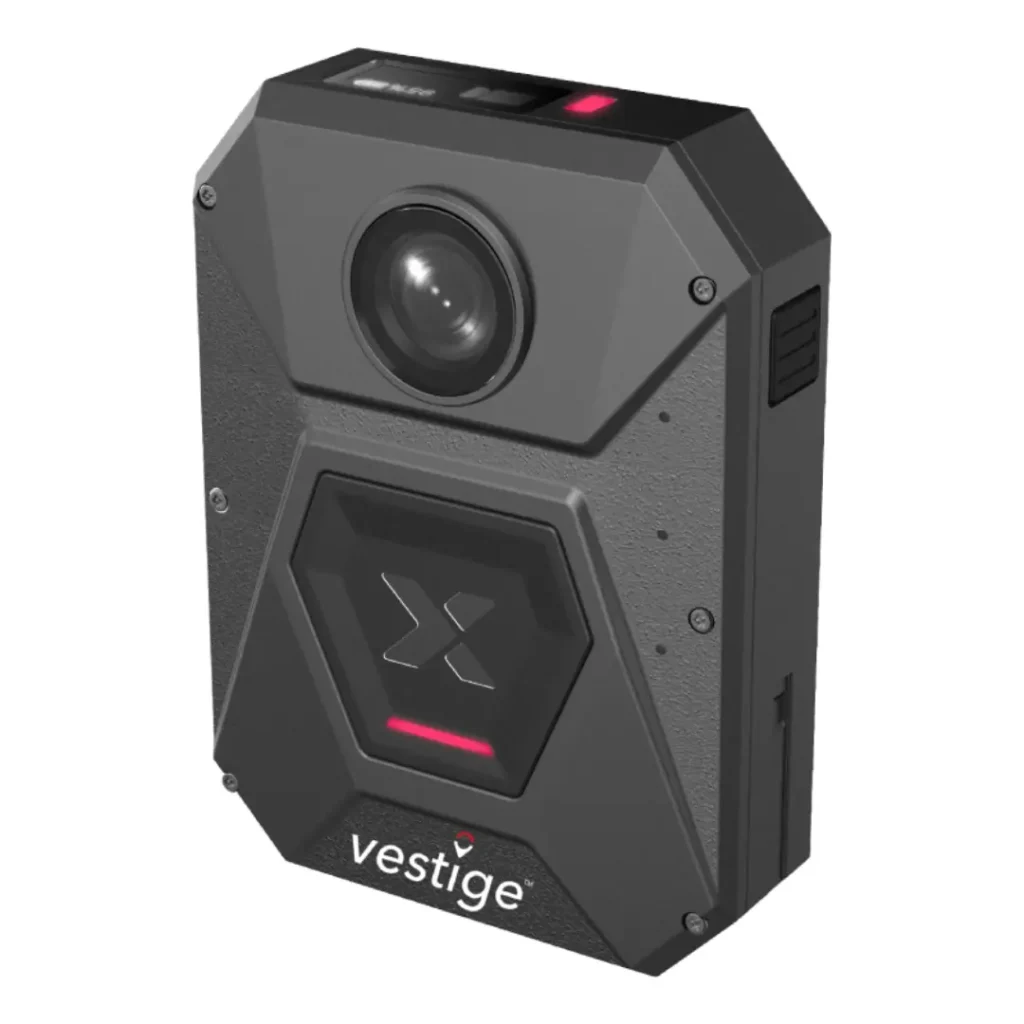
Your Team’s Safety—Captured and Secured with Vestige
Give your employees peace of mind and accountability with our discreet, easy-to-use body cameras. VestigeView’s body-worn solution ensures your team is protected, monitored, and compliant—wherever the job takes them.
- Record and store on-the-job interactions securely
- Track employee movements and verify site visits
- Promote transparency and reduce liability
Selecting the Right Camera System
Choosing appropriate camera technology requires matching system capabilities to operational needs. Key considerations include video quality, storage capacity, durability, battery life, and integration with existing business systems.
Video Quality
High-definition recording ensures footage captures details that might prove crucial in disputes, such as license plates, facial features, property conditions, and environmental factors. Night vision capabilities extend protection to evening and overnight service calls.
Integrated Safety Features
Many of Vestige’s body cameras include built-in panic button functionality, allowing employees to summon help instantly while continuing to document the situation. This integration eliminates the need for multiple devices while ensuring comprehensive protection.
AI-Enhanced Capabilities
Modern camera systems offer capabilities beyond simple recording. AI-powered detection technology identifies dangerous situations in real time, allowing intervention before incidents occur. These proactive capabilities transform cameras from passive documentation tools into active safety systems.
Complete Ecosystem Integration
The most effective protection comes from integrated systems that combine:
- Body-worn cameras for customer interactions
- Vehicle cameras for transit documentation
- GPS tracking for location verification
- Panic button capabilities for emergency response
The Bottom Line: Protection Is No Longer Optional
The service industries face unprecedented challenges in 2026. Rising insurance costs, increasing fraud schemes, new workplace safety legislation, and escalating liability exposure demand comprehensive protective measures.
A complete safety ecosystem, combining panic buttons for emergency response with body cameras for documentation, provides the protection that modern service operations require. The question is no longer whether your business can afford these tools—it’s whether you can afford to operate without them.
Take the Next Step
Vestige delivers integrated safety solutions designed specifically for businesses that need to protect their employees and their bottom line. From AI-powered camera systems that detect dangerous situations to body-worn cameras with integrated panic buttons that capture every customer interaction, Vestige systems create complete chains of documentation that protect your business and your employees.
The PERSA wearable panic button provides emergency alert capabilities that satisfy new workplace safety legislation while integrating seamlessly with comprehensive camera systems. Real-time GPS tracking ensures responders can locate employees instantly. Silent activation prevents escalation during tense encounters.
Don’t wait for a fraudulent claim or workplace incident to demonstrate the value of comprehensive protection. Companies across service industries have discovered that integrated safety systems pay for themselves with the first prevented false claim while providing ongoing protection that supports employee safety, regulatory compliance, and insurance cost management.
Request a demo today to see how Vestige’s integrated solutions can protect your operation.
Tennessee Lawn Service Leader Adopts Vestige Body Cams
Proof of service provides real-time customer support to increase client trust
Branded “Turf Vision” and delivers:
- Fewer service disputes — video proof ends “he said, she said” conversations.
- Reduced liability costs — false damage claims resolved with evidence.
- Improved accountability — technicians perform consistently knowing work is recorded.
Trusted Safety Partners


Frequently Asked Questions
Yes, body cameras are legal for commercial use in all 50 states, though specific regulations vary. Most service industry applications fall under one-party consent rules since the employee wearing the camera is a party to any conversation. Companies should review state-specific requirements and implement appropriate consent procedures.
Systems range from basic units costing a few hundred dollars to enterprise solutions with cloud storage, AI analytics, and management integration. For most small service businesses, mid-range solutions represent the best value. Most businesses find that a single prevented false claim covers several years of system costs.
Many commercial insurers now offer premium discounts of 5% to 15%, with some programs offering up to 20%. Beyond direct discounts, cameras reduce claims frequency and severity, improving loss history and supporting better rates at renewal.
Employers generally have the right to require body cameras as a condition of employment, similar to uniforms or safety equipment. When employees understand that cameras protect them from false accusations, resistance typically diminishes.
Most systems automatically overwrite old footage after a specified retention period unless flagged for preservation. Non-incident footage typically cycles after 30 to 90 days, depending on storage capacity and organizational policies.
The most comprehensive protection combines both. Panic buttons provide immediate emergency response when seconds matter. Body cameras document interactions and protect against false claims. Many modern body cameras include integrated panic buttons, giving employees both capabilities in a single device. The right combination depends on your industry, risk profile, and compliance requirements.