Traffic crashes aren’t just a safety issue, they’re a massive financial drain. In 2019 alone, U.S. traffic crashes cost employers $72.2 billion. An average on-the-job highway crash ran more than $26,000, and when injuries were involved, that number jumped to nearly $80,000 per incident. For transit authorities and public works departments, these aren’t abstract statistics. They can be the difference between staying on budget and facing a fiscal crisis. In fact, a single bus crash settlement can wipe out an entire year’s capital budget. Just look at the Chicago Transit Authority, where individual settlements have ranged from $3.5 million to $20 million.
Municipal fleets also operate under pressures that private companies rarely face. Every accident draws political scrutiny. Insurance premiums continue to rise, squeezing already tight city budgets. And “nuclear verdicts”, jury awards topping $10 millio,n are becoming more common in commercial vehicle cases. When there’s no objective evidence, fleet managers are often left trying to defend their drivers and their budgets with little more than word-of-mouth testimony against highly experienced plaintiff attorneys.
That reality is why many forward-thinking transit agencies and municipal fleet operations are rethinking how they protect themselves. Fleet AI camera systems are no longer viewed as optional safety tools, they’re becoming essential budget safeguards. Agencies that deploy comprehensive dashcam programs are dramatically reducing liability exposure while also improving driver safety and day-to-day operational efficiency.
SEPTA: How Cameras Turned a “Bus Injury Hustle” into a 60% Claim Reduction
Before implementing a comprehensive camera system, the Southeastern Pennsylvania Transportation Authority (SEPTA) faced what local media described as a “lucrative hustle” for personal injury claimants. With approximately 5,000 injury claims filed annually and annual payouts reaching tens of millions of dollars, the agency’s legal and claims departments operated in a constant state of reactive crisis management. Drivers felt demoralized and unsupported, knowing their word alone carried little weight against claims that were often exaggerated or completely fabricated.
The transformation after SEPTA installed cameras across its bus fleet proved dramatic. Annual payouts dropped from $43 million in fiscal year 2012 to just $19.3 million, which is less than half the previous amount. In the agency’s leanest claims year, SEPTA spent approximately $4 million less than budgeted for injury settlements. These savings directly benefited taxpayers and allowed the agency to redirect funds toward service improvements and vehicle maintenance.
Perhaps the most telling indicator of the cameras’ impact came from personal injury attorneys themselves. One plaintiff’s lawyer admitted to dropping approximately 20% of potential cases after reviewing bus video footage that disproved claimed injuries. When the evidence clearly contradicts a claimant’s story, even aggressive attorneys must acknowledge reality. Video doesn’t forget, doesn’t get nervous during cross-examination, and doesn’t change its story between the incident and the courtroom.
The Philadelphia Business Journal confirmed these findings, reporting that surveillance cameras brought SEPTA injury claims to a 10-year low. This success story demonstrates that cameras serve as a fiscal control tool with a measurable return on investment. Video allows agencies to pay fairly when their drivers are at fault, while defending aggressively when claims lack merit. Even a single large-city transit example proves that multi-camera fleet systems generate multi-million-dollar annual savings.
See how SalSon Logistics turned a $9 million insurance problem into a strategic advantage
Accident payouts dropped from six‑figure annual totals to under $200,000 by 2024.
Better yet, drivers are protected, insurers are competing for their business, and a stronger safety culture now fuels their profitability.
The True Cost of a City Fleet Crash
Understanding the full financial impact of fleet crashes helps justify camera investments to budget-conscious city councils and department heads. The Network of Employers for Traffic Safety (NETS) reports that employers face an average cost of $26,081 per on-the-job crash and $78,418 per injury. These figures include direct costs like vehicle repair and medical expenses, but also indirect costs such as lost productivity, employee replacement, and administrative burden.
According to NHTSA’s comprehensive analysis, motor vehicle crashes in 2019 carried a $340 billion economic cost in the United States. This figure includes medical expenses, emergency services, insurance administration, workplace losses, and property damage. For city fleet managers, each preventable crash contributes to this enormous national burden while simultaneously threatening their own department’s budget.
Transit and public works fleets face amplified risk exposure compared to private fleets. Dense urban operations mean constant interaction with pedestrians, cyclists, and distracted drivers. Heavy vehicles like buses and garbage trucks cause more severe damage when collisions occur. Passengers on transit vehicles create additional liability exposure, as every person aboard represents a potential claimant. Settlement ranges for SEPTA bus accidents illustrate how quickly these costs accumulate, with amounts varying widely based on injury severity and circumstances.
The financial case for real-time fleet monitoring becomes clear when fleet managers calculate their current crash frequency multiplied by average incident costs. A fleet experiencing just ten crashes annually faces potential liability exposure exceeding $250,000 before considering any severe injury cases. Nuclear verdicts can multiply these figures tenfold overnight.
How Cameras Prevent Crashes and Claims
Dashcams provide value beyond recording incidents, they actively prevent crashes through behavior modification and coaching opportunities. Research from the AAA Foundation for Traffic Safety found that video-based onboard safety monitoring systems can prevent up to 63,000 crashes, 17,733 injuries, and 293 deaths annually in large trucks alone. These prevention capabilities translate directly to reduced claims, lower insurance premiums, and improved driver retention.
The crash prevention potential of driver coaching systems extends logically from heavy trucks to buses and city fleet vehicles. Similar vehicle mass, comparable duty cycles involving frequent stops and starts, and equivalent exposure to vulnerable road users make the safety parallels compelling. If cameras and monitoring prevent even a fraction of potential crashes in a transit or public works context, the annual savings reach hundreds of thousands to millions of dollars.
OSHA’s Guidelines for Employers to Reduce Motor Vehicle Crashes emphasize that driver behavior, speeding, and distraction represent the major cost drivers in fleet operations. Camera systems address each of these factors directly. Knowing their driving is recorded, operators naturally maintain better following distances, reduce cell phone use, and demonstrate more consistent speed control. When risky behaviors occur, supervisors can use footage for targeted coaching conversations rather than relying on generic safety reminders.
Real-world results confirm these theoretical benefits. SalSon Logistics, a Newark-based trucking company, saw its accidents drop from 418 in 2017 to just 24 in 2019 after implementing video evidence systems. This is a reduction of over 94%. Their insurance payouts simultaneously plummeted from $9 million to under $200,000. As Vice President John Lampasona explained, video gives safety teams the ability to exonerate drivers immediately, identify risky behaviors, and coach drivers with instant feedback.
TRUSTED BY INDUSTRY LEADERS


Fraud, “Crash-for-Cash,” and How Dashcams Protect City Budgets
Staged accident fraud costs billions of dollars annually, and commercial vehicles remain primary targets. Criminal rings and sometimes complicit attorneys specifically target buses and trucks because of their high insurance policy limits and the perception that large organizations will settle rather than fight claims. City fleets face particular vulnerability because taxpayer-funded settlements create pressure to avoid prolonged litigation.
Common fraud schemes hitting public fleets include staged rear-end collisions (known as “swoop-and-squat” maneuvers), panic stops designed to cause following vehicles to strike the fraudster, slip-and-fall claims by passengers, and grossly exaggerated injuries from minor impacts. QBE insurance documents these tactics in detail, noting that fraud rings often include tow truck operators, medical providers, and attorneys working together to maximize fraudulent recoveries.
The Insurance Coalition Group reports that staged accident fraud has reached epidemic proportions in many metropolitan areas, with some regions seeing organized crime involvement. The Staged Accident Fraud Prevention Act, introduced in Congress, would make staging crashes targeting commercial vehicles a federal crime, reflecting the severity of this problem.
Video evidence represents the single most effective anti-fraud tool available. Dashcams provide objective proof of who was actually in the vehicle at the time of an alleged incident, whether there was a meaningful impact, what passengers and the other driver did immediately before and after any collision, and whether claimed injuries are consistent with recorded events. The SEPTA example demonstrates this fraud deterrence in action. When potential claimants know their behavior is recorded, many choose not to file false claims at all.
Video as Legal Armor: Exoneration, Records, and Litigation Strategy
U.S. Department of Justice research on video evidence reveals that complaints with video documentation are overwhelmingly resolved in favor of the recorded party. While this research focused on law enforcement body cameras, the logic translates directly to fleet operations. Sustained complaints become rare when objective footage exists. Drivers facing false accusations gain powerful evidence supporting their version of events.
Video footage becomes both a public record and a critical litigation asset for municipal fleets. Understanding how footage is treated under Freedom of Information Act requests and litigation holds helps fleet managers develop appropriate retention policies. The Bureau of Justice Assistance provides guidance on managing camera footage as public records, while legal analysis from Greenberg Traurig addresses preservation requirements when litigation is reasonably anticipated.
Cities implementing camera programs need clear retention and access policies. Standard practice involves maintaining routine footage for 30 to 90 days, with incident-based footage retained for significantly longer periods to address potential delayed litigation. OSHA’s motor vehicle safety guidelines and NETS crash cost research both support formal camera policies as essential components of comprehensive fleet safety programs.
The ACLU’s “No Tape, No Testimony” report highlights how video is increasingly becoming the expected standard for any credible investigation. In an era where everyone carries a smartphone, juries and judges expect objective documentation. Fleets without cameras find themselves at a significant disadvantage when opposing parties present their own video evidence, while city drivers can only offer verbal testimony.
Trustindex verifies that the original source of the review is Google. I have been a customer of Vestige for over 5 years. Megan and Corey do an awesome job and get us whatever we requested extremely quickly whether it’s an emergency that we need video of or a simple report we want! Their system has saved us from several Faldo claims and the software has never let us down!Trustindex verifies that the original source of the review is Google. Very effective and reliable resource in the field. Product is durable and does everything you’ll need from A-Z, remember you get what you pay for so why not get the best you can. Thank you Vestige for your support and business in this demanding field!Trustindex verifies that the original source of the review is Google. One of our trucks lost a drive line and no parts houses had one in stock. We were able to find it by watching the video from the side camera to see where it landed. Excellent product, and customer service at Vestige is excellent! Much better than other dash cam companies we have used in the past. Highly recommend.Trustindex verifies that the original source of the review is Google. Great products and Service... we were hesitant about getting the Dashcam Service but within a few months it basically paid for itself due to an accident we had that could have been considered our fault but thanks to the camera I was actually able to share it with the Trooper that worked the accident. Not sure how many different set ups they offer but we are very happy with the basicly Live DashCam service we got that also has GPS integrated . Its great having it all in one App.
Policy Blueprint: How Transit and Public Works Should Roll Out Dashcams
Successful camera implementations require thoughtful policy development addressing purpose, access, retention, and privacy concerns. Core policy elements should establish that cameras serve safety, accountability, and fiscal protection purposes, not general surveillance of employees. Policies must specify when cameras must be active, what triggers event clip recording, and who can access footage for what specific purposes.
Standard retention windows of 30 to 90 days balance storage costs against liability protection, with incident-based footage retained much longer based on potential claim timelines. Fleet compliance guidance recommends that policies address both routine and exception-based retention clearly. Some organizations retain footage for up to five years when incidents occur, matching statutes of limitations for personal injury claims.
Privacy and audio consent requirements vary significantly by state, particularly for driver-facing and interior audio recording. Two-party (all-party) consent states require explicit permission from all recorded parties before capturing audio. Legal guidance on dashcam considerations helps fleet managers understand their jurisdiction’s requirements. Video without audio typically faces fewer restrictions, but organizations should verify applicable laws before implementation.
Union and driver engagement early in the process dramatically improves adoption success. When framed as protection rather than punishment, most drivers welcome cameras that can prove their innocence in disputed situations. Clear boundaries between coaching and discipline help address concerns. Sharing success stories where video exonerated drivers builds trust and acceptance across the workforce.
Making the ROI Real for Your City
Calculating return on investment helps fleet managers justify camera expenditures to budget authorities. Simple ROI analysis combines average crash costs ($26,081 per incident, $78,418 per injury) with realistic crash reduction assumptions informed by AAA’s research showing potential prevention of 63,000 crashes annually through video-based monitoring.
Consider a fleet with 200 vehicles experiencing 20 crashes annually. At average costs, this fleet faces potential liability of over $520,000 per year for property damage and minor injuries alone. If camera implementation reduces crashes by even 30%, a conservative estimate based on documented results, annual savings exceed $156,000. Add fraudulent claim prevention and insurance premium discounts, and the investment typically pays for itself within the first year.
The “no tape, no testimony” reality makes cameras essential in modern litigation environments. Without video evidence, fleet managers ask juries to believe their drivers’ verbal accounts against professional plaintiff presentations, often including dramatic injury testimony and expert witnesses. With video, the truth speaks for itself. Jurors can see exactly what happened, when it happened, and how each party behaved.
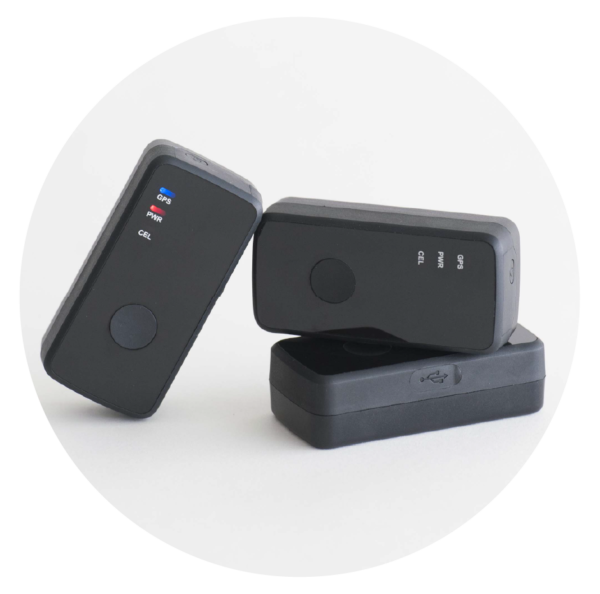
Organizations like Vestige provide city fleets and transit agencies with the complete solution needed to transform cameras from equipment purchases into strategic risk management tools. The combination of AI-powered cameras, integrated GPS tracking, and intuitive incident video management ensures that legal, risk, and operations teams all have access to the same objective truth when incidents occur.
Protect Your Fleet Before the Next Lawsuit Strikes
City fleet managers can no longer afford to operate without comprehensive video documentation. The evidence is overwhelming: cameras prevent crashes, defeat fraudulent claims, protect budgets, and support drivers facing false accusations. SEPTA’s transformation from a $43 million annual claims burden to under $20 million demonstrates what’s possible when video evidence becomes standard operating procedure.
Vestige provides transit and public works fleets with the technology, support, and expertise needed to implement successful camera programs. From AI-powered dash cams with real-time driver coaching to multi-camera systems providing complete vehicle coverage, Vestige solutions are designed specifically for the demanding requirements of commercial fleet operations.
Don’t wait until the next nuclear verdict threatens your department’s budget. Request a demo today to see how Vestige can help your fleet survive and thrive in the lawsuit era. Your drivers, your budget, and your community deserve the protection that objective video evidence provides.
Trusted Safety Partners


Frequently Asked Questions
Most transit agencies and municipal fleets see complete return on investment within 12 to 18 months through reduced claims, lower insurance premiums, and prevented accidents. SEPTA’s experience showed millions in annual savings, with some years coming in $4 million under budget for claims expenses. The first prevents fraudulent claim often cover equipment costs for multiple vehicles.
Comprehensive coverage typically requires forward-facing exterior cameras capturing road conditions and other vehicles, driver-facing cameras monitoring attention and compliance, and interior cabin cameras documenting passenger behavior on transit vehicles. Some operations add side and rear cameras for complete 360-degree coverage during turning and reversing operations.
Standard practice involves 30 to 90 days for routine footage, with incident-based recordings retained for 3 to 5 years or longer, depending on jurisdiction-specific statutes of limitations for personal injury claims. Clear retention policies should address both routine operations and exception-based storage requirements.
Initial resistance is common but typically fades when drivers understand that cameras primarily protect them from false accusations. Sharing examples where video exonerated accused drivers builds acceptance. Union engagement early in the planning process addresses concerns proactively. Most drivers ultimately welcome the protection cameras provide.
Yes, properly maintained dashcam footage is routinely admitted as evidence in civil litigation and criminal proceedings. Establishing a chain of custody through documented retention policies and secure storage strengthens evidentiary value. Courts increasingly expect video evidence in commercial vehicle cases, and its absence can work against defendants.
Privacy requirements vary by state. Some jurisdictions require explicit consent for audio recording, while video-only recording faces fewer restrictions. Policies should clearly explain what is recorded, who can access footage, and how recordings are used. Transparency with drivers about privacy protections builds trust.