Nearly 840,000 blind spot accidents occur annually in the United States, resulting in 300 deaths—and commercial trucks are disproportionately involved due to their massive blind zones, according to the National Highway Traffic Safety Administration (NHTSA).
A study by the Insurance Institute for Highway Safety found that blind spot detection is the most promising technology for preventing large truck crashes of any severity, with the potential to prevent nearly 39,000 crashes annually from lane changes alone.
The Vestige 360° Camera System addresses this critical safety gap by providing fleet operators with comprehensive, real-time visibility around their entire vehicle.
Key Features and Technical Capabilities

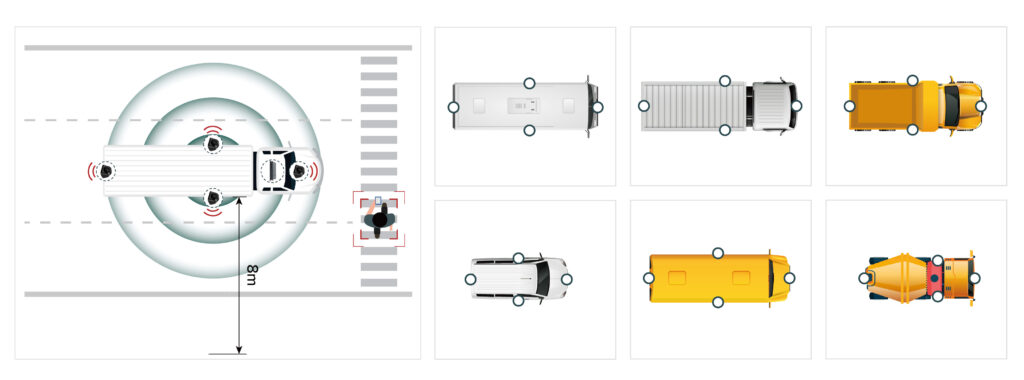
360° Vulnerable Road User Detection
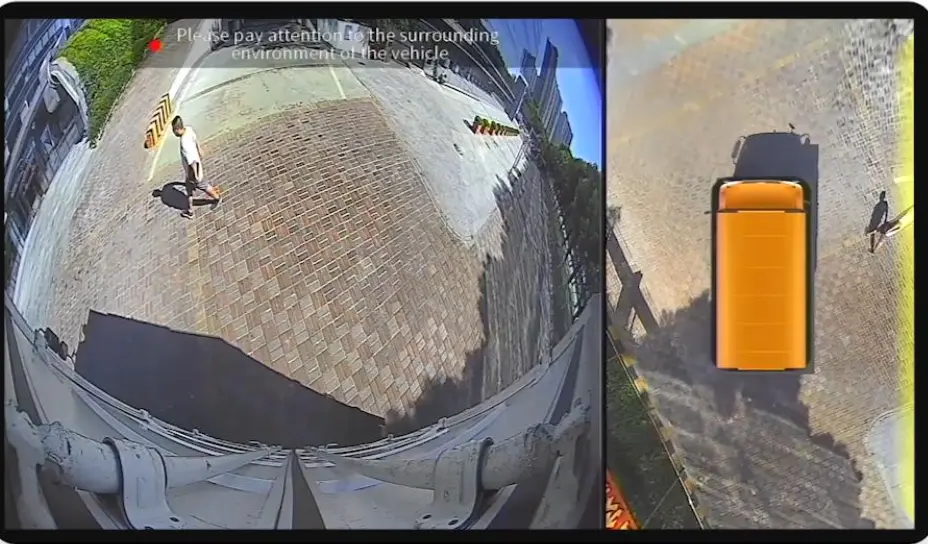
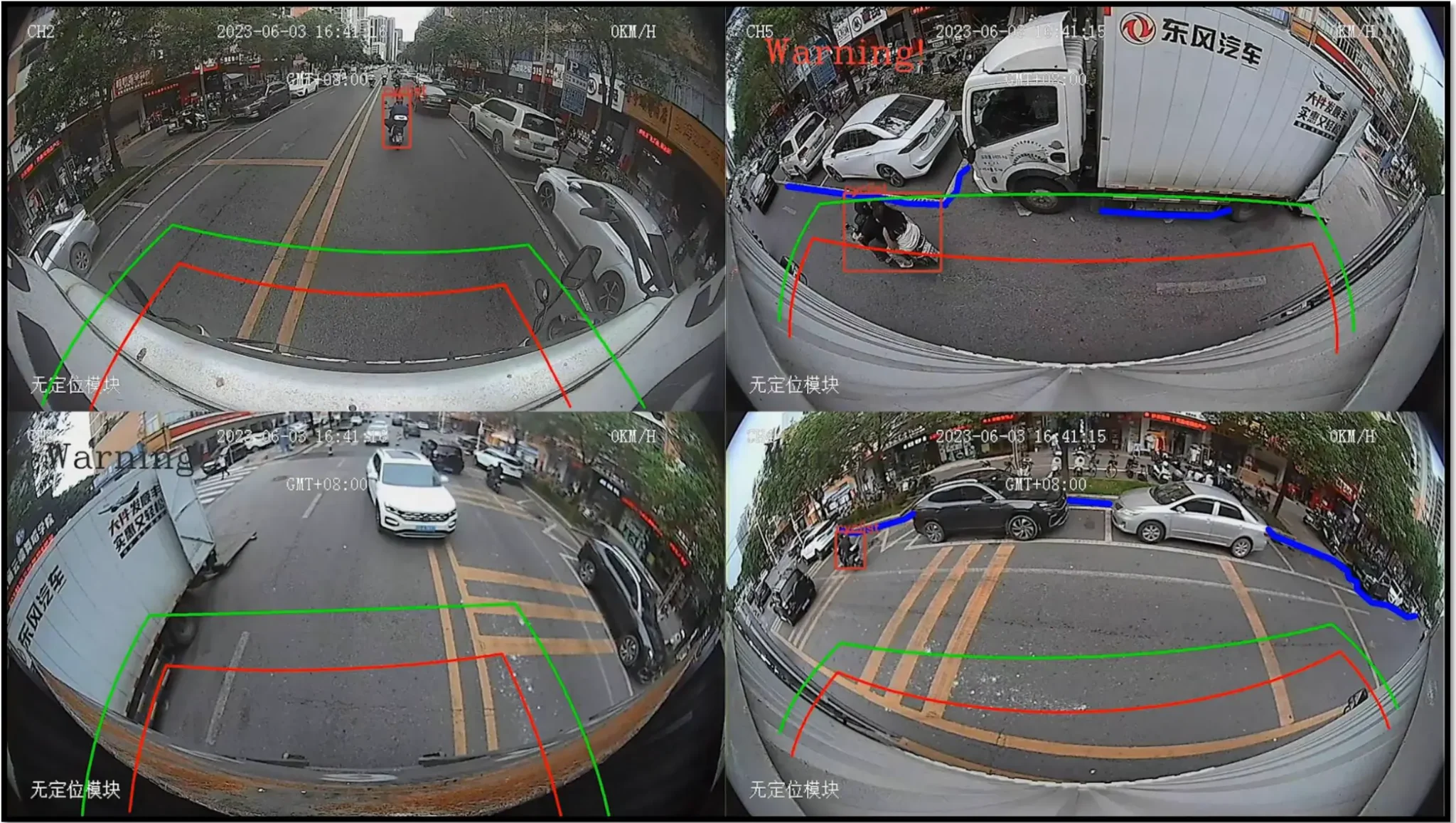
Continuously tracks pedestrians, cyclists, and other vulnerable road users around the entire vehicle perimeter. According to IIHS research, 17% of all deaths in large truck crashes in 2023 were pedestrians, bicyclists, or motorcyclists. The system provides visual alerts when any vulnerable road user enters the detection zone, giving drivers critical reaction time.
Road Shoulder Identification
Distinguishes between vulnerable road users on active roadways versus those safely positioned on shoulders, reducing unnecessary alerts while maintaining vigilance for genuine hazards.

15-second AI Calibration
Eliminates complex setup procedures. The intelligent calibration automatically adjusts to provide complete transparent views, enabling faster fleet-wide deployments without specialized expertise.

4K Ultra HD Video Recording
Provides evidence retention in all lighting conditions—essential for accident documentation systems protecting fleets from fraudulent claims.
See how SalSon Logistics turned a $9 million insurance problem into a strategic advantage
After spending nearly $9 million in claims in 2017—some from staged accidents—SalSon implemented Vestige’s AI‐powered fleet cameras and real‑time command center. The result? Accident payouts dropped from six‑figure annual totals to under $200,000 by 2024.
Better yet, drivers are protected, insurers are competing for their business, and a stronger safety culture now fuels their profitability.
360° Vision Eliminates Blind Spots Instantly
AI-powered panoramic cameras protect drivers, pedestrians, and fleets by detecting hazards, reducing collisions, and delivering clear, defensible video evidence.
Integrated Driver Assistance Functions
The system delivers multiple safety functions working together to create a comprehensive protective envelope.
Blind Spot Monitoring (BSM) continuously scans adjacent lanes and alerts drivers to vehicles entering blind zones. IIHS research demonstrates that blind spot detection reduces lane-change crashes by 14% and injury crashes by 23%.
Blind Spot Detection (BSD) provides audible and visual warnings through the integrated horn system when pedestrians or vehicles approach during low-speed maneuvering, delivering alerts.
Lane Departure Warning (LDW) monitors vehicle position and alerts drivers before unintentional drift. IIHS research found that lane departure warnings cut relevant crash rates nearly in half for trucks in U.S. fleet studies.
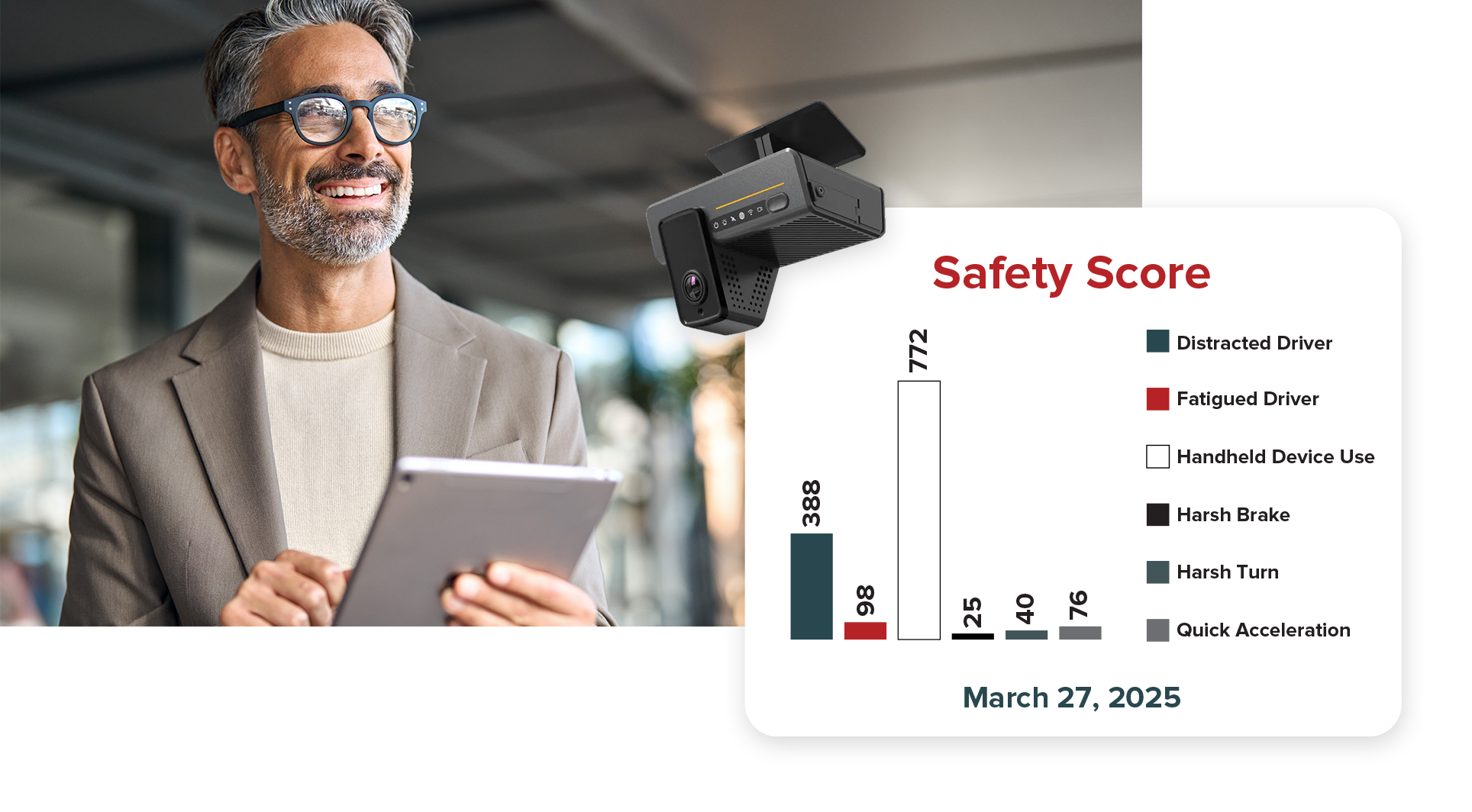
Integration with driver behavior analytics creates opportunities for targeted coaching addressing risky behaviors before incidents occur.
Technical Specifications
The 360 degree camera system is engineered for demanding commercial fleet conditions.
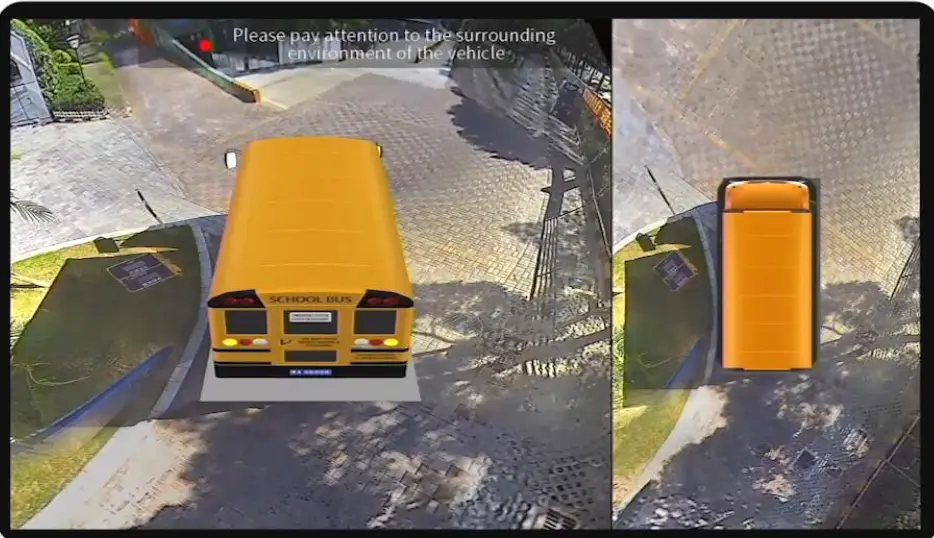
- Video Performance: Five simultaneous video channels—left, right, front, rear, and stitched bird’s eye view—at up to 1080P/25fps. Supports 4K recording at 15fps alongside 1080P feeds on remaining channels.
- Storage: Dual Micro SD slots accept cards up to 512GB each (1TB total). Class 10+ read/write speeds ensure reliable capture during intensive recording.
- Environmental Durability: Operating range of -40°C to +70°C (-40°F to +158°F). IP30 rating for cab-mounted installation.
- Power: Self-adaptive 12V/24V operation (DC 9-36V input). Typical consumption approximately 11W; full-load approximately 22W.
- Connectivity: Built-in 2.4G Wi-Fi (IEEE 802.11b/g/n). RS232, RS485, and CAN bus interfaces enable integration with existing fleet management platforms. Standard J1939 protocol support ensures compatibility with modern vehicle data systems.
Return on Investment
Comprehensive 360° camera coverage delivers measurable returns across multiple cost centers.
Insurance Premium Reduction: Many commercial insurers offer premium discounts for video-based safety systems. As nuclear verdicts against trucking companies frequently exceed $10 million, insurers view cameras as essential risk mitigation.
Claims Cost Reduction: Industry data indicates camera systems reduce claims costs by 60-80% through faster dispute resolution and fraud prevention. The Coalition Against Insurance Fraud reports fraudulent claims cost over $308 billion annually across all sectors.
Driver Retention: When drivers understand cameras protect their careers from false accusations, acceptance increases dramatically. Camera-equipped vehicles often become preferred assignments as drivers recognize the protective benefits that documentation provides.
Operational Efficiency: Beyond safety, the 360° view improves maneuvering efficiency in tight spaces—loading docks, distribution centers, and congested urban environments where visibility limitations traditionally slow operations.
The SalSon Logistics case study demonstrates these benefits: after implementing Vestige AI-powered cameras, insurance payouts dropped from over $9 million (2017) to less than $200,000 (2019), while accidents fell from 418 to just 24.
As Vice President John Lampasona stated, “We’re not flying blind anymore. Vestige gave us eyes.”
Compliance and Regulatory Considerations
Commercial fleets operate within complex regulatory frameworks, increasingly recognizing advanced safety technology as best practice.
While dash cameras are not federally mandated, both FMCSA and NTSB have consistently recommended onboard cameras to enhance safety oversight and crash investigation capabilities. The Vestige system’s 360-degree camera configuration focuses on road conditions
For fleets seeking integrated solutions combining collision detection systems with comprehensive documentation, the 360° camera system represents a proven approach aligned with emerging industry best practices.
Protect Your Fleet with Vestige 360° Camera Technology
Every mile driven without comprehensive blind spot protection exposes your fleet to avoidable risk.
With staged accident fraud increasing and nuclear verdicts reshaping the liability landscape, proactive fleets are implementing video-based safety systems that protect from every angle.
The Vestige 360° Camera System delivers complete situational awareness, from real-time AI detection of vulnerable road users to 4K documentation protecting against fraudulent claims.
Ready to eliminate blind spots across your fleet?
Contact Vestige today to schedule a demonstration and discover how 360-degree vehicle cameras can transform your safety program.
Leading Tow Truck Firm Turns to Vestige Vehicle Cameras
Elite Collateral Recovery trusts Vestige to protect its trucks, employee and clients with our full suite of 360 degree AI-powered safety vehicle cameras
Our Partners
Frequently Asked Questions
Traditional dash cameras capture forward-facing footage only.
The Vestige 360° system uses four fisheye cameras and a panoramic AI-powered camera as well as AI-powered stitching to create real-time bird’s-eye visibility around the entire vehicle, eliminating blind spots entirely while providing continuous vulnerable road user detection.
The system supports dual Micro SD cards up to 512GB each (1TB total). Recording duration depends on resolution settings. The Vestige software platform holds up to 90 days of cloud-based storage as well. Risk advisors recommend retaining footage for several years in case complaints evolve into litigation.
Yes. The 4K UHD recording provides evidence retention in both day and night conditions, with image processing optimizing visibility across varying light levels.
Yes, the 360 degree camera system interfaces enable integration with major platforms. Standard protocol ensures compatibility with modern telematics systems.