
Low Cost Body Camera for Legal Servers and Process Service Professionals

TRUSTED BY INDUSTRY LEADERS



Insurance industry data suggests that as many as 80% of accusations made against service professionals who enter private properties are exaggerated or entirely false. According to the American Society of Home Inspectors, this isn’t a rare occurrence but a real, ongoing risk. For legal servers, process servers, and other field service professionals, a single false claim can quickly spiral into lost income, legal headaches, and long-term damage to a hard-earned reputation.
For process servers delivering court documents in emotionally charged situations, the pressure is even greater. These professionals often face hostility, heightened emotions, and unpredictable environments where their word alone may not be enough to counter a fabricated allegation. That’s why a low cost body camera for legal servers has become such a valuable tool. It provides clear, objective documentation that protects legal service professionals from false claims while also showcasing their professionalism and adherence to proper service procedures.

The Rising Safety Concerns Facing Process Servers and Legal Service Professionals
Process serving remains one of the most underappreciated yet essential functions within the American legal system. These professionals ensure that defendants and parties to lawsuits receive proper notification of legal proceedings, which is a constitutional requirement that upholds due process rights. However, this critical role comes with significant personal risks that many outside the profession fail to understand.
According to the Occupational Safety and Health Administration (OSHA), workplace violence affects nearly 2 million American workers annually. The Bureau of Labor Statistics reports that in 2023 alone, there were 740 fatal workplace injuries due to violent acts, with homicides accounting for 61.9% of these fatalities. While process servers may not face the highest statistical risk of violence, their unique working conditions create specific vulnerabilities that demand attention.
Working alone in unfamiliar locations represents the primary risk factor for legal service professionals. The National Safety Council notes that certain industries, including service providers, are more prone to violence than others. Process servers fall squarely into this category because they regularly interact with individuals who may be experiencing extreme emotional distress upon receiving legal documents related to divorces, evictions, lawsuits, or criminal matters. In these situations, a low cost body camera for legal servers can play a critical role in documenting encounters and deterring aggressive behavior.
The emotional volatility of document recipients creates unpredictable situations. A person being served with divorce papers may view the process server as a representative of their estranged spouse. Someone receiving an eviction notice might channel their anger and frustration toward the messenger. Individuals facing lawsuits or criminal summonses may attempt to avoid service by intimidating or even confronting service agents.
Industry associations have documented numerous incidents where process servers have been punched, threatened with weapons, attacked by dogs directed at them, and even shot while performing their lawful duties. The Promoting Assault Awareness and Protective Regulations for Servers (PAAPRS) initiative was specifically created to track these incidents and advocate for stronger legal protections for process servers nationwide.
For professionals seeking strong protection in the field, body-worn cameras provide essential documentation that serves multiple protective functions simultaneously.
How Body Cameras Protect Legal Servers from False Accusations
The protection that body cameras offer extends far beyond simple video recording. These devices serve as impartial witnesses that document interactions exactly as they occur, providing objective evidence that can quickly resolve disputes in favor of the professional who acted appropriately.
Research from the International Association for Healthcare Security and Safety (IAHSS) found that body cameras helped settle workplace disputes 78.3% of the time in healthcare settings. The same study revealed that 95.7% of facilities using body cameras reported that the investment was worth the cost. These findings translate directly to the legal services industry, where similar dispute resolution benefits apply.
Documentation of proper service procedures represents one of the most valuable benefits for process servers. When a recipient later claims they were never served, or that service was conducted improperly, body camera footage provides irrefutable evidence of the exact time, location, and manner in which documents were delivered. This documentation protects against claims of improper service that could delay legal proceedings and expose the process server to professional liability.
Protection against false accusations of misconduct may be even more critical. Consider the documented case where a home inspector’s body camera captured a homeowner tearing down her own blinds and then falsely accusing the inspector of causing the damage. Without video evidence, this false accusation would have resulted in a costly claim against the professional’s insurance. Similar scenarios occur regularly in process serving, where recipients may fabricate claims of trespassing, harassment, threats, or even physical assault to create legal complications or seek revenge against the messenger.
A Cambridge University study involving eight police forces in the UK and the US found that wearing body cameras led to a 93% decrease in complaints made against officers compared to the previous year. This dramatic reduction occurs partly because potential false accusers recognize that their claims will be evaluated against video evidence rather than competing verbal accounts.
The Police Executive Research Forum conducted extensive research, finding that organizations save approximately $4 for every $1 spent on body-worn cameras when accounting for reduced costs from resolving complaints and defending against false accusations.
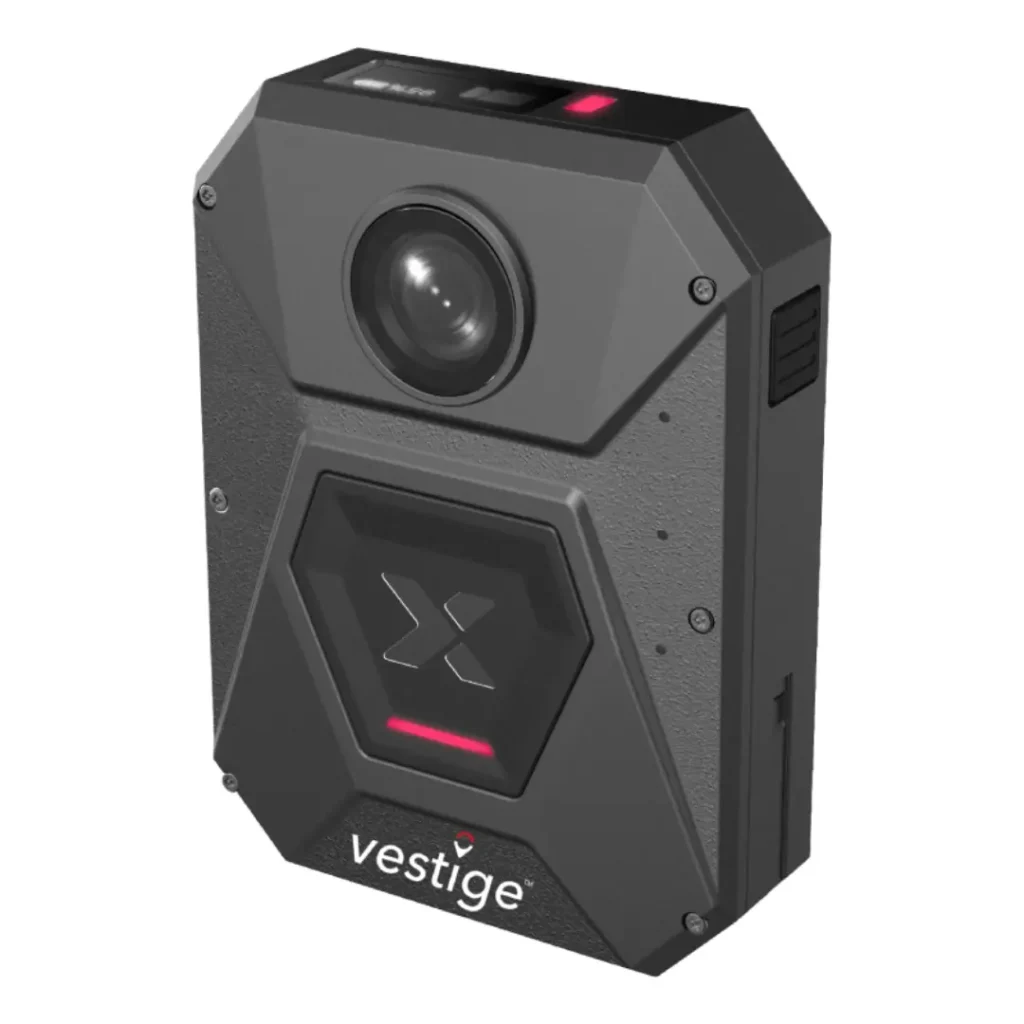
Your Team’s Safety—Captured and Secured with Vestige
Give your employees peace of mind and accountability with our discreet, easy-to-use body cameras. VestigeView’s body-worn solution ensures your team is protected, monitored, and compliant—wherever the job takes them.
- Record and store on-the-job interactions securely
- Track employee movements and verify site visits
- Promote transparency and reduce liability
Key Features to Look for in Affordable Body Cameras
Not all body cameras are created equal, and legal service professionals need specific features that support their unique operational requirements. Understanding these essential capabilities helps ensure that the investment provides maximum protection while remaining cost-effective for independent contractors and small legal service businesses. Choosing a low cost body camera for legal servers allows professionals to get these critical features without breaking the budget
Video resolution and quality must be sufficient to capture clear images of faces, documents, and environmental details that may become important in legal proceedings. Full HD (1080p) resolution represents the minimum standard for professional use, though many affordable options now offer this capability. Video quality should remain sharp in both bright outdoor conditions and dimly lit doorways or hallways where service often occurs.
Wide-angle lenses capture more of the surrounding environment, providing context that may prove crucial in dispute resolution. A field of view of at least 120 degrees ensures that the camera documents not just the direct interaction but also the broader circumstances, including any witnesses present, the condition of the property, and potential hazards.
Audio recording capability adds an essential layer of documentation. Many accusations involve claims about what was said during an interaction. Clear audio recording captures verbal exchanges that can prove the professional maintained appropriate conduct, properly identified themselves, and explained the purpose of the service attempt.
Battery life considerations matter significantly for process servers who may spend entire days in the field making multiple service attempts. Cameras should offer at least 8-10 hours of continuous recording capability, or feature easily swappable batteries that allow for extended operations without returning to charge.
Durability and weather resistance protect the investment in real-world conditions. Legal servers work in rain, extreme temperatures, and environments where equipment may be bumped, dropped, or otherwise stressed. Look for cameras with at least IP65 water and dust resistance ratings.
Storage capacity and data management determine how much footage can be retained and how easily it can be accessed when needed. Internal storage of 32GB or higher provides ample capacity for a full day of recording. Cloud storage integration offers additional security by ensuring footage remains available even if the physical device is damaged or stolen.
Understanding Body Camera Costs and Budget Considerations
The body camera market offers options across a wide price spectrum, making protection accessible to legal service professionals at virtually every budget level. Understanding the cost structure helps professionals make informed decisions about which features are essential versus optional for their specific operational needs.
Entry-level body cameras typically range from $50 to $150 and provide basic recording capabilities suitable for many legal service applications. These devices generally offer 1080p video, several hours of battery life, and internal storage ranging from 32GB to 64GB. While they may lack advanced features like live streaming or cloud integration, they provide fundamental documentation protection at minimal cost.
Mid-range professional body cameras fall in the $150 to $400 range and include enhanced features that improve reliability and functionality. This category often includes better low-light performance, longer battery life, more robust construction, and improved audio capture. Some models in this range include GPS tagging that automatically documents the location of each recording.
Professional-grade systems from $400 to $1,000 and above offer the most comprehensive capabilities, including live streaming to remote viewers, integration with case management software, advanced encryption, and superior video quality. These systems may be overkill for individual process servers, but could represent excellent value for legal service companies managing multiple field personnel.
Total cost of ownership extends beyond the initial purchase price. Consider ongoing expenses, including storage media, cloud service subscriptions if applicable, mounting accessories, and replacement batteries. Many affordable cameras use standard microSD cards that cost less than $20 for sufficient capacity, keeping ongoing expenses minimal.
For legal service businesses seeking the most comprehensive protection, integrated solutions that combine employee safety devices with video documentation capabilities offer compelling value by addressing both evidence capture and emergency response needs.
Start Protecting Your Remote Employees Today
Are you ready to meet the security demands of modern organizations? An ESD is a cost-effective way to achieve your goals.
Many people think it’s a complicated process, but it doesn’t have to be. With Vestige on your side, you can provide guards, bouncers, and event staff with a compact, water-resistant, advanced safety device that they can comfortably wear 24/7.
There’s no other device quite like it on the market. It’s the ideal step to achieving your safety goals for personnel in your company. Request a demo now.

Legal Considerations for Body Camera Use in Process Serving
Understanding the legal framework surrounding body camera use is essential for process servers who want their footage to remain admissible as evidence while avoiding potential liability issues. Recording laws vary significantly by jurisdiction, and professionals must navigate these requirements carefully.
One-party versus two-party consent states represent the primary legal distinction affecting body camera use. In one-party consent states, only the person making the recording needs to consent, meaning the process server can legally record interactions without informing the other party. In two-party (or all-party) consent states, everyone being recorded must consent to the recording.
Currently, approximately 38 states follow one-party consent rules, while 12 states require all-party consent for audio recordings. The specific requirements in two-party consent states vary, with some applying only to telephone conversations while others extend to in-person recordings as well. Process servers must understand the specific laws in each jurisdiction where they operate.
Practical approaches in two-party consent states include announcing the presence of the camera at the beginning of each interaction. Many process servers in these jurisdictions state something like: “I am recording this interaction for documentation purposes. By continuing this conversation, you consent to being recorded.” If the recipient objects, the server may need to disable audio recording while continuing video documentation, depending on the specific state requirements.
Property considerations also affect recording rights. While standing on public property or with permission on private property, recording is generally permissible. However, following someone into their home without permission while recording could create additional legal complications. Process servers should remain on public property or the portions of private property where visitors are implicitly permitted (walkways, porches, common areas) when possible.
Data retention requirements may apply in certain professional contexts. Some jurisdictions or professional licensing boards have specific requirements regarding how long service documentation must be retained. Maintaining organized footage archives ensures compliance while preserving evidence that may be needed months or years after the original recording. Choosing a low cost body camera for legal servers with easy data management and storage features makes this process far more efficient.
Implementing Body Cameras in Your Legal Service Practice
Successfully integrating body cameras into daily operations requires more than simply purchasing equipment. Developing standard procedures ensures consistent use and maximizes the protective benefits these devices offer.
Pre-shift preparation routines should include verifying that the camera is fully charged, has sufficient storage capacity, and is functioning properly. A quick test recording viewed on a smartphone or computer confirms that both video and audio are capturing correctly. Formatting the storage card at the start of each day or after downloading footage ensures reliable operation.
Mounting and positioning significantly affect the quality and usefulness of footage. Body cameras typically mount on the chest area, providing a perspective similar to the wearer’s line of sight. The camera should be positioned high enough to capture faces during normal interaction distances while remaining stable during movement. Most professional body cameras include clip-on mounts designed for shirt pockets, lapels, or specialized harnesses.
Activation protocols determine when recording begins. Some servers prefer continuous recording throughout their entire shift, while others activate the camera only when approaching a service location. Continuous recording provides the most comprehensive documentation but requires more storage capacity and creates longer files to manage. Selective recording reduces storage needs but risks missing important footage if the server forgets to activate the camera or encounters an unexpected situation.
Post-service procedures include downloading and organizing footage in a systematic manner that allows easy retrieval when needed. Many professionals create folder structures organized by date, case number, or client. Adding brief notes or metadata about each recording helps locate specific footage quickly when questions arise weeks or months later.
For organizations managing multiple field personnel, solutions that include fleet tracking and camera integration provide comprehensive oversight of both vehicle and personnel activities during service operations.
See how SalSon Logistics turned a $9 million insurance problem into a strategic advantage
After spending nearly $9 million in claims in 2017—some from staged accidents—SalSon implemented Vestige’s AI‐powered fleet cameras and real‑time command center. The result? Accident payouts dropped from six‑figure annual totals to under $200,000 by 2024.
Better yet, drivers are protected, insurers are competing for their business, and a stronger safety culture now fuels their profitability.
De-escalation Benefits: How Visible Cameras Change Behavior
Beyond their evidentiary value, body cameras provide significant de-escalation benefits that can prevent confrontations before they occur. The visible presence of a recording device often modifies behavior in ways that protect everyone involved in the interaction.
Recipients become more measured in their responses when they notice recording is occurring. A person who might otherwise become verbally abusive or physically threatening often moderates their behavior when aware that their actions are being captured on video. This creates a safer environment for the process server while also protecting the recipient from making decisions in anger that could have legal consequences.
Process servers themselves maintain higher professionalism when wearing body cameras. Knowing that footage may be reviewed by supervisors, clients, or courts encourages strict adherence to professional standards and proper procedures. This improved professionalism benefits the individual server’s reputation and the broader image of the legal service profession.
Documentation of service attempts demonstrates due diligence when personal service proves impossible. Footage showing multiple attempts at different times, affixing documents according to substitute service requirements, or documenting conditions that prevented service provides evidence supporting the accuracy of affidavits of service.
Organizations like San Diego’s Mobile Crisis Response Team have documented similar behavioral benefits when their field personnel use personal safety technology, with staff reporting feeling more secure and confident in challenging environments.
Real-World Applications and Success Stories
The practical benefits of body cameras for legal service professionals become most apparent through real-world examples that demonstrate how footage has resolved disputes, prevented fraud, and protected innocent workers from false accusations.
Documentation of hostile service environments has protected process servers in numerous situations. When a recipient later claims they never received documents, the server’s footage showing the exact moment of service—including the recipient’s face, their acknowledgment of receipt, and the handoff of documents—ends the dispute immediately. Courts have consistently accepted this type of video evidence as proof of proper service.
Protection against injury claims represents another significant benefit. Some recipients have attempted to claim they were injured by aggressive process servers, seeking compensation or criminal charges. Body camera footage showing the server maintaining an appropriate distance, speaking calmly, and making no physical contact has quickly disproved these fabricated claims.
Insurance fraud prevention benefits both individual servers and their clients. The Coalition Against Insurance Fraud estimates that fraudulent claims cost over $308 billion annually across all insurance sectors. Process servers with body cameras can provide evidence that protects their professional liability insurance from fraudulent claims while keeping their premiums affordable.
Training and quality improvement emerge as secondary benefits for legal service organizations. Reviewing footage from successful and challenging service attempts helps identify best practices and areas for improvement. New process servers can learn from recorded examples that demonstrate proper procedures and effective approaches to difficult situations. Integrating a low cost body camera for legal servers into training programs also helps standardize procedures and reinforce compliance.
Protecting Your Career and Business with Vestige Cameras
For legal servers and process service professionals, body cameras represent one of the most cost-effective investments in career protection available today. The combination of evidence capture, de-escalation benefits, and professional documentation creates value that far exceeds the modest equipment cost.
The statistical reality is clear: false accusations against service professionals are common, workplace violence remains a real concern, and insurance fraud costs everyone in the industry. Body cameras address all three concerns simultaneously while also improving service quality and professional standards.
For comprehensive protection that goes beyond video documentation to include GPS tracking, emergency alerts, and panic button functionality, explore the complete range of lone worker safety solutions available from Vestige.
Ready to protect your legal service business with professional-grade safety technology? Request a demo from Vestige to discover how integrated camera systems, GPS tracking, and emergency response capabilities can safeguard your field personnel while improving operational efficiency. Don’t wait for a false accusation or safety incident to recognize the value of proper documentation, invest in protection today.
Trustindex verifies that the original source of the review is Google. I have been a customer of Vestige for over 5 years. Megan and Corey do an awesome job and get us whatever we requested extremely quickly whether it’s an emergency that we need video of or a simple report we want! Their system has saved us from several Faldo claims and the software has never let us down!Trustindex verifies that the original source of the review is Google. Very effective and reliable resource in the field. Product is durable and does everything you’ll need from A-Z, remember you get what you pay for so why not get the best you can. Thank you Vestige for your support and business in this demanding field!Trustindex verifies that the original source of the review is Google. One of our trucks lost a drive line and no parts houses had one in stock. We were able to find it by watching the video from the side camera to see where it landed. Excellent product, and customer service at Vestige is excellent! Much better than other dash cam companies we have used in the past. Highly recommend.Trustindex verifies that the original source of the review is Google. Great products and Service... we were hesitant about getting the Dashcam Service but within a few months it basically paid for itself due to an accident we had that could have been considered our fault but thanks to the camera I was actually able to share it with the Trooper that worked the accident. Not sure how many different set ups they offer but we are very happy with the basicly Live DashCam service we got that also has GPS integrated . Its great having it all in one App.
FAQ: Body Cameras for Legal Servers
Entry-level body cameras suitable for legal service work typically range from $50 to $150. Mid-range options with enhanced features like improved low-light recording and longer battery life cost between $150 and $400. Most independent process servers find excellent protection with devices in the $100-200 range that offer 1080p video, adequate battery life, and sufficient storage capacity.
Body camera legality depends on state recording consent laws. In approximately 38 states with one-party consent laws, process servers can record without notifying the other party. In two-party consent states, audio recording typically requires informing the recipient. Video-only recording is generally permitted more broadly. Process servers should research the specific laws in each jurisdiction where they operate.
Footage retention periods should match or exceed the statute of limitations for potential claims in your jurisdiction. Many professionals retain footage for a minimum of two to five years. Risk advisors recommend longer retention periods since customer complaints or legal disputes may not emerge until years after the original service attempt. Some states have specific retention requirements for process service documentation.
Full HD (1080p) resolution represents the minimum standard for footage that clearly captures faces, document handoffs, and environmental details. Higher resolution cameras (4K) provide even greater detail but require more storage capacity and may be unnecessary for most legal service applications. Ensure the camera also performs adequately in low-light conditions common in doorways and hallways.
Yes, courts routinely accept body camera footage as evidence supporting proof of service. Video documentation showing the time, location, recipient identification, and manner of service provides compelling evidence that supplements traditional affidavits of service. This documentation is particularly valuable when recipients later claim they were never served or that service was improper.
Local storage using SD cards is sufficient for many process servers and keeps ongoing costs minimal. However, cloud storage offers significant advantages, including protection against device loss or damage, remote access to footage, and automatic backup. Many professionals use a hybrid approach with local storage as the primary method and cloud backup for important footage.