
Cloud Body Cameras vs. Local Storage: Which is Best for Enterprise Data Security

TRUSTED BY INDUSTRY LEADERS




The global average cost of a data breach reached $4.88 million in 2024, the highest ever recorded. For enterprises using body-worn cameras in regulated or high-risk environments, the rise of cloud body cameras has changed how video evidence is stored, accessed, and protected. With the global average cost of a data breach reaching $4.88 million in 2024, the decision between cloud-based and local storage now carries significant financial and operational risk.
With 82% of all data breaches now involving cloud-stored data, and the cloud body cameras market projected to grow alongside the broader body-worn camera sector by $1.23 billion between 2024 and 2029, organizations must carefully evaluate their storage strategy. This guide examines both approaches to help safety coordinators, IT directors, and business owners make informed decisions about protecting their video evidence.

Understanding Cloud Body Cameras
A cloud body camera system stores video footage on remote servers managed by a third-party provider rather than on local hardware at your facility. This approach has transformed how enterprises manage digital evidence, offering accessibility and scalability that traditional systems cannot match.
Modern body-worn cameras with cloud connectivity can automatically upload footage through cellular or Wi-Fi networks, eliminating manual data transfer processes. According to AWS Public Sector research, 94.5% of law enforcement agencies have either implemented or committed to implementing body cameras, with many choosing cloud-based evidence management for its operational advantages.
Cloud body cameras offer several distinct capabilities that enterprises find valuable. These systems enable authorized personnel to access video evidence from any location with internet connectivity, which proves essential for organizations with multiple sites or distributed workforces. Automatic backup and redundancy features protect against data loss from hardware failures, while elastic storage capacity eliminates concerns about running out of space during high-activity periods.
The technology continues to advance rapidly. Healthcare facilities, for example, represent the fastest-growing body camera market segment with an 8.34% compound annual growth rate through 2030. These organizations increasingly choose cloud platforms that integrate with existing electronic health record systems and comply with HIPAA requirements. Vestige’s healthcare safety solutions demonstrate how modern platforms address sector-specific compliance needs while maintaining enterprise-grade security.
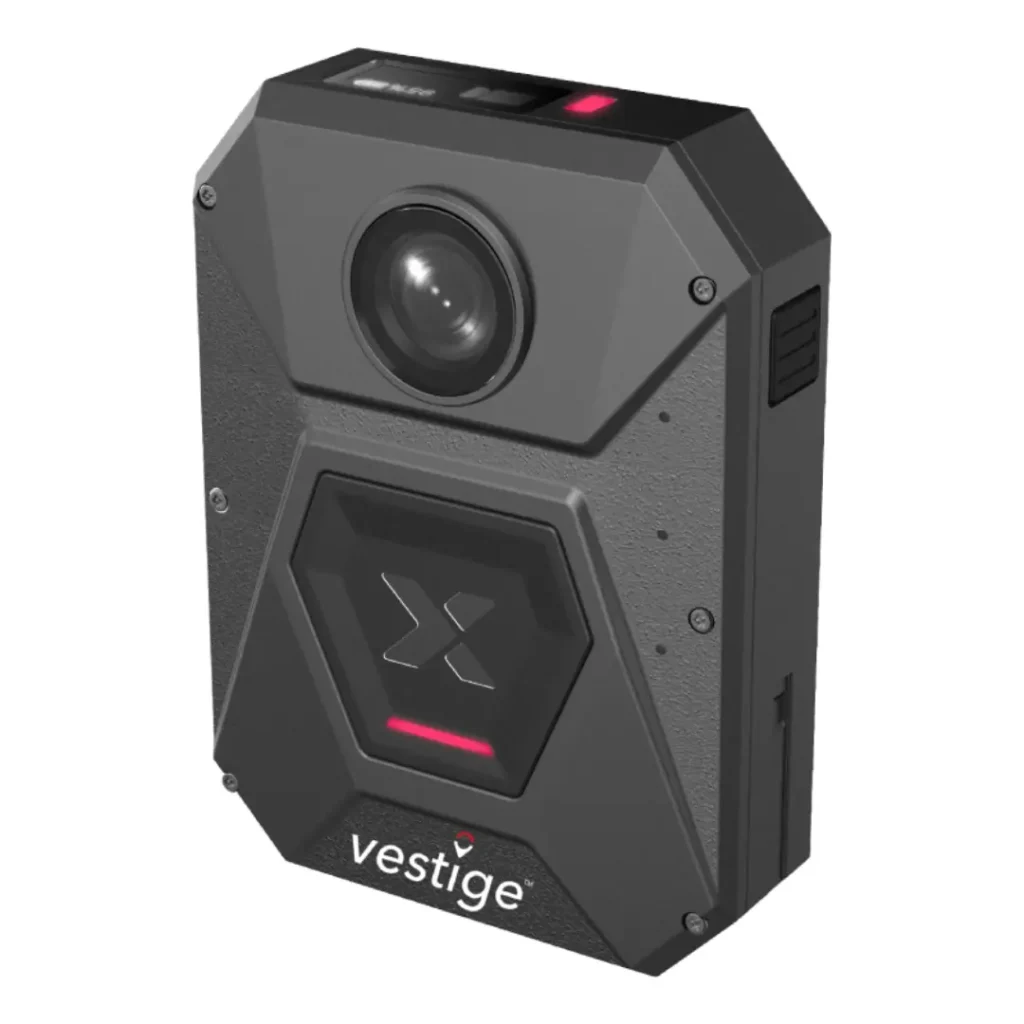
Your Team’s Safety—Captured and Secured with Vestige
Give your employees peace of mind and accountability with our discreet, easy-to-use body cameras. VestigeView’s body-worn solution ensures your team is protected, monitored, and compliant—wherever the job takes them.
- Record and store on-the-job interactions securely
- Track employee movements and verify site visits
- Promote transparency and reduce liability
Local Storage Systems: Benefits and Limitations
Local storage keeps all video data on servers, network-attached storage devices, or dedicated video management systems located within your physical facility. This traditional approach offers complete physical control over sensitive footage, which is a significant consideration for organizations handling legally sensitive evidence or operating in highly regulated industries.
Organizations managing body camera programs have discovered that storage demands grow rapidly. The Chula Vista Police Department found that a 30-minute video requires approximately 800 MB of storage, with some departments generating 7 TB of video data monthly. Oakland’s police department, storing footage for five years as required by their retention policy, ultimately switched to cloud storage after local servers became overburdened.
Local storage systems provide certain advantages that some enterprises prioritize. Network independence means video recording and access continue without internet connectivity. This is critical for facilities in rural areas or those with unreliable networks. Initial capital costs may appear lower than ongoing cloud subscription fees, though this calculation often overlooks maintenance, upgrades, and IT staffing requirements. Physical isolation from the internet theoretically reduces external attack surfaces, assuming proper internal security measures exist.
However, local systems come with significant operational challenges. Hardware failures can result in permanent data loss without robust backup systems. Scaling storage requires purchasing additional equipment and potentially expanding physical infrastructure. Staff must manage firmware updates, security patches, and system maintenance internally. For enterprises operating multiple locations, synchronizing evidence across sites demands complex networking arrangements.
Security Comparison: Cloud vs. Local Infrastructure
Security represents the most consequential factor in this decision. Both approaches carry distinct risks that enterprises must evaluate against their specific threat landscapes and compliance obligations.
Cloud security concerns center on data transmission vulnerabilities and reliance on third-party security practices. Research shows that 35% of data breaches involved shadow data, with breaches involving shadow data costing 16% more on average. Cloud misconfigurations account for 15% of all breaches, making vendor selection and configuration management critical considerations.
Yet enterprise-grade cloud platforms often implement security measures exceeding what most organizations can deploy internally. CJIS-compliant cloud providers deploy AES-256 encryption for data at rest and TLS 1.2+ for data in transit, meeting FBI standards for criminal justice information. Multi-factor authentication, role-based access controls, and comprehensive audit logging come standard with reputable providers.
Local storage security challenges frequently stem from limited IT resources and expertise. Only 45% of data stored in the cloud is currently encrypted, according to cloud security research, but on-premises systems often fare worse without dedicated security teams. Physical security requirements, including controlled access to server rooms and visitor management protocols, add complexity and cost.
Internal threats deserve particular attention with local systems. Unauthorized access by employees, inadequate access logging, and inconsistent backup procedures have caused significant data losses. The IBM Cost of a Data Breach Report notes that breaches taking over 200 days to contain cost an average of $5.46 million, and organizations with inadequate monitoring often detect breaches far too late.
Real-world implementations demonstrate effective security practices. As documented in client success stories, organizations like SalSon Logistics reduced insurance payouts from $9 million to under $200,000 by implementing comprehensive video systems with proper data management, proving that well-secured footage provides both protective and financial value.
Start Protecting Your Remote Employees Today
Are you ready to meet the security demands of modern organizations? An ESD is a cost-effective way to achieve your goals.
Many people think it’s a complicated process, but it doesn’t have to be. With Vestige on your side, you can provide guards, bouncers, and event staff with a compact, water-resistant, advanced safety device that they can comfortably wear 24/7.
There’s no other device quite like it on the market. It’s the ideal step to achieving your safety goals for personnel in your company. Request a demo now.

CJIS Compliance and Regulatory Requirements
Enterprises handling evidence-grade video must navigate complex regulatory frameworks. The FBI’s Criminal Justice Information Services Security Policy establishes baseline requirements that many body camera deployments must meet, but various industries face additional regulations, including HIPAA, OSHA, and state-specific privacy laws.
CJIS encryption standards require FIPS 140-2 certified encryption with minimum 128-bit key strength for data in transit, and FIPS 197 certified AES encryption with at least 256-bit strength for data at rest. Both cloud and local systems can meet these requirements, but implementation complexity differs significantly.
Cloud providers serving government and enterprise clients often maintain CJIS compliance as a core offering. AWS, Microsoft Azure, and specialized evidence management platforms provide turnkey compliance solutions that undergo regular third-party audits. For local deployments, achieving and maintaining compliance requires dedicated internal expertise, regular security assessments, and documented procedures that many organizations struggle to maintain.
Data retention requirements vary considerably by jurisdiction and use case. The Bureau of Justice Assistance notes that non-evidentiary video retention typically ranges from 60 to 90 days, while some departments retain footage for five years or longer. Court evidence may require retention for decades pending appeals. Cloud platforms handle variable retention policies more gracefully than fixed-capacity local storage.
Access control requirements mandate detailed audit trails of every person who views, downloads, or modifies video files. Chain-of-custody documentation proves essential if footage becomes evidence in legal proceedings. Modern cloud platforms automatically generate these records, while local systems require deliberate implementation and ongoing management.
Total Cost of Ownership Analysis
Financial analysis must extend beyond initial purchase prices to capture true operational costs over a typical five-year deployment period.
Cloud body cameras generally operate on subscription models with predictable monthly or annual costs. Pricing typically scales with storage consumption, user counts, and feature requirements. Initial hardware costs remain similar to local deployments—cameras themselves don’t differ based on storage strategy. Ongoing costs include subscription fees, potential overage charges, and internet bandwidth requirements.
Cloud advantages become apparent in maintenance and staffing. Automatic software updates eliminate patching responsibilities. Hardware refreshes happen on the provider’s schedule without capital outlay. IT staff time shifts from infrastructure maintenance to evidence management and operational tasks. Organizations avoid server room space, cooling, and power costs. Disaster recovery capabilities come standard rather than requiring separate investment.
Local storage systems require upfront capital investment in servers, network equipment, and potentially facility modifications. Ongoing costs include electricity, cooling, IT staffing for maintenance and security monitoring, software licensing, hardware replacement cycles, and backup infrastructure. Many organizations underestimate these expenses when comparing them against cloud subscription fees.
Storage growth creates particular challenges for local deployments. When capacity nears limits, organizations face urgent equipment purchases, often at premium prices. Planning adequate capacity years proves difficult given unpredictable growth rates. Cloud elasticity eliminates these constraints.
The body-worn camera market analysis emphasizes that data retention policies and storage costs rank among the top considerations influencing enterprise purchasing decisions. This is recognition that total cost extends far beyond camera hardware.
Hybrid Storage Strategies
Many enterprises find optimal results combining cloud and local storage based on data sensitivity, access requirements, and cost considerations.
Hybrid architectures typically store recent, frequently accessed footage locally for rapid retrieval while automatically migrating older content to cloud archives. Critical incidents may remain locally stored for enhanced control while routine footage moves to more cost-effective cloud tiers. This approach balances performance, security, and cost considerations.
Implementation requires careful policy development. Organizations must define which content categories warrant local retention, establish migration timelines, and ensure consistent security across both environments. Integration between systems should maintain unified search and retrieval capabilities rather than forcing users to query multiple platforms.
For enterprises operating fleet AI camera systems alongside body-worn devices, hybrid strategies can leverage existing infrastructure investments. Fleet dash camera footage and body camera evidence might share cloud platforms while using local caching for bandwidth optimization in vehicles.
The Government Technology analysis notes that Oakland’s police department adopted this approach using CJIS-compliant cloud storage for long-term retention while maintaining local access for active investigations. This balance preserved operational speed while enabling unlimited archival capacity.
See how SalSon Logistics turned a $9 million insurance problem into a strategic advantage
After spending nearly $9 million in claims in 2017—some from staged accidents—SalSon implemented Vestige’s AI‐powered fleet cameras and real‑time command center. The result? Accident payouts dropped from six‑figure annual totals to under $200,000 by 2024.
Better yet, drivers are protected, insurers are competing for their business, and a stronger safety culture now fuels their profitability.
Industry-Specific Considerations
Different sectors face unique requirements that influence optimal storage strategies.
Healthcare organizations must maintain HIPAA compliance while managing video from body cameras worn by security staff, mobile clinicians, and crisis response teams. Cloud body cameras with BAA (Business Associate Agreement) coverage make it easier to follow the rules, but choosing the right vendor for integration with existing electronic health records is important. Vestige’s work with organizations like Henry Ford Health demonstrates how body camera programs can protect lone workers while meeting healthcare-specific requirements.
Retail and commercial security operations prioritize rapid access to incident footage for loss prevention investigations and customer dispute resolution. According to the body-worn camera market research, retail represents a growing adoption sector following reports of significant reductions in violent incidents when staff wear visible cameras. Cloud storage enables multi-location retailers to centralize evidence management while maintaining store-level access.
Field service organizations deploying body cameras for technician protection face unique challenges. Workers operating in areas with limited connectivity may need local recording capabilities with automatic cloud synchronization when connections become available. Home inspectors and service technicians increasingly adopt body cameras after recognizing that 80% of accusations against home inspectors are exaggerated or meritless, and video evidence quickly resolves disputes.
Security and towing services operate in high-risk environments where video evidence proves essential for liability protection. As demonstrated by Elite Collateral Recovery, body cameras combined with vehicle camera systems, provide comprehensive documentation that protects both employees and organizations from false claims.
Implementing Enterprise-Grade Security Practices
Regardless of storage strategy, certain practices maximize data security and operational value.
Encryption implementation should protect data both at rest and in transit without exception. AES-256 encryption represents the current gold standard, meeting CJIS requirements and providing protection that remains secure against foreseeable computing advances. Encryption key management deserves particular attention. Lost keys render data irrecoverable, while compromised keys expose everything.
Access controls must follow least-privilege principles. Not every employee needs access to all footage. Role-based permissions should limit access based on job functions, with special controls for sensitive categories like incidents involving minors or medical emergencies. The CJIS Security Policy requires multi-factor authentication for accessing criminal justice information—a practice equally valuable for any sensitive footage.
Audit logging provides accountability and supports legal proceedings. Every access attempt should generate records including user identity, timestamp, specific files accessed, and actions taken. Logs themselves require protection from tampering. Cloud platforms typically maintain comprehensive, immutable audit trails automatically.
Incident response planning prepares organizations for security events before they occur. Written procedures should address breach detection, containment, evidence preservation, regulatory notification requirements, and recovery steps. Regular drills ensure staff can execute plans effectively under pressure.
For organizations seeking to enhance safety across multiple domains, Vestige offers integrated solutions, including personal safety wearable panic buttons that complement body camera deployments with emergency alert capabilities.
Protecting Your Enterprise with the Right Storage Strategy
The decision between cloud and local storage for body camera footage ultimately depends on your organization’s specific security requirements, regulatory environment, technical capabilities, and operational priorities. Cloud platforms offer scalability, accessibility, and often stronger security through specialized expertise, while local storage provides physical control that some organizations require.
Modern enterprises increasingly recognize that video evidence from body cameras, fleet cameras, and security systems provides invaluable protection against fraudulent claims, workplace incidents, and liability exposure.
Ready to implement secure body camera technology with enterprise-grade data protection? Vestige provides AI-powered body cameras, fleet camera systems, and integrated safety solutions designed for organizations that demand reliability, security, and compliance. Visit Vestige’s resources to learn more about protecting your workforce and your business, or contact Vestige today to discuss your specific requirements.
Trustindex verifies that the original source of the review is Google. I have been a customer of Vestige for over 5 years. Megan and Corey do an awesome job and get us whatever we requested extremely quickly whether it’s an emergency that we need video of or a simple report we want! Their system has saved us from several Faldo claims and the software has never let us down!Trustindex verifies that the original source of the review is Google. Very effective and reliable resource in the field. Product is durable and does everything you’ll need from A-Z, remember you get what you pay for so why not get the best you can. Thank you Vestige for your support and business in this demanding field!Trustindex verifies that the original source of the review is Google. One of our trucks lost a drive line and no parts houses had one in stock. We were able to find it by watching the video from the side camera to see where it landed. Excellent product, and customer service at Vestige is excellent! Much better than other dash cam companies we have used in the past. Highly recommend.Trustindex verifies that the original source of the review is Google. Great products and Service... we were hesitant about getting the Dashcam Service but within a few months it basically paid for itself due to an accident we had that could have been considered our fault but thanks to the camera I was actually able to share it with the Trooper that worked the accident. Not sure how many different set ups they offer but we are very happy with the basicly Live DashCam service we got that also has GPS integrated . Its great having it all in one App.
FAQ: Cloud Body Camera Storage
CJIS Security Policy requires FIPS 197 certified AES encryption with at least 256-bit key strength for data at rest, and FIPS 140-2 certified encryption with minimum 128-bit keys for data in transit. Enterprise deployments should meet or exceed these standards regardless of regulatory requirements.
Storage needs vary based on video resolution, recording hours, and retention policies. A single 30-minute video at standard resolution requires approximately 800 MB. Departments typically generate between 2 and 7 TB monthly, depending on workforce size and recording policies. Cloud platforms eliminate capacity planning concerns through elastic scaling.
Yes. Multiple cloud providers offer CJIS-compliant platforms with appropriate encryption, access controls, and audit capabilities. AWS, Microsoft Azure Government, and specialized digital evidence management platforms maintain CJIS compliance through proper configuration and customer-managed encryption keys.
Reputable providers maintain redundant infrastructure across multiple data centers, minimizing outage risks. Organizations should verify SLA terms and understand disaster recovery procedures. Local caching of recent footage provides continued access during brief connectivity interruptions.
Retention periods depend on jurisdiction, industry regulations, and organizational policy. Non-evidentiary footage typically requires 60-180 days of retention. Evidence related to investigations or legal proceedings may require retention for years pending case resolution. Consult legal counsel to establish compliant retention policies.
Total cost comparisons favor cloud storage for most enterprises when accounting for full operational expenses, including IT staffing, hardware maintenance, facility costs, and backup infrastructure. Local storage may prove cost-effective for small deployments or organizations with existing data center infrastructure.